
The Smart Choice for Garage and Shed Flooring in Jamberoo
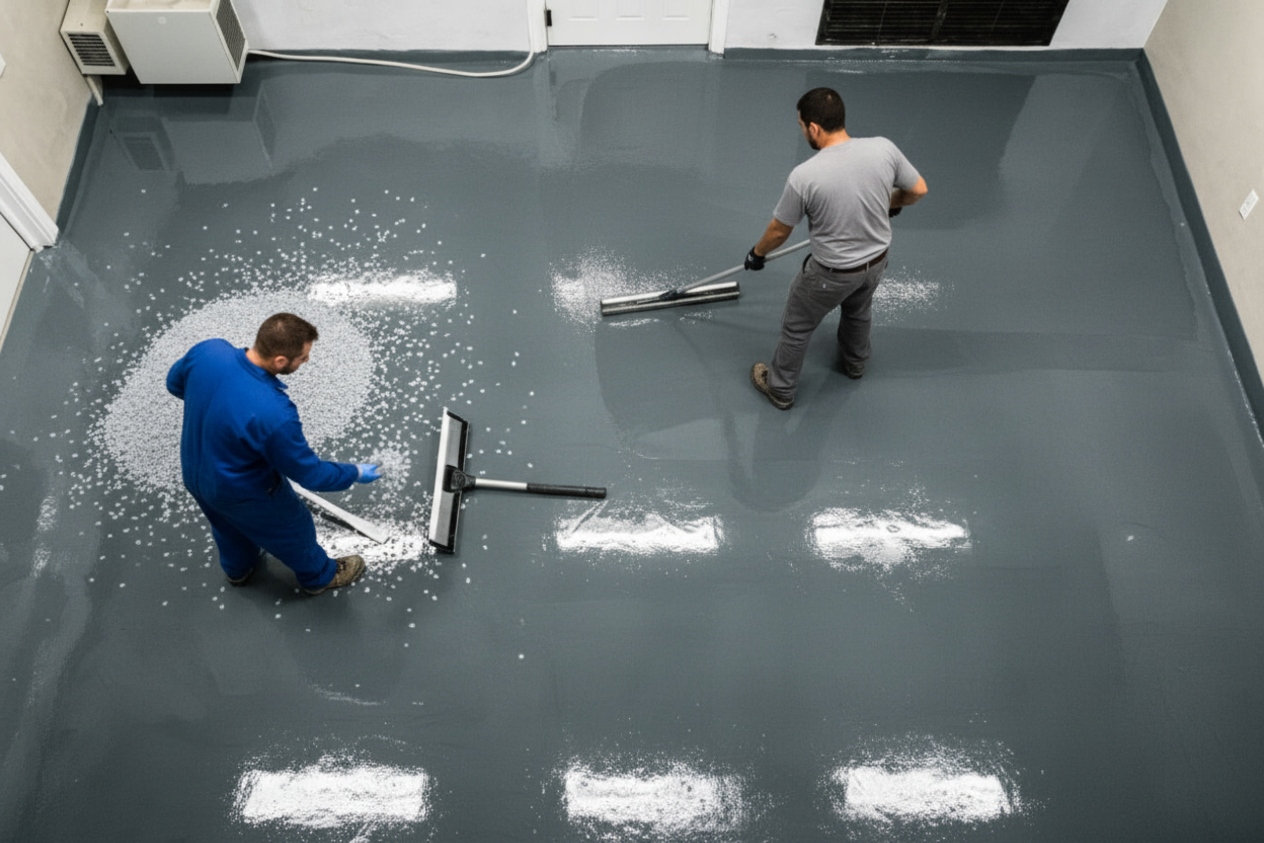
Jamberoo properties aren’t your typical suburban builds. Larger slabs, working garages, farm sheds and workshop spaces that take real punishment — day in, day out. Epoxy flooring Jamberoo property owners rely on is purpose-built for exactly these conditions, delivering a hard-wearing, chemically resistant surface that holds up under vehicle traffic, agricultural equipment, oil spills and the kind of heavy use bare concrete simply wasn’t designed to handle long-term.
We service garages, shed floors and full working properties across the Illawarra region — and we know what rural slabs actually face out here. Before you commit to any coating system, this page walks you through what matters: assessing your existing concrete, choosing the right epoxy system, and understanding what separates a coating that lasts years from one that peels inside a season.

Why Jamberoo Properties Demand More from a Floor Coating
Rural epoxy flooring NSW properties need a coating system that’s built for real work — not just aesthetics. Jamberoo slabs face a unique combination of heavy use, environmental stress and slab scale that standard suburban coatings simply aren’t rated for.
Epoxy Systems Best Suited to Garages, Sheds and Farm Workshops
Shed floor epoxy coating Jamberoo installers recommend varies depending on slab conditions, use type and exposure. Choosing the wrong system for a rural working environment is one of the most common reasons coatings fail prematurely.
100% Solids Epoxy — the Benchmark for Working Environments
Two-part 100% solids epoxy delivers a higher build thickness than diluted alternatives, with minimal VOC off-gassing during cure — an important consideration in enclosed garages and sheds. It’s the right starting point for any slab facing moderate to heavy use, and it handles moderate moisture vapour transmission better than thinner film systems.
Polyaspartic Topcoats for UV and Abrasion Resistance
Polyaspartic topcoats cure faster than standard epoxy, reducing downtime on working properties where you can’t afford days of restricted access. UV-stable formulations hold colour and gloss in partially open sheds and garages where direct sun exposure would yellow or degrade a standard epoxy topcoat within a season or two.
Anti-Slip Broadcast Finishes for Workshop Safety
Aluminium oxide or quartz aggregate broadcast into the topcoat delivers a slip-resistant finish that meets AS 4586 slip resistance classification — the relevant Australian standard for working environments. Safe Work Australia’s guidance on managing slip and fall hazards in workplaces outlines the obligations that apply to commercial and farm workshop settings alike.
Colour and Finish Selection for Rural Properties
Mid-grey and charcoal are the most practical colour choices for high-soiling rural environments — they mask tyre marks, dust and minor staining between cleans. A satin finish strikes the right balance between aesthetics and ease of cleaning, without showing every scuff the way a high-gloss surface would in a working shed or garage.
The Installation Process — What to Expect on a Jamberoo Property
Site Assessment and Moisture Testing: Every project begins with a site inspection to assess the condition of the concrete, identify any damage, and check moisture levels. This information helps determine the most suitable preparation and coating system for the slab.
Preparation Day — Grinding, Patching and Priming: The concrete is mechanically prepared through grinding, followed by crack repairs and priming. Proper preparation is essential to achieve strong adhesion and long-term coating performance.
Epoxy Application and Cure Times: Once prepared, the epoxy system is applied and allowed to cure. Depending on conditions and the coating used, light foot traffic is usually possible within 24 hours, while vehicle traffic may require several days.
Minimising Downtime on Working Properties: For larger sheds and workshops, installation can often be staged in sections to keep part of the area operational. Careful planning helps minimise disruption while ensuring a quality finish.
Concrete Preparation — The Step That Determines Longevity
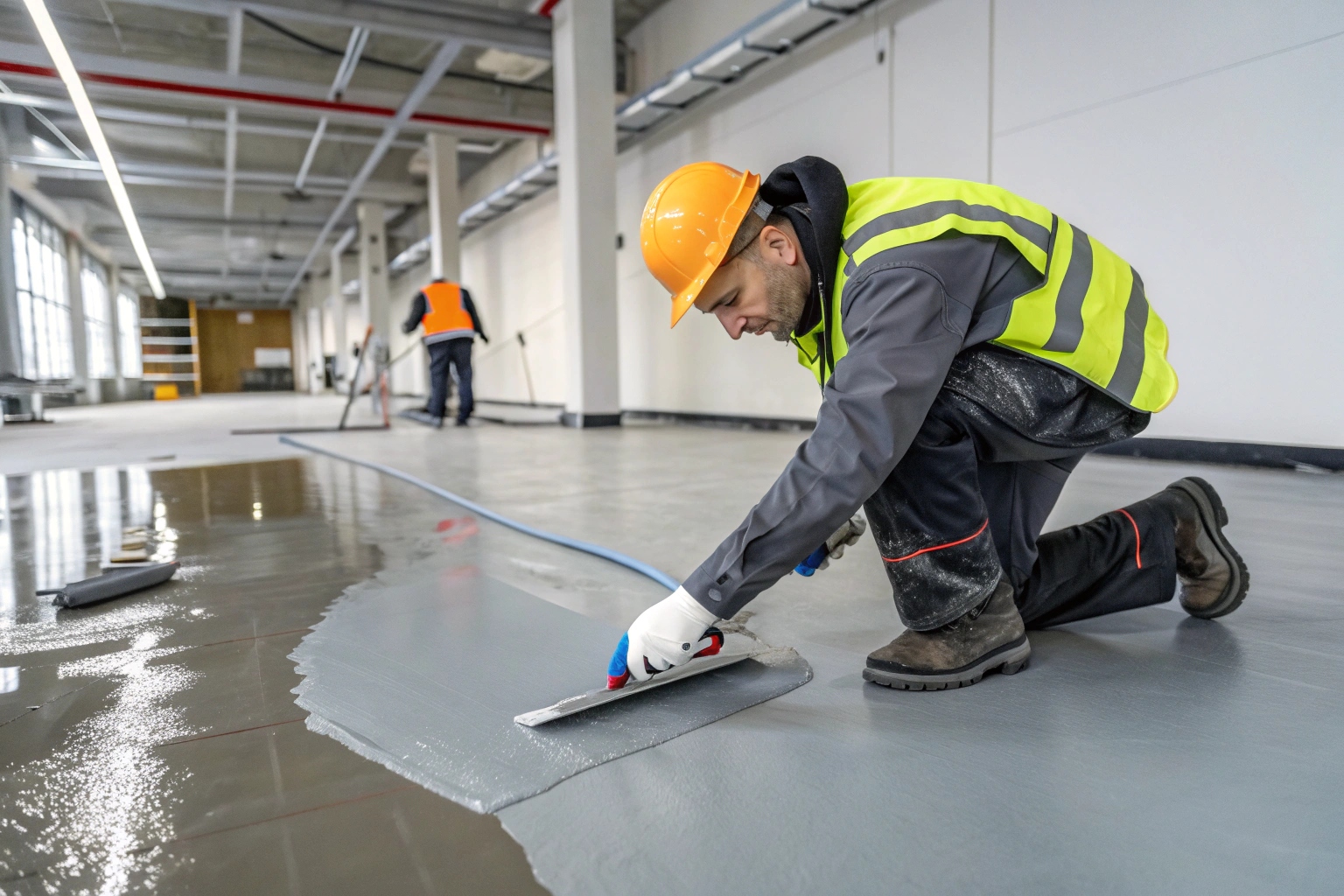
A durable epoxy floor starts long before the coating is applied. Most epoxy failures can be traced back to inadequate surface preparation rather than the quality of the product itself. To achieve proper adhesion, the concrete must be mechanically prepared using methods such as diamond grinding or shot blasting, depending on the size and condition of the slab. Creating the correct surface profile ensures the epoxy bonds effectively and performs as intended for years to come.
Moisture testing and slab repairs are equally important parts of the process. Excess moisture trapped within concrete can cause bubbling, peeling, and coating failure if not identified before installation. Existing cracks, damaged sections, and expansion joints should also be properly treated before any epoxy system is applied. By addressing these issues upfront, the finished floor delivers the durability, chemical resistance, and long-term performance that Jamberoo property owners expect from a professional epoxy flooring system.
Durability, Maintenance and Long-Term Performance
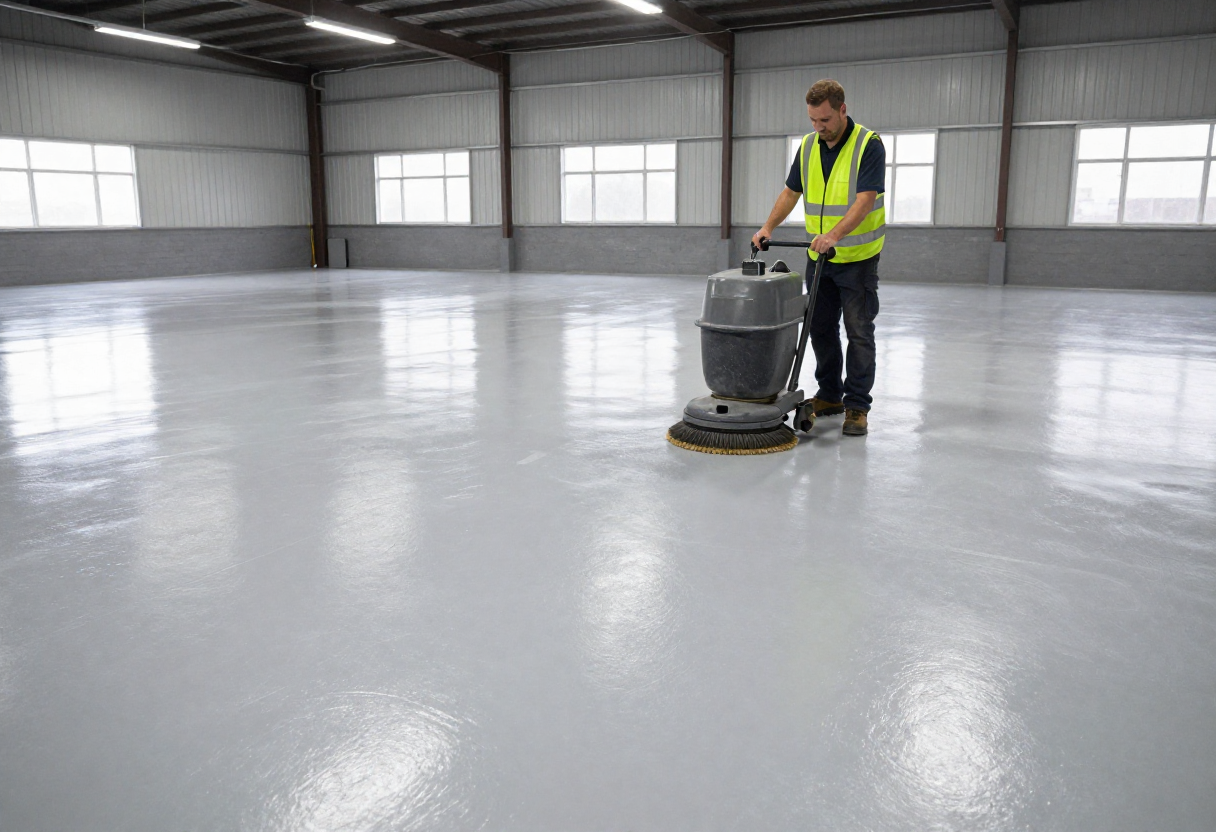
Expected Service Life of a Correctly Installed Epoxy System: A professionally installed epoxy floor can last 10–15 years or more with proper preparation, quality materials, and regular maintenance. Its lifespan will vary depending on traffic levels, environmental conditions, and how the space is used.
Day-to-Day Maintenance on a Working Property Floor: Epoxy floors are easy to maintain. Regular sweeping, occasional washing, and prompt cleanup of oil or chemical spills help keep the surface looking good and performing well for longer.
When to Consider Recoating vs Full Replacement: Minor wear, fading, or loss of gloss can often be resolved with a new topcoat, extending the floor’s lifespan. More serious issues such as peeling or widespread coating failure may require larger repairs or replacement.
Chemical Resistance — Oils, Fuels and Agricultural Inputs: Quality epoxy flooring offers strong resistance to oils, fuels, hydraulic fluids, fertilisers, and other common agricultural chemicals, helping protect the concrete from stains and long-term damage.


FAQs About Epoxy Flooring Jamberoo
How much does epoxy flooring typically cost for a garage or shed in Jamberoo?
Pricing varies depending on slab size, condition and the system specified, but most Jamberoo residential garages run somewhere between $50–$80 per square metre for a quality two-part system with proper preparation included. Larger shed floors on acreage properties can come in lower per square metre due to scale. Always get a written quote that breaks out preparation costs separately — that’s where you’ll spot whether you’re comparing apples with apples.
Can epoxy flooring handle the humidity and coastal conditions in the Illawarra?
Yes, but product selection and moisture testing matter more here than they would in a dry inland climate. The Illawarra’s coastal humidity means slab moisture levels can be higher than expected, even on slabs that look and feel dry. A polyaspartic topcoat is my recommendation for any property within range of the coast — it holds up to UV and humidity cycling far better than a standard epoxy topcoat will.
How long do I need to stay off the floor after it's been coated?
Light foot traffic is usually fine within 24 hours, but I’d keep vehicles off for at least 48–72 hours and hold off on full workshop loads for five to seven days. Jamberoo’s cooler overnight temperatures, especially through winter, can slow cure times down, so your installer should be adjusting those timelines based on the conditions on the day — not just quoting you a generic number.
Is epoxy flooring suitable for an older slab on a rural Jamberoo property?
Older slabs are absolutely coatable, but they need more attention upfront. I’d expect to spend more time on crack repair, surface profiling and moisture assessment on a slab that’s been working hard for 20-plus years. The prep work is where older slabs earn their cost — done right, the finished coating performs just as well as it would on a new pour.
Do I need council approval to coat my shed or garage floor in the Illawarra?
No — applying an epoxy coating to an existing floor is a surface treatment, not a structural alteration, so it doesn’t trigger a DA or building approval requirement. That said, if your shed or garage was built without proper approvals in the first place, that’s a separate conversation worth having with Kiama Council before any trades come on site. Most straightforward residential and rural shed floor jobs go ahead without any council involvement at all.
What happens if my epoxy floor gets damaged by a heavy impact or sharp object?
Localised damage — a gouge from a dropped tool or a chip from something heavy — can usually be repaired without recoating the whole floor. I fill the damaged area with a compatible epoxy filler, feather the edges and apply a topcoat patch that blends in reasonably well. It won’t be invisible up close, but on a working Jamberoo shed floor that’s seeing daily use, a repaired patch is a practical outcome that extends the coating’s life without the cost of a full reinstall.
Ready to coat your Jamberoo garage, shed or workshop floor?
Request a free on-site quote — we’ll assess your slab, test for moisture and provide a written recommendation with full product specification and warranty terms.
Not sure which epoxy system suits your shed or workshop? Contact us for a no-obligation product recommendation.
Ready to plan your installation? Ask us about scheduling around your property’s operations.
