
Marcus had his Berkeley garage floor coated three years ago. Looked great for about eighteen…
Windang
How to Restore Shine to a Dull Epoxy Floor: The Complete Guide for Windang, Wollongong & Illawarra Homeowners
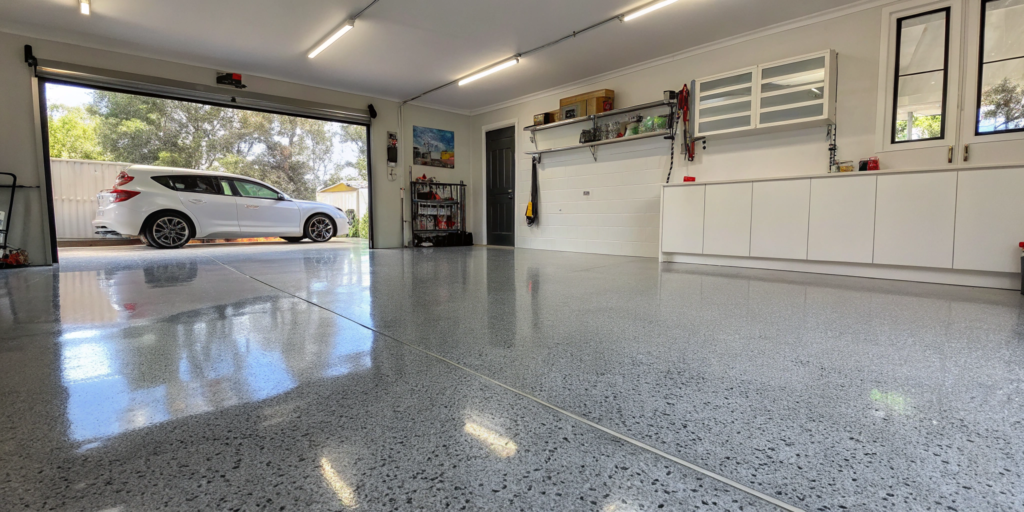
Your epoxy floor was a smart investment — and the good news is that restoring its original brilliance is easier than you think. Whether it’s your garage, workshop, or living space, a dull epoxy floor can be transformed back to its stunning, high-gloss finish with the right approach. Windang and Wollongong homeowners have a real advantage here: once you understand what your floor needs, results come quickly and last for years.
In this guide, you’ll discover exactly how to restore shine to your epoxy floor — from simple DIY maintenance steps through to professional recoating options that deliver showroom-quality results. We cover the best products, proven techniques, and smart prevention strategies so your epoxy floor stays looking its absolute best in Wollongong’s coastal environment.
Quick Answer: How to Restore Shine to an Epoxy Floor
- Deep clean the surface with a pH-neutral cleaner
- Lightly buff with a soft floor buffer or microfibre pad
- Apply an epoxy-compatible water-based floor polish
- Allow 2–4 hours of cure time before foot traffic
- Apply a clear epoxy topcoat sealer for lasting gloss
- Maintain monthly to prevent future dullness
For Windang & Wollongong homes, salt air and humidity require more frequent maintenance cycles to keep epoxy floors performing at their best.
Why Epoxy Floors Lose Their Shine
Understanding why your epoxy floor has lost its lustre is the first step to getting it back — and the great news is that most causes are entirely reversible. Epoxy floors don’t go dull overnight. It’s a gradual process driven by a combination of surface wear, environmental exposure, and cleaning habits. Identifying the cause helps you choose the right restoration approach.
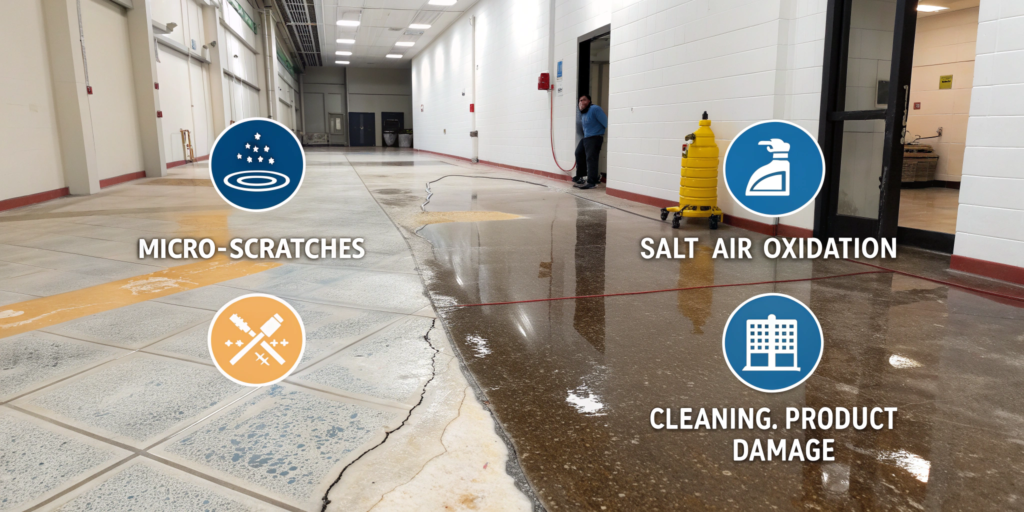
The most common culprit is everyday surface micro-scratching. Foot traffic, furniture movement, and in garages — vehicle tyres — all create tiny abrasions across the topcoat. Individually they’re invisible, but collectively they scatter light rather than reflecting it cleanly, which is exactly what turns a once-gleaming floor into a flat, lacklustre surface.
For homeowners in Windang, Barrack Point, and throughout the Illawarra coastal strip, there’s an additional factor: salt air. Wollongong’s coastal environment exposes epoxy surfaces to airborne salt particles that gradually oxidise the topcoat, creating a surface haze that no amount of mopping will shift. According to the Bureau of Meteorology’s climate data for Wollongong, the region experiences elevated coastal humidity year-round — conditions that accelerate topcoat oxidation, particularly in garages and covered outdoor areas without climate control.
Cleaning product damage is the third major cause — and often the most avoidable. Many standard household floor cleaners contain alkaline compounds, ammonia, or solvents that chemically degrade epoxy topcoats over time. Using the wrong mop technique (wet mopping rather than damp mopping) can also leave behind residue that builds up into a dull film. The good news? Once you switch to the right products, your floor immediately begins to recover.
How to Restore Shine to Your Epoxy Floor (Step-by-Step)
For most residential epoxy floors in Wollongong and Windang, a full shine restoration is well within reach as a confident DIY project. The key is working through the process in the right order — rushing straight to a polish without cleaning and buffing first is the single biggest mistake homeowners make, and it leads to a finish that looks worse than when you started.
Before you begin, assess your floor carefully. Run your hand across the surface. If it feels smooth but looks dull, you’re dealing with surface oxidation or cleaning residue — the easiest fix. If it feels rough or gritty, micro-scratches are the primary issue, and light buffing is needed before polishing. If you can see actual peeling, flaking, or deep gouges, skip to the professional recoating section below — those issues need more than a polish.
What You’ll Need
- pH-neutral epoxy floor cleaner
- Microfibre flat mop
- Soft floor buffer or polisher with a white buffing pad
- Epoxy-compatible water-based floor polish
- Lambswool applicator or clean foam applicator pad
Avoid anything abrasive and always confirm that any product you buy is explicitly labelled as safe for epoxy or polyurethane coatings before applying it to your floor.
The Complete Restoration Process
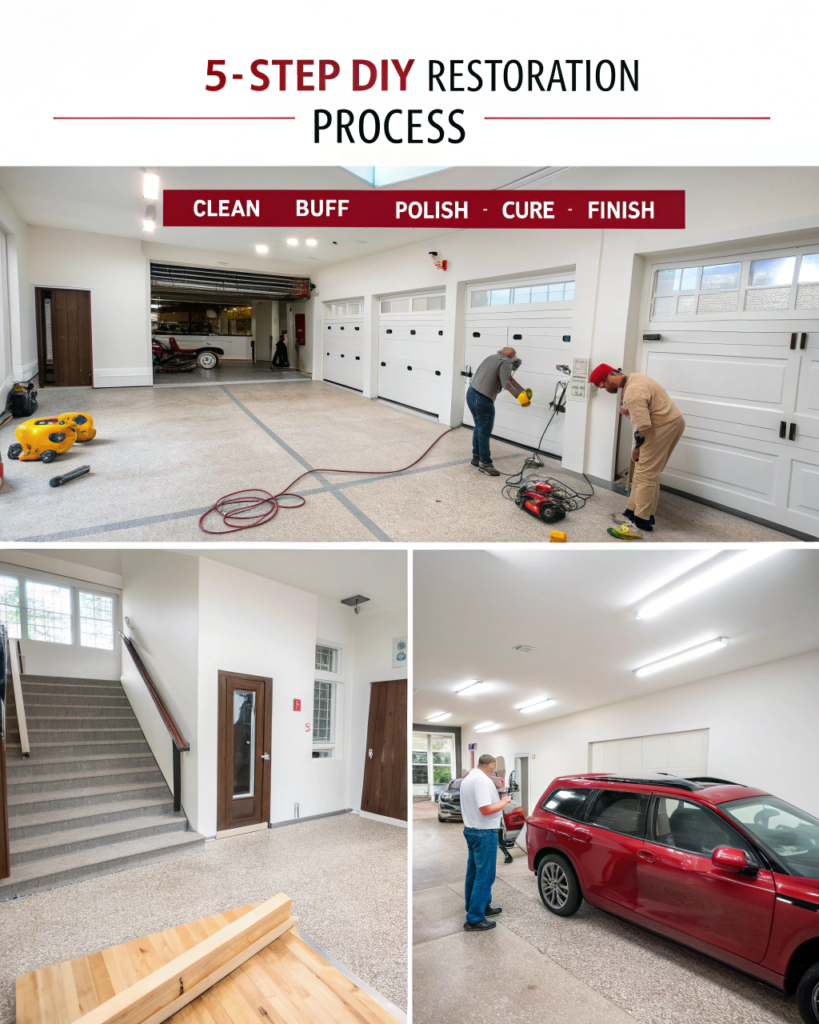
- Deep Clean the Surface. Mix your pH-neutral cleaner with warm water according to label directions. Damp mop the entire floor — never saturate it. For stubborn grease or oil spots common in Wollongong garages, use a dedicated degreaser safe for epoxy. Allow the floor to dry completely — ideally 2–3 hours minimum. Rushing this step means you’ll be polishing over contamination.
- Buff to Remove Surface Scratches. Fit your floor buffer with a white (fine) buffing pad — never use a darker, more aggressive pad on epoxy. Work in slow, overlapping passes across the floor. You’re not trying to sand the surface, just gently abrade the micro-scratched topcoat layer. Wipe away any residue with a clean microfibre cloth before proceeding.
- Apply Epoxy-Compatible Floor Polish. Apply the polish in thin, even coats using a lambswool applicator or foam pad. Work from the far wall toward the door so you don’t walk over wet polish. One coat is often enough for light dullness; two thin coats deliver a noticeably deeper gloss. Don’t apply one thick coat — it will streak and take much longer to cure.
- Allow Full Cure Time. Most water-based epoxy polishes require 2–4 hours before light foot traffic, and 24 hours before parking a vehicle. In Wollongong’s humid coastal climate, err toward the longer end of cure times — high humidity slows evaporation and can cloud the finish if you rush.
- Optional: Apply a Clear Topcoat Sealer. For floors that need more than a surface refresh, a fresh, clear epoxy topcoat delivers a dramatically superior result. This is particularly worthwhile for Windang and coastal Wollongong homes where ongoing salt air exposure is a factor. A topcoat also extends the time before your next restoration is needed.
Best Products for Restoring Epoxy Floor Gloss
Product selection makes a significant difference to your results — and it’s the area where most DIY attempts go wrong. The Australian market has good options available, but you need to know exactly what to look for on the label.
For regular maintenance polishing, look for water-based floor polishes specifically formulated for epoxy or polyurethane coatings. Products marketed as “floor wax” or “timber floor polish” are incompatible with epoxy and can create a slippery, hazy build-up that is difficult to remove. Good water-based epoxy polishes will specify compatibility with epoxy, concrete sealer, or urethane coatings on the label.
When polish alone isn’t delivering the gloss level you want, a clear epoxy topcoat sealer is the next step up. These products penetrate more deeply into the surface and provide a harder, more durable gloss layer. They’re also significantly better at resisting Wollongong’s coastal humidity and the ongoing salt air exposure that Windang homeowners deal with year-round. Application is similar to the polish process but requires slightly longer cure times — typically 24–48 hours for light traffic.
The products to avoid entirely are solvent-based cleaners, bleach, ammonia-based products, and anything abrasive. These don’t just fail to help — they actively strip your epoxy topcoat with each use, creating the exact dullness you’re trying to eliminate. If you’ve been using a multi-purpose floor cleaner from the supermarket, there’s a strong chance this has been contributing to your floor’s deterioration.
DIY Options vs Professional Recoat — At a Glance
| Option | Typical Lifespan | Best For | Skill Level |
|---|---|---|---|
| Floor Polish | 6–12 months | Light dullness, regular maintenance | DIY-friendly |
| Topcoat Sealer | 1–3 years | Moderate wear, coastal homes | Confident DIY |
| Professional Recoat | 5–10+ years | Heavy damage, coating failure | Professional |
| Full Resurface | 10–15+ years | Complete coating breakdown | Professional |
Professional Recoating vs. DIY Polish — Which Is Right for You?
For many Wollongong homeowners, DIY polishing delivers excellent results and is absolutely the right choice for floors showing general dullness or light surface wear. But there are situations where professional recoating is not just a better option — it’s the only option that will actually work.
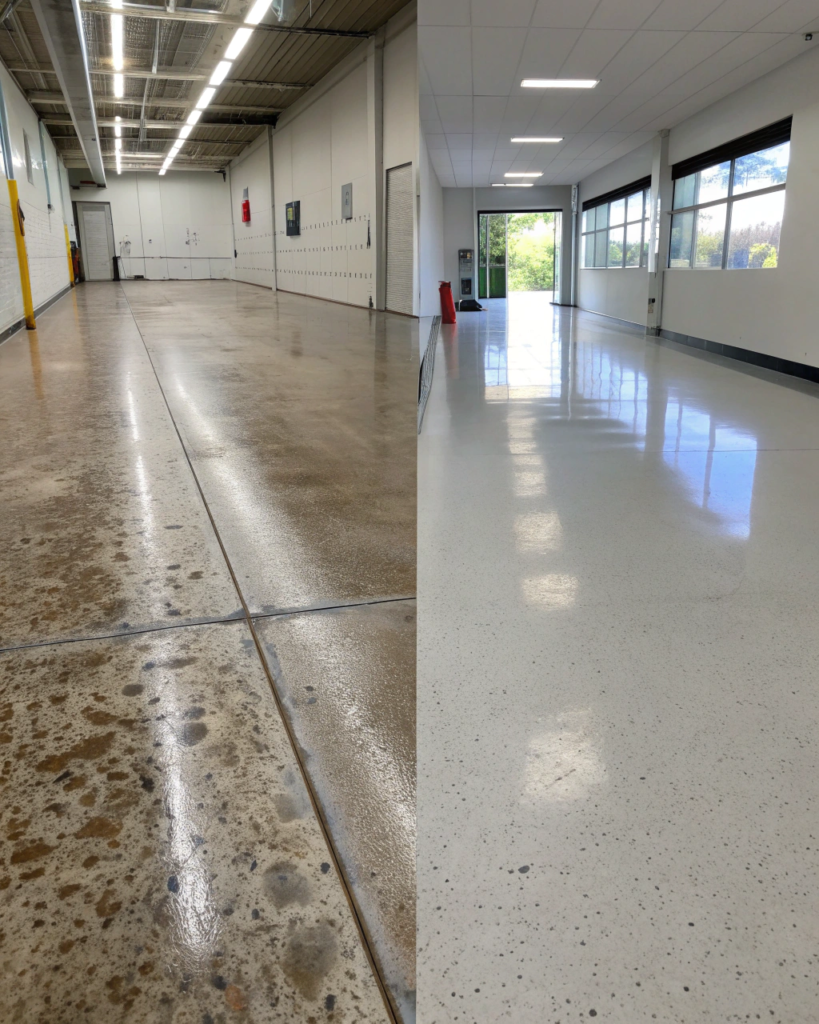
The clearest indicator that your floor needs professional attention is visible coating failure. This includes peeling or flaking sections, areas where the epoxy has become cloudy or milky rather than just dull, persistent hazing that returns quickly after polishing, and deep scratches that go through the topcoat into the base coat. These symptoms indicate that the coating itself has been compromised, and no amount of surface polish will create a lasting fix.
Professional recoating begins with surface preparation that goes well beyond what DIY tools can achieve. Commercial diamond grinding equipment opens up the existing coating to ensure proper mechanical adhesion for the new layer. This preparation step alone is what makes the difference between a professional recoat that lasts many years and a DIY application that peels within months.
According to NSW Fair Trading’s guidelines for building and construction tradespeople, engaging a licensed contractor for surface coating work ensures both the quality of materials and the standard of workmanship — important protection for homeowners in coastal environments where environmental stressors are higher than average. For a home in Windang or Barrack Point where salt air conditions are harsh, the durability advantage of a licensed professional application carries real long-term value.
Signs It’s Time to Call a Professional
- Peeling, flaking, or bubbling in the existing coating
- Persistent milky or cloudy appearance after cleaning
- Deep scratches penetrate through to the base coat
- Polish applied, butthe shine disappears within weeks
- More than 5 years since the original installation without maintenance
- Preparing to sell your home and want showroom-quality results
Preventing Future Dullness — Maintenance Tips for Coastal Homes
Restoring your epoxy floor’s shine is satisfying — keeping it that way is even better. With the right maintenance habits in place, Windang and Wollongong homeowners can dramatically extend the time between restorations and protect their investment against coastal conditions.
A simple weekly and monthly cleaning routine makes a significant difference. Weekly, remove loose dirt and grit with a dry microfibre mop before it gets ground into the surface — this single habit does more for gloss longevity than any product. Monthly, do a proper damp mop with a pH-neutral epoxy-safe cleaner. Every six to twelve months, depending on traffic and exposure, apply a maintenance coat of your chosen epoxy polish to keep the topcoat building rather than degrading.
Coastal-specific protection deserves extra attention for homes near Lake Illawarra and the Windang peninsula. Salt particles blown in from the water settle on floor surfaces and slowly oxidise the coating. Placing quality entry matting at garage doors and exterior access points captures a significant proportion of these particles before they reach your floor. For garages used for boat equipment storage or marine gear, the salt load is even higher — plan for more frequent cleaning cycles and consider a UV-resistant topcoat specifically formulated for coastal environments.
A few simple protection habits make a meaningful difference to gloss longevity. Fit felt, or rubber pads under all furniture legs — metal or hard plastic furniture feet are surprisingly effective at creating the micro-scratches that kill gloss. In garages, use tyre parking pads under your vehicle’s tyres: tyre rubber reacts chemically with epoxy over time and can cause discolouration in high-contact zones. And if any section of your floor gets oil, grease, or chemical spills, clean them promptly with the correct cleaner rather than letting them sit and penetrate.
Restore Your Epoxy Floor’s Shine — Local Epoxy Flooring Wollongong
Whether your floor needs a straightforward DIY polish or a full professional recoat, Local Epoxy Flooring Wollongong has the local knowledge and experience to deliver outstanding results across the Illawarra region. Our team understands exactly how Wollongong’s coastal climate — the salt air, the humidity, the UV exposure — affects epoxy coatings, and we use products and techniques specifically selected for local conditions.
We’ve restored and recoated epoxy floors across Windang, Barrack Point, Wollongong CBD, Shellharbour, and throughout the Illawarra, for homeowners and businesses who want a result that genuinely lasts. Our professional recoating work carries a workmanship warranty, and we’re happy to provide a free assessment to help you determine the right approach for your floor.
- 📞 0242 026 324
- 📍 317 Keira St, Wollongong NSW 2500
- 🌐 epoxyflooringwollongong.com
- 📍 View on Google Maps
Serving Windang, Barrack Point, Wollongong, Shellharbour & surrounds. Call today for your free, no-obligation floor assessment.

