
Marcus had his Berkeley garage floor coated three years ago. Looked great for about eighteen…
Windang
How to Clean Epoxy Floors: The Complete Maintenance Guide for Windang Homes
Category: Epoxy Floor Maintenance | Reading time: ~9 minutes

Epoxy floors are one of the smartest flooring investments you can make — durable, great-looking, and remarkably easy to keep clean when you know the right approach. With a simple routine and the correct products, your floor will hold its gloss, resist stains, and stay looking sharp for decades. The good news is that cleaning epoxy floors properly takes far less time and effort than most people expect, making it one of the lowest-maintenance flooring options available.
This guide covers everything Windang homeowners need to keep their epoxy floor performing at its best — from quick daily maintenance and the best pH-neutral cleaners, to tackling specific spills, restoring lost shine, and building a seasonal care routine that stands up to Windang’s unique coastal conditions year after year.
How to Clean Epoxy Floors: The Basics
Cleaning an epoxy floor is straightforward, but getting the fundamentals right from the start means you’ll spend far less time correcting problems down the track. The core principle is simple: use gentle, pH-neutral cleaning agents, soft tools, and avoid flooding the surface with water. Epoxy is a sealed, non-porous surface, so dirt and spills sit on top rather than soaking in — which means regular light cleaning is all it takes to keep things looking great. For Windang properties, where salt air off Lake Illawarra and beach sand are part of daily life, that regular cleaning habit pays off even more.
What Makes Epoxy Different from Other Floor Types
Unlike timber, tile, or polished concrete, epoxy creates a continuous sealed surface with no grout lines, pores, or gaps for dirt to accumulate. This makes it highly resistant to staining and moisture, but it also means cleaning products that work well on other surfaces can cause real problems here. Solvent-based cleaners, acidic products, and abrasive tools can degrade the topcoat, strip the gloss, or leave a dull residue that builds up over time. Knowing what your floor is made of helps you choose the right products every time. For a deeper technical understanding of how industrial floor coatings behave, the CCAA Guide to Industrial Floors and Pavements is an excellent reference.
How Often Should You Clean Epoxy Floors
For most homes and garages, a light sweep or dust mop daily and a wet mop weekly is all you need. High-traffic commercial spaces or workshop floors may need wet mopping every two to three days. In Windang, the combination of fine beach sand, salt residue from Lake Illawarra, and humid air means the daily dust mop is especially important — fine coastal grit is the primary cause of micro-scratching and gloss loss on epoxy surfaces over time.
Quick Frequency Guide:
Daily: Dry sweep or dust mop | Weekly: Wet mop with pH-neutral cleaner | Monthly: Edge and corner detail clean | Quarterly: Full inspection and spot treatment
Best Tools for Cleaning Epoxy Floors
The right tools make the job faster and protect your floor’s finish. Because epoxy is a coated surface, anything abrasive will cause microscopic scratches that accumulate over time and dull the gloss. Stick to soft, non-scratch options, and you’ll get a better clean with less effort.
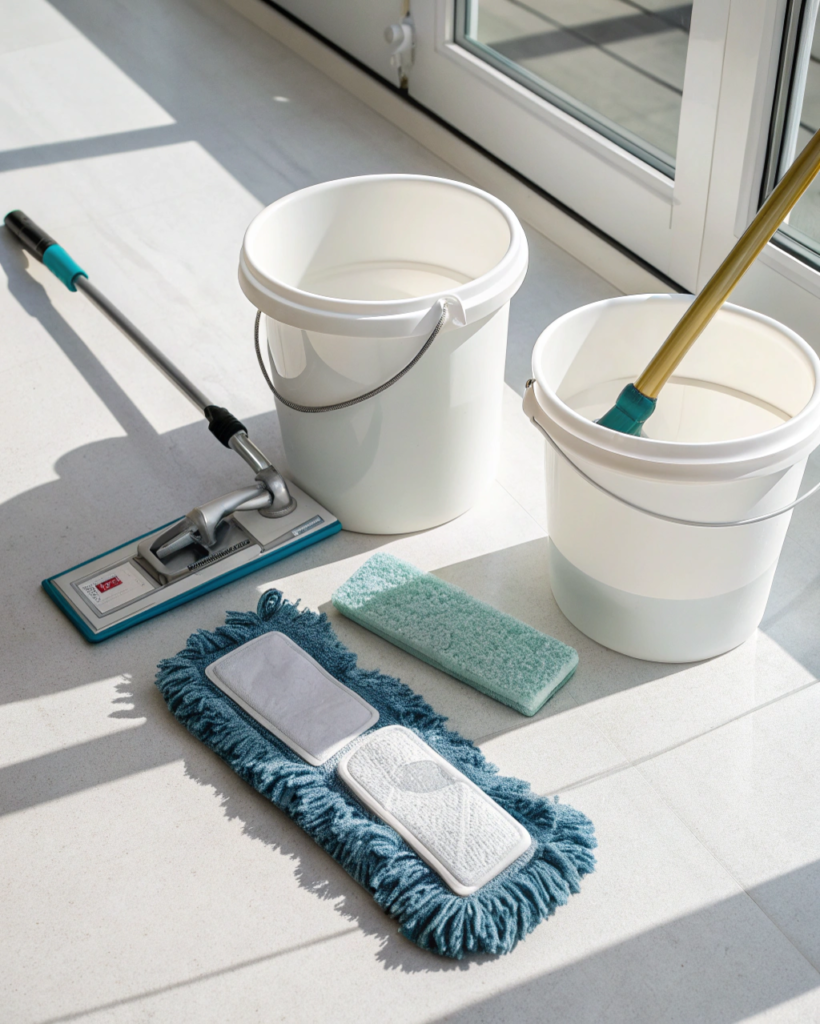
- Microfibre dust mop: The gold standard for daily dry cleaning. Picks up fine particles and grit without scratching. Far superior to a stiff-bristle broom.
- Soft-bristle broom: Acceptable for larger debris like leaves and dirt in garage or outdoor settings, but follow up with a microfibre mop for fine particles.
- Microfibre flat mop: Best for wet cleaning. Doesn’t hold excess water and covers large areas quickly. Avoids the soaking that can occur with traditional string mops.
- Soft nylon scrub pad: For spot-treating stubborn stains. Never use steel wool, green scourer pads, or anything rated “medium” or “heavy” duty.
- Two-bucket system: One bucket for your cleaning solution, one for rinsing your mop. Keeps your cleaning water clean and avoids spreading dirty water back across the floor.
Avoid: Rotary scrubbers with abrasive pads, steel wool, stiff wire brushes, and string mops that hold excess water. These tools damage the topcoat and reduce the life of your floor.
Best Cleaning Products for Epoxy Floors
The single most important product characteristic for epoxy floors is pH neutrality. Acidic cleaners etch the surface and strip the gloss. Alkaline cleaners leave a soap film that builds up over time and makes the floor look dull and streaky. Stay in the neutral zone — a pH of 6 to 8 —, and you’ll protect the coating while still getting a thorough clean.
pH-Neutral Cleaners That Work Best
Dedicated epoxy floor cleaners from brands like Bona, Simple Green diluted appropriately, or commercial epoxy maintenance products from your installer are the safest choice. These are formulated specifically for sealed floor surfaces and rinse clean without leaving residue. If you’re unsure, ask your epoxy installer what they recommend — most will have a preferred product that suits the specific coating they used.
Budget-Friendly Options, Including the Dish Soap Method
Plain warm water handles the majority of everyday cleaning on a well-maintained epoxy floor. When you need a little more cleaning power, a small amount of mild dish soap — roughly half a teaspoon per bucket of warm water — works very effectively. Use the minimum amount needed; too much soap is the most common cause of streaky, filmy-looking epoxy floors. Rinse with clean water after mopping, and the floor will be dry, clear and glossy.
DIY Cleaning Solution Recipe:
4 litres warm water + ½ teaspoon mild dish soap (no citrus, no degreasers) + optional splash of white vinegar for hard water areas. Mix, mop, rinse. Done.
What Cleaning Products to Avoid on Epoxy Floors
The list of products that can damage epoxy coatings is longer than most people realise. Many common household cleaners are formulated for hard surfaces like ceramic tile, which is far more chemically resistant than an epoxy topcoat. Using the wrong product once might not cause visible damage, but repeated use will degrade your floor’s finish faster than normal wear ever would.
Chemicals That Break Down Epoxy Coatings
- Bleach and bleach-based cleaners: Highly alkaline, bleach breaks down the chemical bonds in the epoxy topcoat over time, causing yellowing, dullness, and surface degradation.
- Pine-Sol and citrus-based cleaners: The acidic citrus compounds and petroleum solvents in these products strip the gloss and leave a residue that attracts dirt.
- Ammonia-based cleaners: Commonly found in glass cleaners, ammonia is too harsh for epoxy topcoats and can cause surface hazing with repeated use.
- Vinegar at full concentration: While diluted white vinegar is fine for occasional use, full-strength or frequent vinegar application is mildly acidic enough to dull the finish over time.
- Solvent-based cleaners: Products containing acetone, mineral spirits, or xylene will dissolve the epoxy topcoat and cause permanent damage.
Cleaning Tools That Cause Scratches
Abrasive cleaning tools are just as damaging as harsh chemicals. Steel wool and heavy-duty scouring pads will scratch the topcoat immediately. Even regular green kitchen scourers are too abrasive for epoxy surfaces. Rotary floor scrubbers fitted with abrasive pads will cause widespread micro-scratching that dulls the entire floor. Stick to soft microfibre, foam, or soft nylon for all cleaning and spot treatment. For commercial epoxy floor owners, it’s worth noting that Safe Work Australia’s Code of Practice for Managing the Work Environment also requires that floor surfaces be maintained to eliminate slip hazards — making proper cleaning methods a compliance matter, not just an aesthetic one.
Daily and Weekly Epoxy Floor Cleaning Routine
Consistency is the secret to an epoxy floor that looks great for years. A routine that takes five minutes a day and twenty minutes a week will prevent the kind of buildup that leads to dull surfaces, staining, and the need for professional restoration. The good news is that epoxy is genuinely one of the easiest floors to maintain — the routine is simple and quick once it becomes a habit.
Simple 5-Minute Daily Maintenance Steps
- Run a microfibre dust mop across the entire floor to collect grit, dust, and fine debris.
- Pay extra attention to entry points from the garage or outdoor areas — in Windang, beach sand and salt grit track easily from driveways and patios close to the lake foreshore.
- Spot-wipe any fresh spills immediately with a damp cloth. Fresh spills are always easier to remove than dried ones.
- Check entry mats and shake or vacuum them out — these are your first defence against abrasive particles reaching the floor.
Step-by-Step Weekly Deep Clean Guide
- Start with a thorough dry sweep or dust mop to remove all loose debris before introducing water.
- Mix your cleaning solution — warm water with a small amount of pH-neutral cleaner or half a teaspoon of dish soap per 4 litres.
- Mop in sections using a damp (not wet) microfibre flat mop, working back toward the exit so you don’t walk on cleaned areas.
- Rinse the mop frequently in your clean water bucket to avoid spreading dirty water.
- Follow with a final rinse pass using clean water to remove any detergent residue.
- Allow to air dry or use a clean dry microfibre mop to speed up drying and prevent water marks.
How to Remove Stains from Epoxy Floors
One of the great advantages of epoxy flooring is its resistance to staining — but that doesn’t mean stains are impossible. Acting quickly and using the right approach for each stain type means you’ll almost always get a clean result without damaging the surface.
| Scrubbing wet mud spreads the stain | Best Treatment | What to Avoid |
|---|---|---|
| Oil & grease | Kitty litter to absorb, then dish soap and warm water | Solvent degreasers, acetone |
| Tyre marks & scuffs | Soft nylon pad with diluted dish soap, light circular scrub | Green scourers, abrasive pads |
| Rust stains | Commercial rust remover formulated for sealed surfaces, test first | Acid-based rust removers at full strength |
| Paint & chemical spills | Wipe immediately while wet; dried paint — try plastic scraper then warm soapy water | Paint stripper, acetone, solvents |
| Food & beverage | Warm water and dish soap, wipe with microfibre cloth | Citrus-based cleaners |
| Mud & dirt buildup | Let dry completely, sweep up, then damp mop | Scrubbing wet mud — spreads the stain |
Pro tip: For any stain you’re unsure about, always test your cleaning solution on a small, inconspicuous area first. This is especially important with any product that isn’t specifically formulated for epoxy floors.
How to Restore Shine to Dull Epoxy Floors
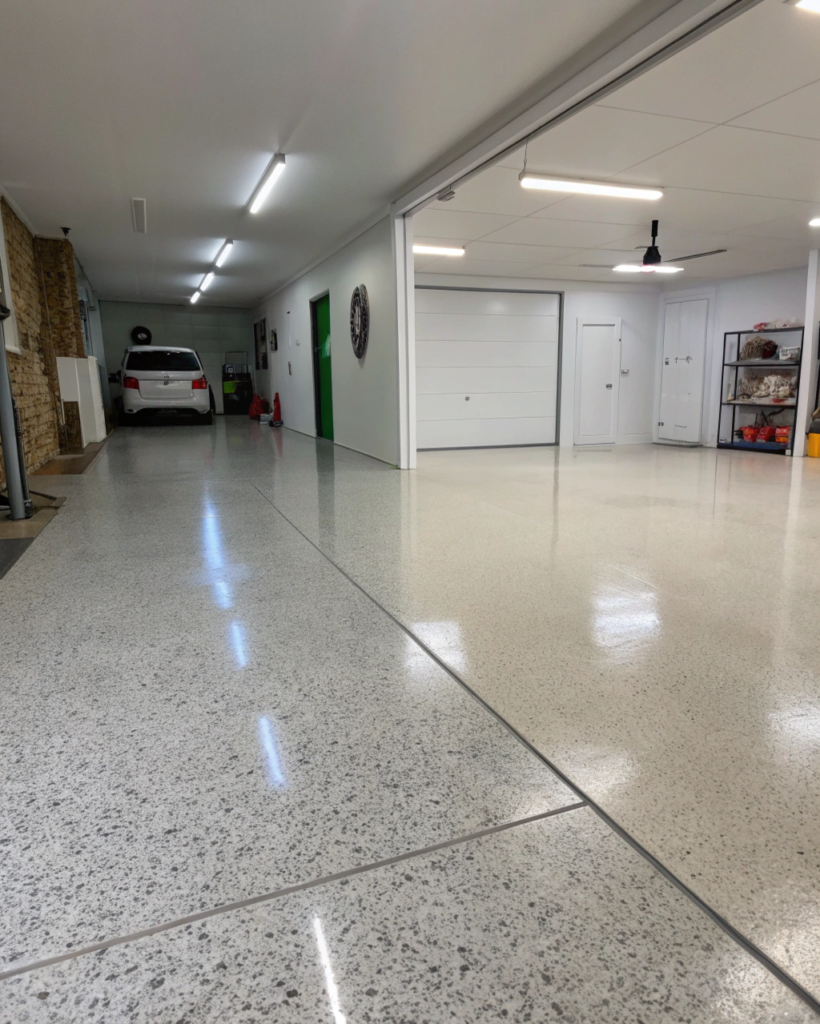
Even well-maintained epoxy floors can lose some of their original gloss over time — particularly in high-traffic areas. Before assuming the floor needs recoating, it’s worth working through a few simple restoration steps. In many cases, dullness is caused by soap residue or fine surface scratching rather than coating failure, and both are very fixable.
Step 1 — Deep clean and strip residue: Mix warm water with a small amount of ammonia-free floor cleaner and mop thoroughly. If soap film has been building up, this cleaning alone can restore significant gloss. Rinse with clean water twice and allow to dry fully.
Step 2 — Apply an epoxy floor polish: Products like Rejuvenate Floor Restorer or epoxy-specific floor polish can restore gloss to a dull surface without recoating. Apply with a clean microfibre mop in thin, even layers and allow to cure. This is suitable for DIY and produces very good results on floors with minor dullness.
Step 3 — Consider professional light polishing: If the surface has fine scratches or the dullness is widespread, a professional can machine polish the floor with a very fine diamond pad to restore clarity and gloss without a full recoat. This is more cost-effective than recoating and is appropriate when the coating itself is still structurally sound.
Step 4 — Full recoat: If the topcoat is worn through, visibly scratched, or peeling, a professional recoat is the right solution. A quality installer can sand back the existing surface and apply a fresh topcoat that restores the floor to like-new condition. Properly maintained epoxy floors may only need this every 5 to 10 years.
Seasonal Epoxy Floor Maintenance Calendar
A seasonal maintenance calendar takes the guesswork out of caring for your floor throughout the year. By scheduling specific tasks at regular intervals, you’ll catch small issues before they become expensive problems and keep your floor consistently looking its best.
Monthly, Quarterly and Annual Tasks
| Frequency | Task |
|---|---|
| Daily | Dust mop, spot clean fresh spills, check entry mats |
| Weekly | Full wet mop with pH-neutral cleaner, rinse pass, dry |
| Monthly | Detail clean edges, corners and under fixed furniture. Inspect for chips or surface damage. Check drainage points and floor joins. |
| Quarterly | Deep clean with slightly stronger pH-neutral solution. Inspect gloss levels. Treat any stains that have developed. Review and refresh entry matting. |
| Annually | Full professional inspection of coating integrity, gloss, adhesion, and any cracking or lifting. Apply floor polish if required. Assess whether any spot recoating is needed. |
Windang homeowner tip: Summer is the ideal time for your annual epoxy inspection — warm temperatures mean faster cure times if any spot repairs or recoating are needed. With Windang’s humid summers and salt-laden air off Lake Illawarra, catching any coating wear early keeps your floor protected through the most demanding months of the year.
Need Help With Your Epoxy Floor in Windang?
Whether you’re looking to maintain an existing epoxy floor or considering a new installation, our team understands the specific demands of living close to Lake Illawarra — where salt air, coastal humidity, and sandy footprints are part of everyday life. We use products and systems built to perform in Windang’s coastal environment, and we’re here to help long after the installation is complete.
Call us today for a free consultation or request a quote online — and let’s keep your Windang floor looking exactly the way it did on day one.

