
Marcus had his Berkeley garage floor coated three years ago. Looked great for about eighteen…
Heavy Duty Epoxy Flooring Warrawong: Built for Manufacturing & Industrial Machinery
Standard concrete floors weren’t built for what Warrawong’s industrial facilities put them through every day.
Forklifts, chemical spills, dropped loads, constant foot traffic — it adds up fast. Cracks appear. Surfaces start dusting. What was once a functional floor becomes a safety headache and a maintenance bill that never seems to end.
Heavy duty epoxy flooring changes that. The right system turns a deteriorating slab into a surface that handles real industrial conditions — without constant repairs or downtime.
This guide covers everything Warrawong facility managers need to know: load capacity, aggregate reinforcement, forklift and crane traffic, impact resistance, and how to choose the right epoxy thickness for your machinery.
Can Epoxy Flooring Handle Heavy Machinery?
Yes — and when it’s specified correctly, it handles it well. Here’s what makes heavy duty epoxy up to the task:
- Compressive strength: Industrial epoxy systems reach 10,000–14,000 PSI, well above standard concrete’s 3,000–4,000 PSI
- Load distribution: Epoxy bonds directly to the concrete slab, spreading heavy point loads from forklifts and cranes across a wider surface area
- Impact resistance: Reinforced systems with quartz or aluminium oxide aggregate handle dropped loads and constant equipment movement
- Chemical resistance: Sealed epoxy surfaces repel oils, hydraulic fluids, and industrial chemicals that eat through standard concrete
- Thickness matters: Heavy machinery environments typically need 3–6mm systems, compared to 1–2mm for light commercial use
For Warrawong manufacturing facilities, a professionally installed heavy duty epoxy system is the proven solution for high-load industrial floors.
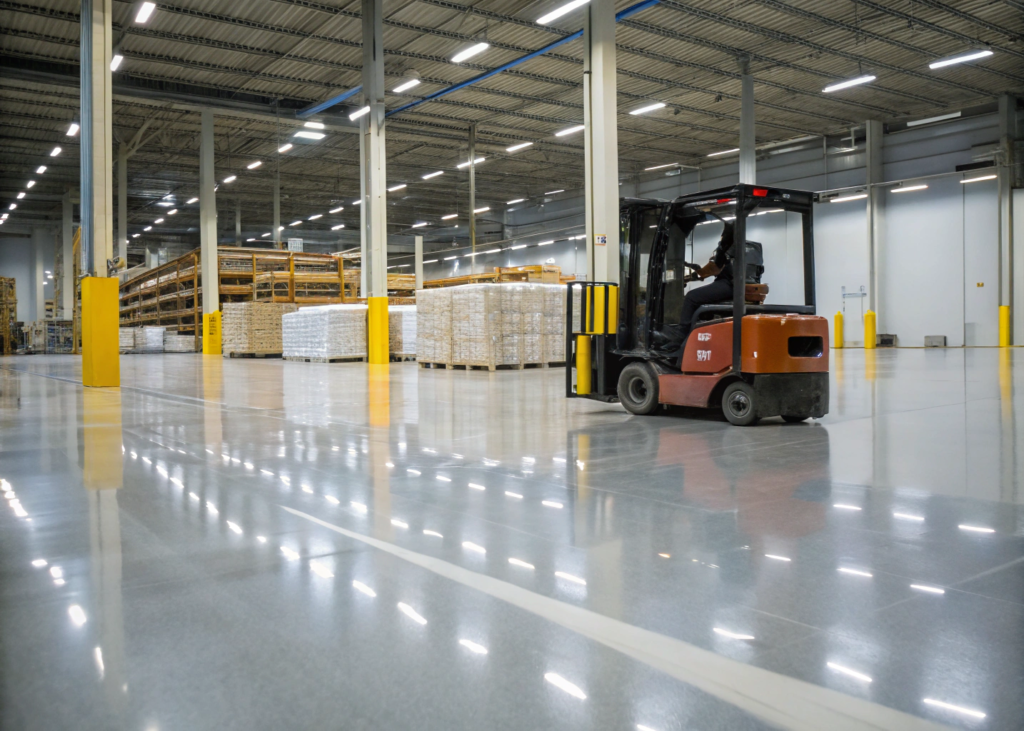
Load-Bearing Capacity of Industrial Epoxy Systems
Understanding PSI Ratings and What They Mean for Your Facility
PSI measures how much compressive force a surface can handle. Standard concrete sits at 3,000–4,000 PSI. Industrial epoxy systems reach 10,000–14,000 PSI. In practical terms, that’s the difference between a floor that holds up for 15 years and one that needs patching inside 18 months.
How Epoxy Bonds to Concrete to Distribute Heavy Loads
Epoxy mechanically bonds into the concrete surface — but only when the slab is properly prepared first. That bond spreads heavy forklift loads across a wider area, reducing stress on the slab. DIY kits skip this step, which is why they fail fast under real industrial conditions.
Real Load Scenarios in Warrawong Manufacturing Environments
Warrawong facilities near the Port Kembla precinct deal with forklifts weighing 3–10 tonnes making dozens of runs daily. Before specifying any system, a good contractor needs your actual load numbers — forklift weight class, traffic frequency, and fixed machinery locations.
Aggregate Reinforcement Options for Heavy Traffic Areas
What Is Aggregate Reinforcement and Why It Matters
Aggregate is a hard material — sand, grit, or granules — broadcast into wet epoxy before it cures. It bonds into the surface, dramatically increasing hardness, slip resistance, and the floor’s ability to absorb impact. Without it, a plain epoxy surface won’t hold up in serious industrial environments.
Types of Aggregate Used in Heavy Duty Systems
| Aggregate Type | Best For |
|---|---|
| Quartz sand | General industrial use, excellent hardness and chemical resistance |
| Aluminium oxide | Wet or oily environments, superior slip resistance |
| Recycled glass | Facilities wanting an eco-friendly option with strong aesthetics |
| Silicon carbide | Extreme hardness for the most demanding industrial applications |
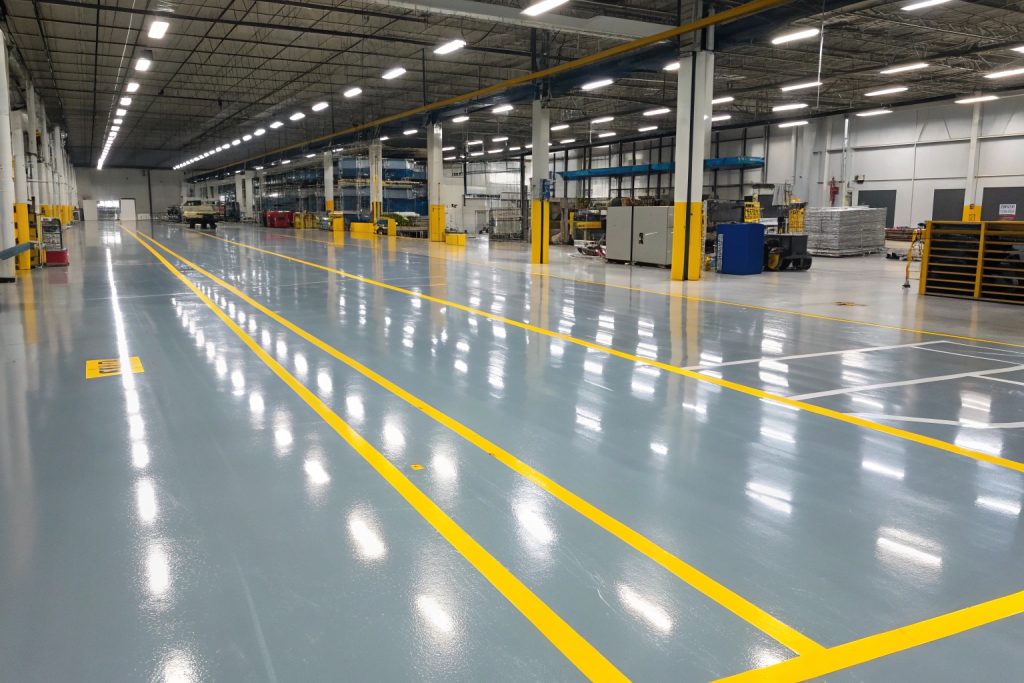
Choosing the Right Aggregate for Your Warrawong Facility
The right aggregate depends on your specific machinery, traffic patterns, and chemical exposure. Warrawong’s coastal humidity and salt air — especially near Port Kembla — also influence the decision. Some aggregates handle moisture exposure better than others, and getting this wrong affects both performance and long-term cost.
Forklift and Crane Traffic Considerations in Flooring Design
How Forklift Traffic Damages Standard Concrete Floors
Forklifts don’t just apply weight — they apply turning force, acceleration, and concentrated point loads through small tyre contact patches. That combination creates shear stress that cracks edges, deteriorates joints, and breaks down surface integrity fast. Ignoring it leads to downtime, safety incidents, and growing compliance issues.
Designing Epoxy Systems Around Your Forklift Fleet
| Forklift Class | Recommended System |
|---|---|
| Up to 3 tonnes | 2–3mm broadcast system |
| 3–10 tonnes | 4–6mm reinforced system |
| 10+ tonnes | 6mm+ mortar system with aggregate |
Electric and LPG forklifts have different tyre compounds that wear floors differently. Turning zones and aisle ends also take more punishment and often need extra reinforcement built into the specification.
Overhead Crane and Heavy Equipment Anchor Points
Crane outrigger points and anchor bolts create concentrated stress zones that plain epoxy can’t handle without specialised detailing. These areas need extra attention during installation — including sealing around penetrations to stop moisture getting in underneath. For Warrawong and Port Kembla heavy manufacturing setups, this step is non-negotiable.
Impact Resistance Testing for Manufacturing Environments
How Impact Resistance Is Measured in Industrial Epoxy Systems
Impact resistance is tested using drop weight standards under AS/NZS testing protocols. There are two separate things being measured — surface hardness and impact absorption — and both matter. A floor can be hard but brittle, which actually makes it more likely to crack under sudden heavy impact.
Common Impact Scenarios in Warrawong Manufacturing Facilities
Dropped tools, raw materials, and components are everyday realities in fabrication environments. Loading docks and pallet drop zones concentrate impact in specific spots. For facilities connected to the steel and heavy manufacturing activity around Port Kembla, an under-specified floor takes damage fast — and repair costs add up quickly.
Epoxy Formulations That Maximise Impact Resistance
Not all epoxy systems absorb impact the same way. Flexible epoxy handles sudden shock better than rigid systems. Polyurethane topcoats add a sacrificial layer that takes the hit before the base coat does. Hybrid systems combining epoxy with polyaspartic or polyurethane finishes give you the best of both — hardness and absorption.
Maintenance Protocols That Preserve Impact Resistance Long Term
High-impact zones need regular inspection. Surface chips should be repaired early — once moisture gets underneath in Warrawong’s coastal humidity, deterioration accelerates quickly. Topcoat reapplication timelines vary by traffic volume, but most heavy manufacturing environments need a scheduled review every 2–3 years.
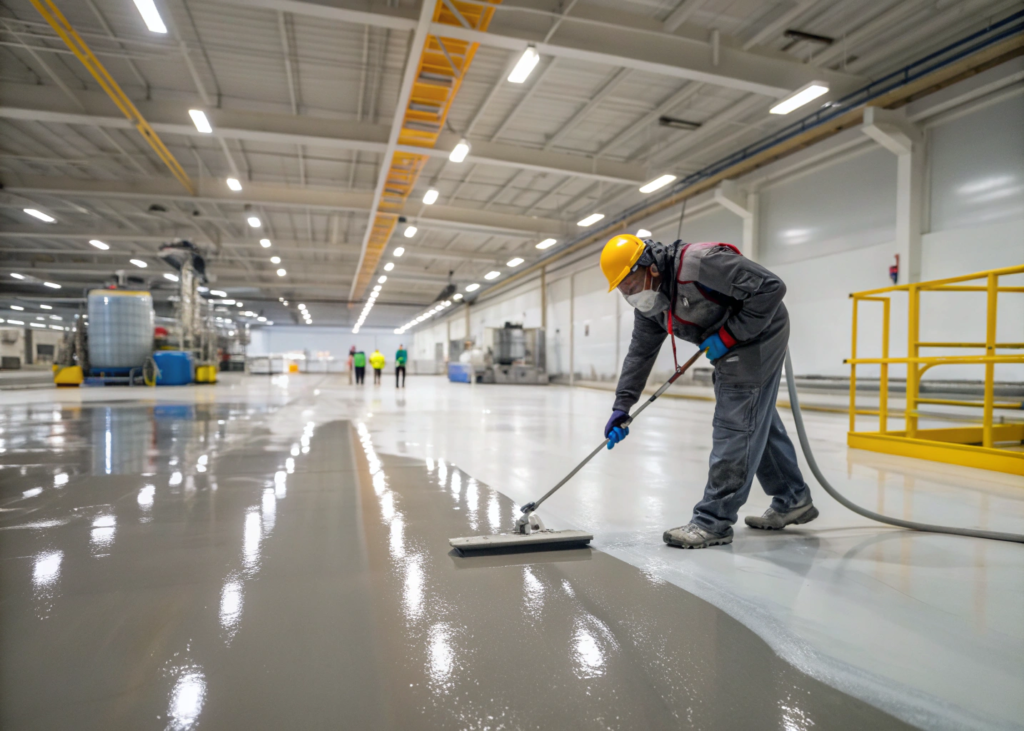
Comparing Epoxy Thickness Requirements for Different Machinery
Why Thickness Is the Most Critical Variable in Heavy Duty Epoxy Specification
Most epoxy systems look similar once installed. The difference is what’s underneath. Under-specified thickness is the number one cause of premature industrial floor failure — and it’s completely avoidable. The right thickness depends on your machinery type, load ratings, and how your facility actually operates day to day.
Thickness Guide by Machinery and Traffic Type
| Traffic Type | Recommended Thickness | System Type |
|---|---|---|
| Foot traffic, trolleys | 1–2mm | Self-levelling |
| Pallet jacks, light forklifts up to 3 tonnes | 2–3mm | Broadcast system |
| Forklifts 3–10 tonnes, heavy equipment | 4–6mm | Reinforced system |
| Cranes, steel processing, heavy industry | 6mm+ | Mortar system with aggregate |
How Substrate Condition Affects Thickness Requirements
A damaged or contaminated slab needs extra preparation before any epoxy goes down. Warrawong’s coastal environment also means moisture vapour transmission through slabs is a real consideration — one that affects which system gets specified. Skipping proper substrate assessment is how delamination happens.
Getting the Specification Right for Your Warrawong Facility
A site inspection is non-negotiable before any quote. Ask your contractor how they assess substrate condition, what moisture testing they do, and how they determine thickness. Red flags include contractors who quote without visiting the site or who offer one system regardless of your machinery. Local Warrawong and Illawarra contractors who know regional conditions will always give you a more accurate specification than someone flying in from interstate.
Get the Right System for Your Warrawong Facility
Choosing the wrong epoxy system for your machinery isn’t just a wasted investment — it’s a safety and compliance risk that compounds over time. The right specification, installed correctly from day one, is what separates a floor that lasts 15 years from one that’s failing inside two.
At Local Epoxy Flooring Wollongong, we work with Warrawong and Port Kembla facilities every day. We know the substrate conditions, the coastal humidity challenges, and what heavy industrial operations in this part of the Illawarra actually demand from a floor system.
Here’s how it works:
- Book your free site inspection — we assess your slab condition, moisture levels, and machinery requirements
- Receive your detailed written specification and quote — no guesswork, no one-size-fits-all systems
- We handle everything — from surface preparation through to final coat
Proudly servicing Warrawong, Port Kembla, and the wider Illawarra region.
Call us today: 02 4202 6324

