
Marcus had his Berkeley garage floor coated three years ago. Looked great for about eighteen…
Garage Epoxy Flooring Cost Berkeley NSW
Craig had done his homework. Weeks of YouTube videos, three quotes printed out and folded in his back pocket, a spreadsheet his wife thought was overkill. He knew what he wanted — a proper epoxy floor for his Berkeley garage — he just couldn’t work out if the numbers actually made sense. Was he about to spend $4,000 on something that’d chip in two summers? Or was he leaving money on the table by not doing it sooner?
If that sounds familiar, you’re not alone. Berkeley homeowners ask about garage epoxy costs more than almost any other flooring question — and for good reason. It’s not a small spend. But once you break down what you’re actually getting, most people find the decision a lot easier than they expected.
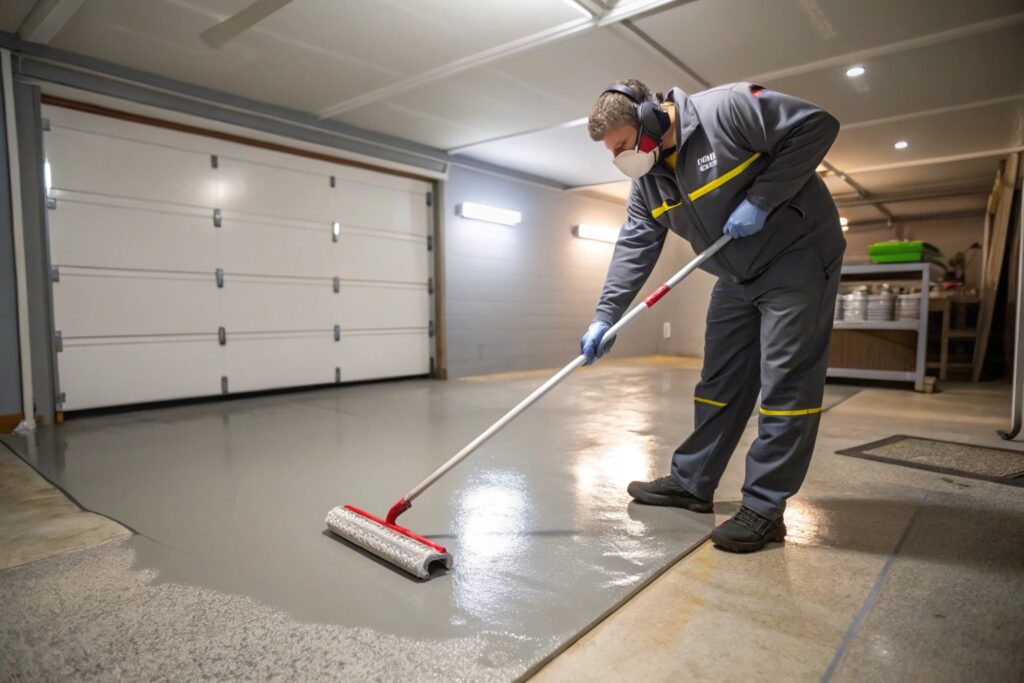
Breaking Down Berkeley Garage Epoxy Costs
The honest answer is that epoxy flooring in Berkeley NSW doesn’t have a single price — it has a range, and where you land in that range depends on a few key variables.
For a standard single garage (around 20–25m²), most Berkeley homeowners are looking at somewhere between $1,500 and $3,000 for a quality professional installation. A double garage (40–55m²) typically runs $2,800 to $5,500 depending on the system chosen and the condition of the existing slab.
Here’s what drives that variation:
- Surface preparation — If the concrete has cracks, moisture damage, or an existing coating that needs grinding off, that adds labour time and cost. Skipping this step is how cheap jobs fail fast.
- Epoxy system type — A single-broadcast flake system costs less than a multi-layer metallic or quartz finish. Both are durable, but they serve different purposes.
- Coating thickness — Thicker builds with higher solid content cost more upfront but last significantly longer — relevant in Berkeley where coastal humidity can stress thinner coatings.
- Add-ons — Anti-slip additives, cove bases, moisture-barrier primers. These aren’t extras for the sake of it. In a suburb sitting close to Lake Illawarra, a moisture barrier isn’t optional — it’s what separates a floor that lasts from one that bubbles and peels inside three years.
A rough breakdown of what you’re paying for:
| Component | Approx. Cost (Double Garage) |
| Surface grinding & prep | $400 – $900 |
| Moisture barrier primer | $200 – $500 |
| Epoxy base coat | $600 – $1,200 |
| Flake broadcast & top coat | $800 – $1,500 |
| Labour | Included above |
These aren’t quotes — they’re ballpark figures to help you read a quote when one lands in your inbox.
ROI: Property Value Increase from Garage Flooring
Here’s the part Craig didn’t have in his spreadsheet — what the floor gives back.
Real estate agents working the Berkeley and broader Illawarra market consistently flag garages as an undervalued selling point. A clean, sealed, epoxy-coated garage reads as a finished, maintained space. An oil-stained, cracked concrete slab reads as a problem the buyer will have to deal with. That perception gap translates directly into offers.
The Housing Industry Association — Australia’s peak body for residential building — consistently highlights garage upgrades as one of the higher-return home improvement categories for resale. And the numbers back that up locally. Industry data and agent feedback suggest a well-finished garage can contribute anywhere from $5,000 to $15,000 in perceived property value — often more than the cost of the floor itself. For a $900,000 Berkeley home, that’s not a renovation, that’s a return.
Beyond resale, there’s the day-to-day value that doesn’t show up on a spreadsheet:
- Durability — A professionally installed epoxy floor carries a typical lifespan of 10–20 years with basic maintenance. That’s one investment over two decades.
- Reduced maintenance costs — Sealed concrete doesn’t absorb oil, moisture, or salt. You’re not resealing, patching, or replacing every few years.
- Usable space — A finished garage becomes a workshop, gym, or storage area people actually want to use. That has lifestyle value that’s hard to put a number on but easy to feel.
For Berkeley homeowners close to the lake and exposed to that persistent coastal humidity, the protective function of epoxy pays for itself quietly — every season it keeps moisture from working its way into the slab beneath your feet.
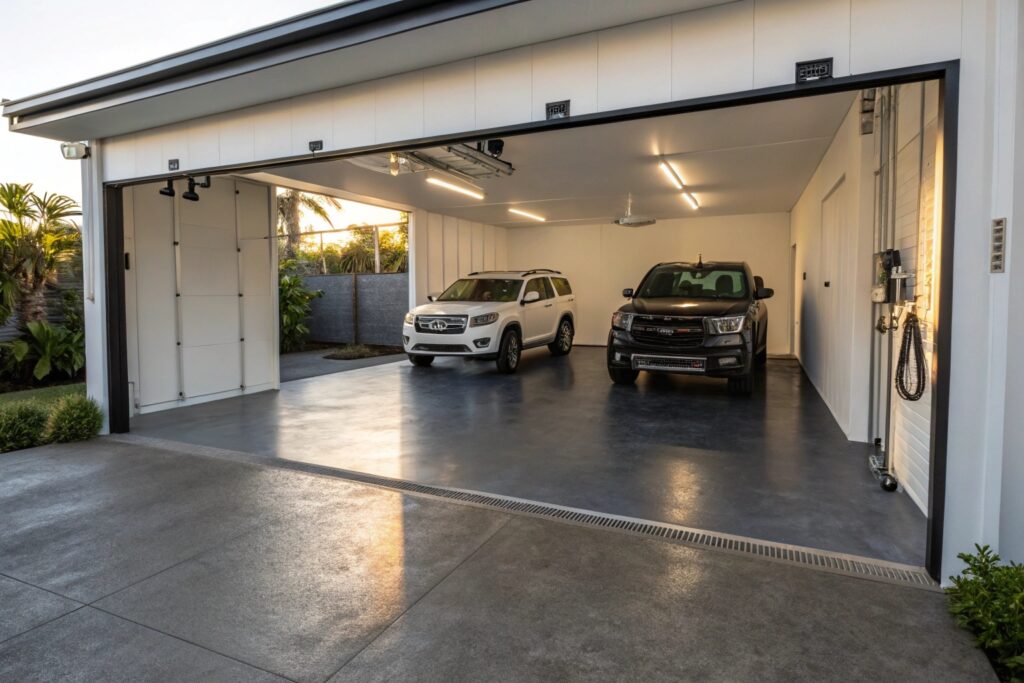
Comparing Costs: Epoxy vs Other Flooring Options
It’s worth putting epoxy next to the alternatives — not to make it look good by comparison, but because the numbers genuinely tell a clear story.
| Flooring Option | Upfront Cost (Double Garage) | Lifespan | Maintenance |
| Professional epoxy | $2,800 – $5,500 | 10–20 years | Low |
| DIY epoxy kit | $300 – $600 | 1–3 years | High |
| Concrete sealer | $500 – $1,200 | 2–5 years | Medium |
| Rubber tile flooring | $1,500 – $3,000 | 5–10 years | Medium |
| Bare concrete (untreated) | $0 | Ongoing damage | Very high |
The DIY kit column is worth pausing on. A $400 hardware store epoxy kit looks like a bargain until it starts peeling at the 18-month mark — which, in Berkeley’s humidity, it often does. The resins in consumer kits are thinner, the prep instructions get skipped, and the result is a floor that costs you twice: once to install, once to redo properly.
Professional epoxy uses higher solid-content resins, proper moisture testing, mechanical grinding for adhesion, and layered application. That’s not marketing language — that’s why the lifespan numbers are so different.
Concrete sealer is the other common comparison. It protects to a point, but it doesn’t resurface, doesn’t hide damage, and doesn’t give you the hard, cleanable finish that epoxy does. For a garage seeing regular vehicle traffic and coastal air, sealer alone is a short-term answer to a long-term problem.
Hidden Costs of Delaying Garage Floor Protection
This is the section most flooring articles skip. Because the real cost of epoxy flooring in Berkeley isn’t just what you pay — it’s what you pay if you wait.
Concrete is porous. In a suburb sitting alongside Lake Illawarra, that matters more than most places. Moisture works into unsealed slabs slowly, quietly, and without asking permission. By the time you see the damage — efflorescence blooming up through the surface, cracks widening, that damp smell that won’t leave — the slab has already been compromised for a while.
Here’s what delayed protection can actually cost Berkeley homeowners:
- Concrete repair before coating — Minor crack injection and patching runs $300–$800. Significant slab damage can push repair costs to $2,000 or more before a single drop of epoxy goes down.
- Moisture remediation — If water has been sitting in the slab, a standard primer won’t cut it. You’re looking at specialist moisture barrier systems and potentially extended prep time.
- Replacement, not resurfacing — In worst-case scenarios, damaged slabs need sections re-poured. That’s a concreting job on top of a flooring job, and the bill reflects it.
- Vehicle and equipment damage — Oil and fluid spills on unsealed concrete don’t stay on the surface. They absorb in, they spread, and they eventually become a contamination issue if you’re ever looking to sell.
The concrete under Craig’s garage had a hairline crack running from the roller door to the back wall. His installer caught it during the quote. Six more months and that crack would’ve needed filling before any coating could go on — adding cost before the job even started.
Waiting doesn’t save money. It just moves the bill — and usually makes it bigger.
Financing Options for Berkeley Homeowners
The upfront cost is the part that makes people pause. A $3,000–$5,500 job isn’t small, and most households aren’t sitting on a dedicated garage floor budget. But there are a few ways Berkeley homeowners are actually managing this spend.
Pay upfront with a written quote The most straightforward approach. NSW Fair Trading recommends getting at least three written quotes and comparing them line by line before signing anything — solid advice for any flooring job. Reputable local installers will ask for a deposit, not full payment upfront.
Home improvement personal loans Several Australian lenders offer unsecured personal loans specifically for home improvement. Rates vary, but for a $4,000 job spread over two years, monthly repayments are often manageable enough that homeowners treat it like a utility bill rather than a lump sum.
Buy now, pay later (BNPL) through your installer Some epoxy flooring businesses in the Illawarra region have arrangements with BNPL providers. It’s worth asking directly during the quote process. Not every operator offers it, but it’s becoming more common for jobs in the $2,000–$6,000 range.
Redraw from an offset account or home loan For homeowners with equity, pulling a few thousand from a redraw facility is often the lowest-interest option available. Given the property value argument made earlier, some people frame it as exactly what offset accounts are designed for.
One thing worth keeping in mind — whatever financing path you choose, get the scope of work in writing before any money changes hands. That means prep method, coating system, number of layers, and warranty terms. A detailed quote protects both sides.
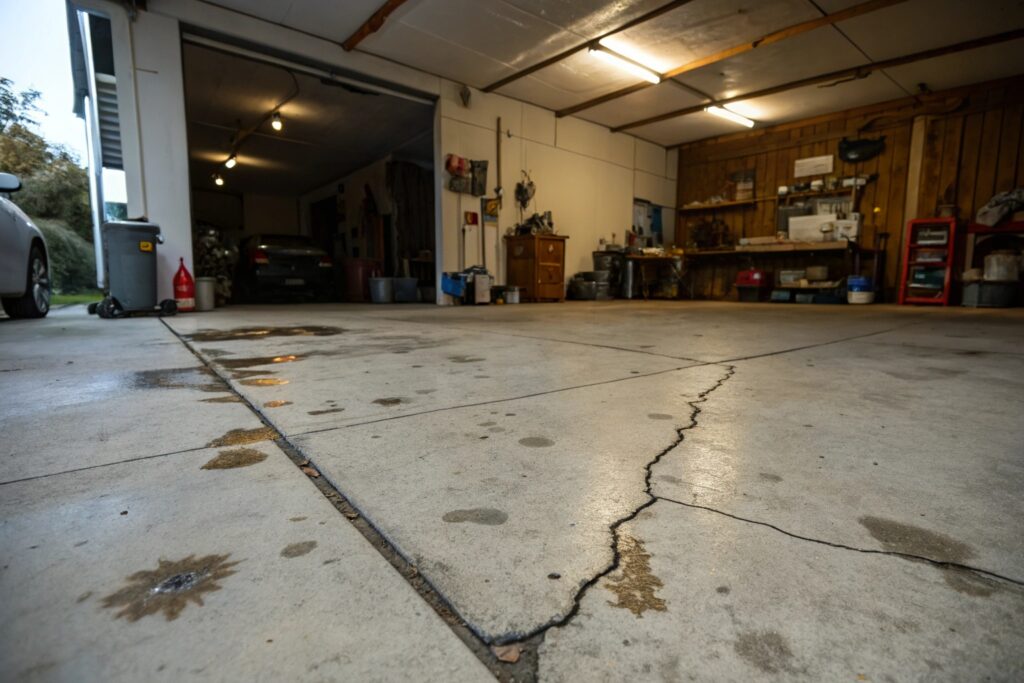
Cost Per Square Meter: Berkeley Market Analysis
If you want a quick way to sense-check a quote, the per square metre figure is your starting point.
In the current Berkeley and broader Illawarra market, professional epoxy flooring typically lands in this range:
| System Type | Cost Per m² |
| Basic single-coat epoxy | $40 – $60/m² |
| Flake broadcast system | $60 – $90/m² |
| Quartz or mortar system | $80 – $120/m² |
| Metallic or decorative epoxy | $100 – $150/m² |
A standard double garage at 50m² with a mid-range flake system puts you around $3,500–$4,500 all in — which lines up with what most Berkeley homeowners are actually spending when they go with a reputable local installer.
If a quote comes in well below the lower end of these ranges, that’s a question worth asking about. It usually means thinner coatings, skipped prep steps, or cheaper resins — the same combination that produces the floors that fail in eighteen months and end up on renovation forums.
If a quote comes in above the top end, make sure you understand exactly what’s driving it. Extra layers, specialist moisture systems, and decorative finishes all justify higher costs. A vague invoice doesn’t.
The per square metre figure also helps when comparing quotes side by side. Two quotes for a 48m² garage might look like a $900 difference — but if one includes mechanical grinding and a moisture barrier primer and the other doesn’t, they’re not the same job at different prices. They’re different jobs entirely.
Get a Quote That Makes Sense for Your Garage
If you’ve read this far, you’re clearly not the type to make a rushed decision — and that’s exactly the right approach for a job like this. Berkeley garages deal with enough between the lake air, the humidity, and daily vehicle traffic. The floor underneath deserves more than a cheap fix.
Get in touch for an obligation-free quote. We’ll assess your slab, walk you through the right system for your situation, and give you a clear, itemised price — no vague estimates, no surprises on the day.
Because the best time to protect your garage floor was five years ago. The next best time is before next winter.


Comments (0)