
Marcus had his Berkeley garage floor coated three years ago. Looked great for about eighteen…
Berkeley
Garage Epoxy Floor Maintenance Berkeley: The Complete Year-Round Care Guide
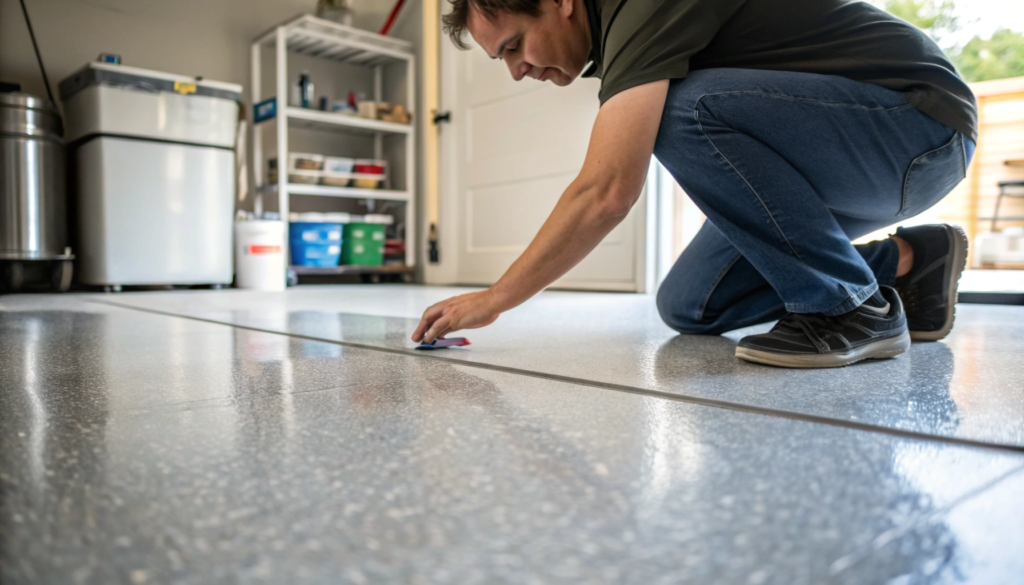
Your Berkeley garage epoxy floor is one of the smartest investments you’ve made in your home — and with the right maintenance routine, it can stay looking flawless for decades. The Illawarra coast’s marine layer, salt air drifting in from Lake Illawarra and the coast, and year-round moisture create specific demands on epoxy coatings that generic care guides simply don’t account for. The good news is that epoxy is one of the lowest-maintenance flooring systems available, and keeping it in peak condition is straightforward once you know what Berkeley’s climate actually requires.
In this guide, you’ll find a practical, season-by-season approach to garage epoxy floor maintenance in Berkeley — covering daily cleaning habits, the right products to use, how to protect your coating from moisture and chemical damage, and clear signs that it’s time to call in a professional.
How Do You Maintain an Epoxy Garage Floor?
Maintaining an epoxy garage floor requires a simple routine built around gentle cleaning, moisture control, and periodic inspection. In Berkeley’s Illawarra coastal climate, where marine layer and salt air accelerate surface wear, consistent care is especially important.
Basic epoxy garage floor maintenance steps:
- Sweep or dust mop weekly to remove grit and debris
- Mop monthly using a pH-neutral cleaner diluted in warm water
- Wipe chemical spills immediately to prevent surface etching
- Inspect the coating every six months for chips, cracks, or dull patches
- Reapply a topcoat sealer every 3–5 years, depending on traffic and wear
- Avoid harsh cleaners such as bleach, citrus-based degreasers, or soap-based products
Daily and Weekly Maintenance for Your Berkeley Garage Floor
The most common misconception about epoxy flooring is that it requires constant upkeep. It doesn’t. What it does require is a consistent light routine — and in Berkeley’s environment, that consistency is what separates floors that look great at the ten-year mark from ones that start fading and chipping within three.
A soft-bristle broom or microfibre dust mop once a week is all it takes to stay ahead of surface damage. Grit and fine sand are the primary culprits behind micro-scratches on epoxy, and Berkeley’s year-round foot traffic from outdoor activities means particles accumulate faster than most homeowners expect. The sweep takes less than five minutes and does more to preserve your floor’s finish than any product you can buy.
For monthly mopping, use a pH-neutral cleaner diluted in warm water. Apply it with a lightly damp mop — not a saturated one. Standing water allowed to sit near expansion joints or perimeter edges can work its way beneath the coating over time, particularly in older garages where original slab prep may not have included a full moisture barrier. Less is genuinely more when it comes to water on an epoxy floor.
Spills should be wiped immediately rather than left to sit. Motor oil, transmission fluid, and brake fluid are manageable if addressed quickly; left for hours, they can begin to etch or discolour the topcoat. Keep a roll of paper towels or a designated rag within reach in the garage for this reason.
Seasonal Care in Berkeley’s Coastal Environment
Berkeley’s climate is shaped by its position on the Illawarra coast, south of Wollongong. The marine layer rolls in reliably from the Tasman Sea, winters bring sustained rainfall, and summers deliver dry heat broken by cool, foggy mornings. Each season creates different pressures on your garage floor coating — and a seasonal approach to care is far more effective than a one-size-fits-all routine.

According to the Bureau of Meteorology climate data for the Illawarra region, Berkeley receives the majority of its annual rainfall between November and March, with December and January seeing the highest precipitation. During this wet season, moisture tracking is the dominant risk. Vehicles bring in rain, mud, and road salts; foot traffic carries in wet debris; and the garage environment itself stays humid for days at a time. Heavy-duty entry mats at the garage door threshold make a measurable difference, intercepting the bulk of what gets tracked in before it reaches the floor surface. Check drainage channels and expansion joints monthly during this period, and address any water pooling near wall bases promptly.
The dry season from April through October brings a different challenge: UV exposure. Garages with south or west-facing doors that stay open during the day expose the epoxy topcoat to sustained sunlight, which can cause fading and surface oxidation in coatings that aren’t UV-stabilised. This period is also the ideal window for any topcoat reapplication or minor repairs — dry conditions allow proper curing and adhesion that wet-season work simply can’t match.
Year-round, Berkeley’s proximity to Lake Illawarra and the Tasman Sea means salt air is an ongoing factor regardless of season. Salt particles are microscopic and settle into hairline imperfections in the topcoat, gradually accelerating oxidation and dulling the finish. For homes within a couple of kilometres of the waterfront, wiping down floor edges and skirting areas monthly — in addition to the regular sweep routine — provides meaningful additional protection. An annual professional inspection is a worthwhile investment at this distance from the coast.
Cleaning Products That Are Safe for Epoxy Floors — and Those That Aren’t
Walk into any hardware store, and you’ll find no shortage of floor cleaning products. The challenge is that most of them are formulated for tile, timber, or bare concrete, and several will actively damage an epoxy coating with repeated use. Knowing what to reach for and what to avoid is one of the most practical things you can do to extend the life of your Berkeley garage floor.
| Product Type | Safe for Epoxy? | Notes |
|---|---|---|
| pH-neutral floor cleaner (diluted) | ✅ Yes | Best everyday option — won’t strip topcoat |
| Warm water alone | ✅ Yes | Sufficient for light weekly mopping |
| Simple Green (diluted, ammonia-free formula) | ✅ Yes | Check label — avoid versions with citrus additives |
| Bleach or chlorine-based cleaners | ❌ No | Strips topcoat with repeated use |
| Citrus or vinegar-based degreasers | ❌ No | Acidic — causes micro-etching over time |
| Soap-based floor cleaners | ❌ No | Leaves residue that attracts grit and dulls finish |
| Steel wool or abrasive scrubbing pads | ❌ No | Scratches the topcoat permanently |
The safest default for any Berkeley homeowner is a pH-neutral cleaner from a flooring supply store paired with a microfibre mop head. When in doubt about a product, test it on a small, inconspicuous area and wait 24 hours before using it across the full floor surface.
Preventing Damage from Salt Air and Illawarra Coast Moisture
Salt air is the silent antagonist of any outdoor or semi-outdoor surface in Berkeley. Most homeowners understand that coastal environments are harder on materials — but the specific mechanism by which salt air degrades epoxy coatings is worth understanding, because it shapes how you protect against it.
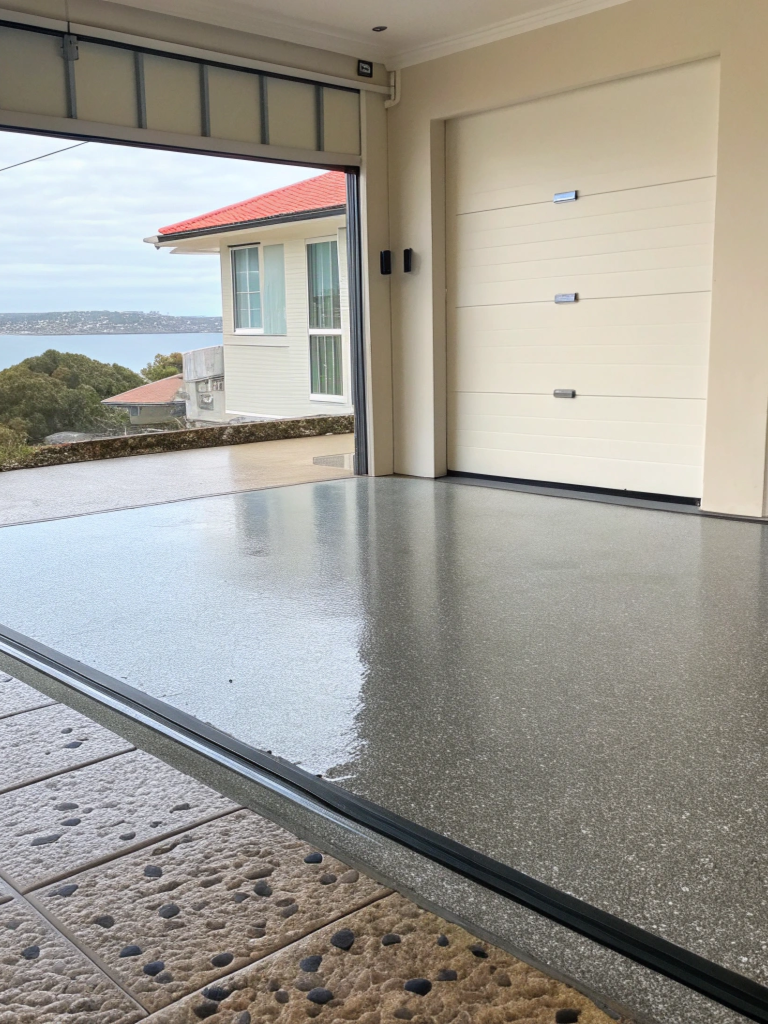
Microscopic salt particles carried in the marine layer settle on the floor surface and accumulate in hairline imperfections in the topcoat. Over time, these particles draw moisture, accelerating oxidation and causing the coating to dull and eventually degrade from the surface down. The Australasian Corrosion Association’s research consistently identifies chloride ion ingress — the mechanism by which salt penetrates coatings — as one of the primary accelerators of protective coating failure in coastal environments. The same principles that apply to industrial coatings apply at a smaller scale to residential epoxy floors.
The most effective protection against salt air is a well-maintained topcoat with no surface imperfections for particles to accumulate in. This is why the sweep and monthly wipe-down routine matters so much in Berkeley specifically — you’re not just cleaning for aesthetics, you’re removing the material that causes long-term degradation.
Moisture is managed through a combination of good habits and smart mat placement. Avoid rubber-backed mats placed directly on the epoxy surface for extended periods — they trap moisture against the coating and can cause yellowing or adhesion loss beneath the mat. Purpose-designed garage floor mats with a breathable backing are the better option. Drip trays beneath vehicles provide an easy solution for oil and fluid management without requiring you to change anything else about how you use the space.
If you notice white haze developing near the perimeter of the floor — particularly along the wall edges — this is likely efflorescence, a sign that moisture is migrating through the slab from beneath. This is not a cleaning issue; it requires professional assessment to determine whether the moisture barrier installed under the coating remains intact.
When to Call a Professional for Epoxy Floor Maintenance
Most of what this guide covers is well within the capability of any homeowner. But there are specific conditions where continuing to clean and maintain a floor yourself won’t solve the underlying problem — and where calling a professional early saves considerably more than it costs.
The warning signs worth acting on promptly include:
- Peeling or delamination — sections of the coating lifting away from the substrate, often starting at edges or where surface prep was insufficient at installation
- Bubbling or blistering — typically a moisture-related issue, indicating vapour pressure building beneath the coating
- Deep scratches exposing bare concrete — these create pathways for moisture and contaminants to work beneath the surrounding coating
- Widespread dullness that cleaning won’t resolve — a signal that the topcoat has worn through and the underlying epoxy is now exposed
- Persistent white haze or efflorescence — as discussed above, a moisture intrusion issue that needs professional diagnosis
A reputable Berkeley epoxy contractor will assess the substrate moisture levels, the adhesion integrity of the existing coating, and the condition of the topcoat before recommending any remediation. Catching issues at the peeling or bubbling stage — before they spread — is almost always repairable with a partial recoat. Leaving them until full delamination has occurred typically means a complete strip and reapplication.
The questions worth asking any contractor before booking include: what moisture testing do they perform before applying any new coating, what warranty do they offer on remediation work, and whether they have specific experience with Illawarra coastal conditions. A contractor who can answer these specifically — not generically — is one worth trusting with your floor.
Extending Your Berkeley Garage Floor’s Lifespan
A well-installed, properly maintained epoxy garage floor has a realistic lifespan of 15 to 20 years in residential use. In Berkeley’s coastal environment, reaching that upper range comes down to two things: a consistent maintenance routine and a proactive approach to topcoat reapplication before problems develop rather than after.
The standard recommendation for topcoat reapplication is every three to five years, depending on traffic volume and environmental exposure. For Berkeley homes — particularly those within close range of the coast, or garages used as active workshops rather than just parking — the three-year end of that range is the more appropriate benchmark. The topcoat is the sacrificial layer of the system: its job is to take the wear so the epoxy beneath doesn’t have to. Refreshing it on schedule is the single highest-value maintenance decision you can make.
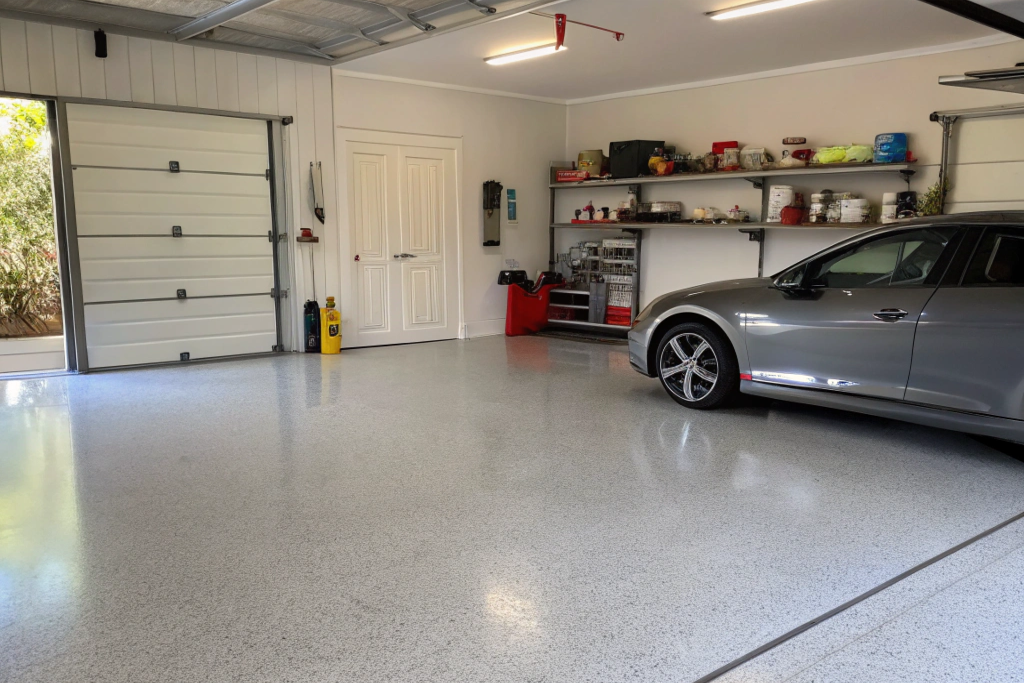
The signs that your topcoat is ready for a refresh rather than a full recoat are: surface dullness that persists after cleaning, minor scratching visible in raking light, and a slight roughness to the touch that wasn’t there when the floor was new. These are topcoat-level symptoms. Full recoating becomes necessary when the epoxy layer itself shows adhesion failure, deep substrate exposure, or moisture-related delamination.
Two upgrades worth considering at the topcoat reapplication stage are anti-slip aggregate — particularly valuable in Berkeley’s wet-season conditions — and a UV-resistant topcoat formulation if your garage door faces south or west and stays open during daylight hours. Neither is expensive relative to the total reapplication cost, and both meaningfully extend performance in Berkeley’s specific environment.
Finally, the most underrated tool for floor longevity is a simple maintenance calendar. Set a recurring reminder for your monthly mop, your six-monthly inspection, and your annual professional check (if you’re in a high-exposure coastal zone). The homeowners who get twenty years from their epoxy floors aren’t doing anything dramatic — they’re just consistent.
Get Expert Epoxy Floor Maintenance Help in Berkeley
If your Berkeley garage floor needs a professional inspection, topcoat refresh, or full restoration — or if you’re considering epoxy for the first time and want to understand what proper installation and ongoing care looks like — our team is here to help. We work exclusively across the Illawarra region and understand the specific demands that Berkeley’s coastal climate places on epoxy coatings.
Contact us today for an obligation-free assessment:
- 📍 Address: 317 Keira St, Wollongong NSW 2500
- 📞 Phone: 02 4202 6324
- 🌐 Website: epoxyflooringwollongong.com
- 📍 Find us on Google Maps
We offer free quotes, honest assessments, and the kind of local knowledge that only comes from years of working in the region. Reach out today — and let’s make sure your epoxy floor is protected for everything the local climate can throw at it.


Comments (0)