
Marcus had his Berkeley garage floor coated three years ago. Looked great for about eighteen…
Heavy Duty Epoxy Flooring Cringila – Forklift Traffic Solutions
In Cringila, where the manufacturing sector runs hard and the machinery runs harder, a bad floor isn’t just an eyesore — it’s a liability. I remember standing in a workshop just off Cringila’s industrial strip watching a forklift operator navigate around a section of cracked concrete like it was an obstacle course. The supervisor told me they’d been “managing” that floor for three years. Managing. That word stuck with me, because no business should be managing its floor — it should be working off it.
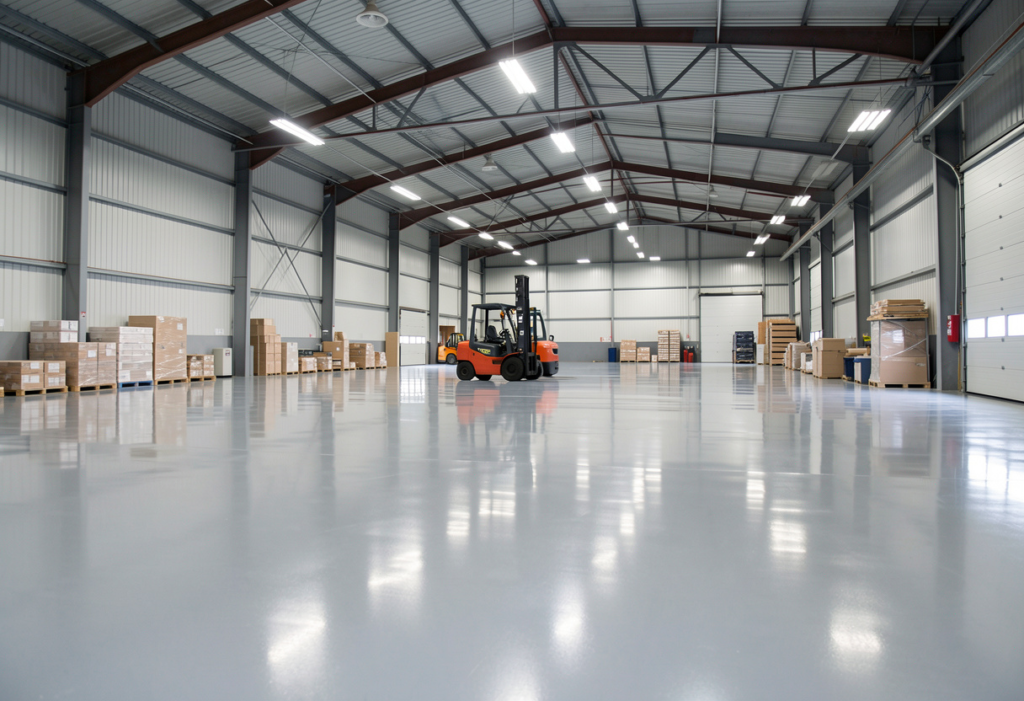
The question we hear more than almost any other from Cringila facility managers is some version of: “Can epoxy really hold up under our machinery?” It’s a fair question. The machinery running through Wollongong’s industrial zones — forklifts, pallet jacks, scissor lifts, heavy trolleys — puts floors through punishment that domestic or even light commercial products simply weren’t built for. And the concrete underneath most of these facilities, laid down decades ago, wasn’t exactly poured with modern load expectations in mind.
Heavy duty epoxy flooring in Cringila has to do a lot of things at once. It has to resist impact. It has to handle point loads from forklift tyres without cracking. It has to stay bonded to a substrate that might have moisture moving through it from the ground. And it has to do all of that while staying safe, compliant, and not turning into a maintenance nightmare six months down the track.
This article walks through exactly what that looks like — from the load specs that actually matter, to how a floor gets built to survive the kind of traffic Cringila’s manufacturing operations throw at it every single day.
Load Bearing Requirements for Industrial Epoxy Floors
Here’s something that surprises a lot of facility managers when they first start looking at epoxy: not all epoxy systems are rated the same, and the difference between a standard commercial coating and a genuinely heavy duty industrial system isn’t just thickness — it’s the entire engineering approach.
Understanding Point Pressure from Forklifts
A standard counterbalance forklift carrying a full load can exert point pressures of anywhere between 150 and 300 kilograms per square centimetre, depending on the tyre configuration and the load being carried. When you factor in dynamic loads — the additional force generated when a forklift accelerates, brakes, or turns — those numbers climb even higher. A floor that’s only been assessed for static loads is going to show stress fractures within months in a real operating environment.
Load Bearing Reference Table
For Cringila facilities, the load bearing requirements we’re typically working to include:
| Application | Minimum Compressive Strength | Recommended System |
| Pallet jack traffic | 25 MPa substrate | 2mm broadcast system |
| Standard forklifts | 30 MPa substrate | 3-4mm reinforced system |
| Heavy counterbalance | 35+ MPa substrate | 4-6mm quartz broadcast |
| Crane outrigger zones | Engineer-specified | Custom build-up system |
Why the Slab Matters as Much as the Coating
The epoxy coating itself contributes to load distribution, but it’s working in partnership with the concrete underneath. If the slab can’t carry the load, the coating won’t save it. That’s why any honest conversation about heavy duty epoxy starts with the substrate, not the product.
Forklift Traffic Patterns in Cringila Manufacturing
One of the most common mistakes in industrial flooring is treating the entire floor the same way. But anyone who’s spent time in a Cringila manufacturing or warehousing facility knows the floor doesn’t wear evenly — it wears in very specific patterns.
The Zones That Always Fail First
Turning zones are always the first to go. When a forklift pivots — especially a reach truck or a counterbalance with solid tyres — the lateral shear force on that spot is massive. It’s essentially a grinding motion, and it’s relentless. Loading dock approaches are another critical zone, where heavy loads combine with the dynamic forces of deceleration. Then there are the long straight runs down racking aisles, which create wear channels over time from the consistent tyre path.
Designing Around Traffic Patterns
Understanding those patterns before installation means the flooring system can be designed around them. Higher build thickness in turning zones. Additional aggregate broadcast in dock approach areas for grip and impact resistance. Potentially different surface profiles in pedestrian crossover zones for safety compliance.
Why Traffic Mapping Is Worth the Time
This kind of traffic mapping isn’t complicated — it takes maybe an hour to walk a facility properly and mark the zones — but it makes an enormous difference to how long the floor performs before it needs attention.
Substrate Preparation for Heavy Load Applications
If there’s one thing that separates a floor that lasts fifteen years from one that fails in eighteen months, it’s what happens before the first drop of epoxy hits the concrete. Substrate preparation for heavy industrial applications in Cringila is not a shortcut-friendly process, and any contractor who tells you otherwise is worth walking away from.
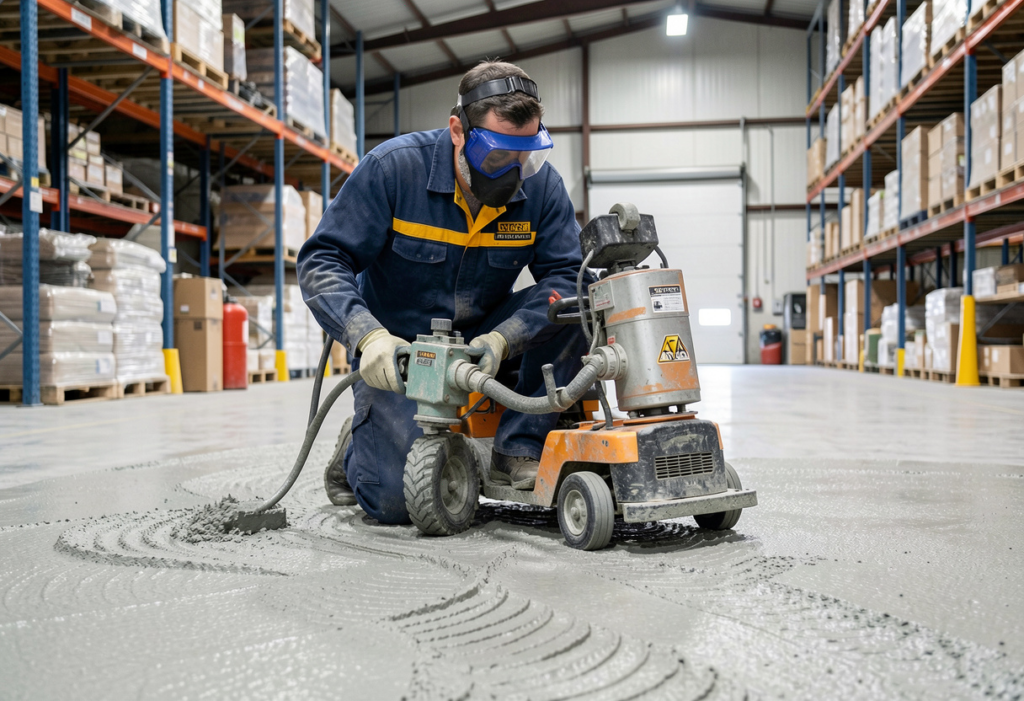
Diamond Grinding vs Shot Blasting
The standard for proper industrial substrate prep involves diamond grinding at minimum, and shot blasting in most heavy load scenarios. Shot blasting — where steel shot is propelled at high velocity across the concrete surface — opens the pores of the concrete to a profile that allows the epoxy primer to penetrate and mechanically bond, rather than just sitting on top.
Moisture Vapour Transmission
Moisture moving up through a slab will break the bond between epoxy and concrete over time, causing delamination that no amount of recoating will fix permanently. Calcium chloride testing or relative humidity probes establish whether a moisture barrier primer is needed — and in Cringila’s coastal environment, it often is.
Crack Repair and Joint Treatment
Active cracks need to be cut out and filled with a flexible polyurethane compound before the epoxy system goes down. Control joints need to be honoured through the coating system — bridging them with a rigid epoxy will just transfer the movement and crack the coating along the same line.
Contamination Removal
Oil, grease, or chemical contamination is removed with industrial degreasers and sometimes grinding back to clean concrete. This step matters enormously in facilities where machinery has been operating for years — the concrete surface in those areas can be saturated with hydrocarbons that will prevent proper adhesion no matter how good the product is.
The Australian standard AS 1884 covers floor coatings for commercial and industrial use and provides useful guidance on surface preparation requirements. Installers working to this standard aren’t cutting corners.
Epoxy Thickness and Reinforcement Options
Once the substrate is right, the system build-up determines how the floor handles the specific demands of the facility. For heavy duty industrial applications in Cringila, there’s a clear progression from light to full-strength systems.
Thin Film Systems (0.3–0.5mm)
These are really light industrial at best — fine for clean rooms or light foot traffic, not appropriate for forklift environments. These get mentioned here only to be ruled out.
Mid-Build Systems (1–2mm)
These work for environments with pallet jack traffic and infrequent light forklift use. They provide better chemical resistance and some impact tolerance, but they’re not the answer for high-cycle forklift operations.
Heavy Build Systems (3–6mm)
These are the standard for genuine industrial environments. They typically use a broadcast aggregate — either quartz sand or aluminium oxide — embedded into the wet epoxy between coats. The aggregate does two things: it adds mechanical strength to the coating layer, and it creates a textured surface profile that improves grip and reduces tyre wear on the coating itself.
Polyurethane Cement Systems
These sit above standard epoxy in terms of thermal stability and impact resistance. In areas where hot washing occurs, or where temperature cycling from machinery creates thermal stress on the floor, polyurethane cement is worth the additional investment.
Fibreglass Reinforcement for Critical Zones
For the most demanding zones — loading docks, turning circles, compactor areas — a reinforcing layer of fibreglass mat embedded in the epoxy build-up adds tensile strength and significantly improves the floor’s ability to resist cracking under point load stress.
Impact Resistance Testing and Standards
When a forklift drops a pallet — and in a busy Cringila warehouse, it happens — the floor takes a hit that a standard coating simply absorbs badly. Impact resistance is a measurable property, and it’s one worth understanding when comparing systems.
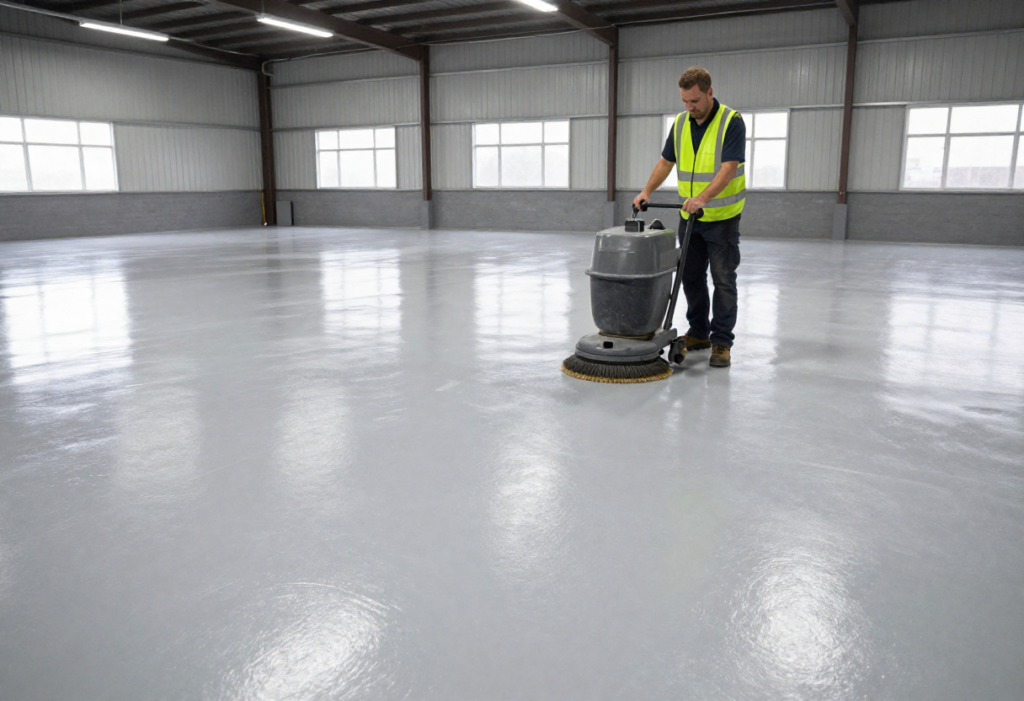
How Impact Resistance Is Measured
The relevant testing method used in Australia follows AS/NZS standards for surface coatings, with impact resistance measured in joules using a falling weight test. Heavy duty industrial systems should be able to withstand impacts of 20 joules or more without cracking or delaminating from the substrate.
Why Flexibility Matters in a Hard Floor
What this means in practical terms is that the system needs to have some degree of flexibility — not so much that it deflects under continuous load, but enough that a sudden point impact distributes through the coating rather than causing it to shatter. This is why 100% solids epoxy formulations are generally preferred for industrial applications over solvent-based products. They cure denser, with less internal void, and they maintain better impact performance over time.
Temperature and Impact Performance
At very low temperatures, epoxy becomes more brittle. Facilities in Cringila that operate refrigerated storage areas or see significant temperature variation between winter nights and summer operating conditions should factor this into their system selection.
What to Ask Your Installer
Reputable epoxy installers will provide product data sheets showing impact resistance test results for the specific system being proposed. If that documentation isn’t available on request, it’s a gap worth questioning.
Preventive Maintenance for High-Traffic Areas
A well-installed heavy duty epoxy floor in a Cringila industrial facility isn’t maintenance-free — but it’s close, and what maintenance it does need is simple and inexpensive compared to what it prevents.
Routine Cleaning
In industrial environments, abrasive particles — metal swarf, grit tracked in from outside, aggregate from spills — sitting on the floor surface get ground into the coating by forklift tyres. A regular sweeping and wet mopping schedule removes that abrasive layer before it does damage. Neutral pH cleaners are the right choice; acidic or highly alkaline cleaners will attack the epoxy resin over time.
Annual Inspections of High-Wear Zones
Turning circles, dock approaches, and areas around machinery should be checked regularly so minor surface wear is identified before it becomes delamination or cracking. A thin topcoat reapplication over a worn area costs a fraction of what a full remediation does, and it can extend the floor’s working life by years.
Forklift Tyre Condition
Most facility managers don’t connect tyre condition to floor maintenance, but flat spots on solid tyres from hard braking create impact concentrations that wear through floor coatings much faster than round tyres running correctly. It’s a simple thing, but it makes a real difference.
Spill Response
Even chemically resistant epoxy systems have limits — strong solvents, concentrated acids, or caustic solutions left pooled on the surface for extended periods can compromise the coating. Getting spills up quickly is a cheap and effective maintenance step.
Compliance and Record Keeping
The WorkSafe NSW guidelines around workplace floor safety provide a useful framework for ongoing compliance checks — particularly around slip resistance ratings, which can change as floor surfaces wear. Keeping a record of condition inspections also supports due diligence requirements under WHS legislation.
How Long Should It Last?
For most Cringila facilities running a proper maintenance program, a quality heavy duty epoxy floor should realistically perform for ten to fifteen years before any major remediation is needed. That’s a long run for a surface that’s taking forklift traffic every working day — and it starts with getting the installation right from the ground up.

