
Marcus had his Berkeley garage floor coated three years ago. Looked great for about eighteen…
Windang
Epoxy Flooring for Coastal Properties in Windang: What You Need to Know
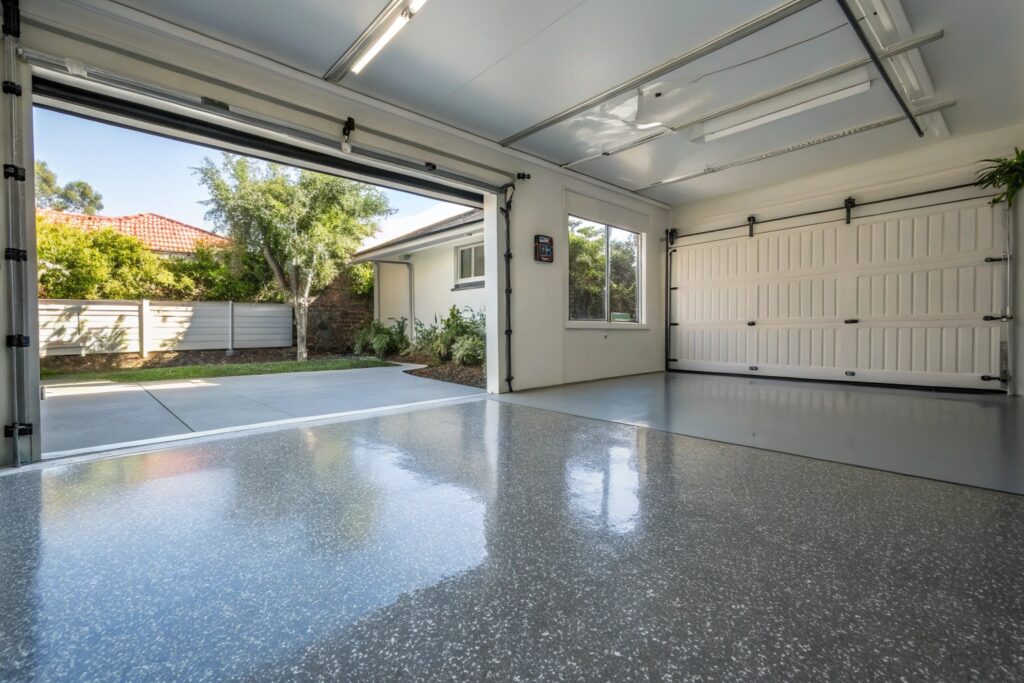
Properly installed marine-grade epoxy flooring in coastal environments can last 15–20 years with minimal maintenance — nearly double the lifespan of standard flooring solutions. For homeowners and business owners in Windang and around Lake Illawarra, that durability represents a genuine long-term property investment in one of Australia’s most rewarding coastal settings. Today’s marine-grade systems are purpose-engineered for high-humidity, salt-air environments, delivering performance that standard products simply cannot match beside the water.
The secret lies in matching the right system to coastal demands from day one. Windang and Lake Illawarra properties that get this right enjoy floors that resist moisture, handle salt air, withstand the Australian summer heat, and still look exceptional years down the track. This complete 2026 Coastal Epoxy Flooring Guide walks you through everything — system selection, moisture testing, installation timing, costs, and long-term care — so you can move forward with total confidence.
🔍 “What type of epoxy flooring is best for coastal areas?”
Marine-grade epoxy systems are the proven choice for coastal areas like Windang and Lake Illawarra. Unlike standard epoxy, these systems are specifically engineered to resist moisture vapour, salt air, UV exposure, and hydrostatic pressure — the four primary failure factors in coastal environments.
A complete coastal epoxy system includes:
- Moisture-tolerant primer — bonds chemically to damp concrete substrates
- 100% solids epoxy base coat — zero shrinkage, maximum bond strength and film build
- UV-stable polyaspartic topcoat — prevents yellowing and surface breakdown in coastal sun
- Anti-slip additives — safety compliance for wet entry and outdoor coastal zones
- Vapour barrier system — controls hydrostatic pressure pushing moisture upward from below
1. Why Coastal Epoxy Flooring Is Different
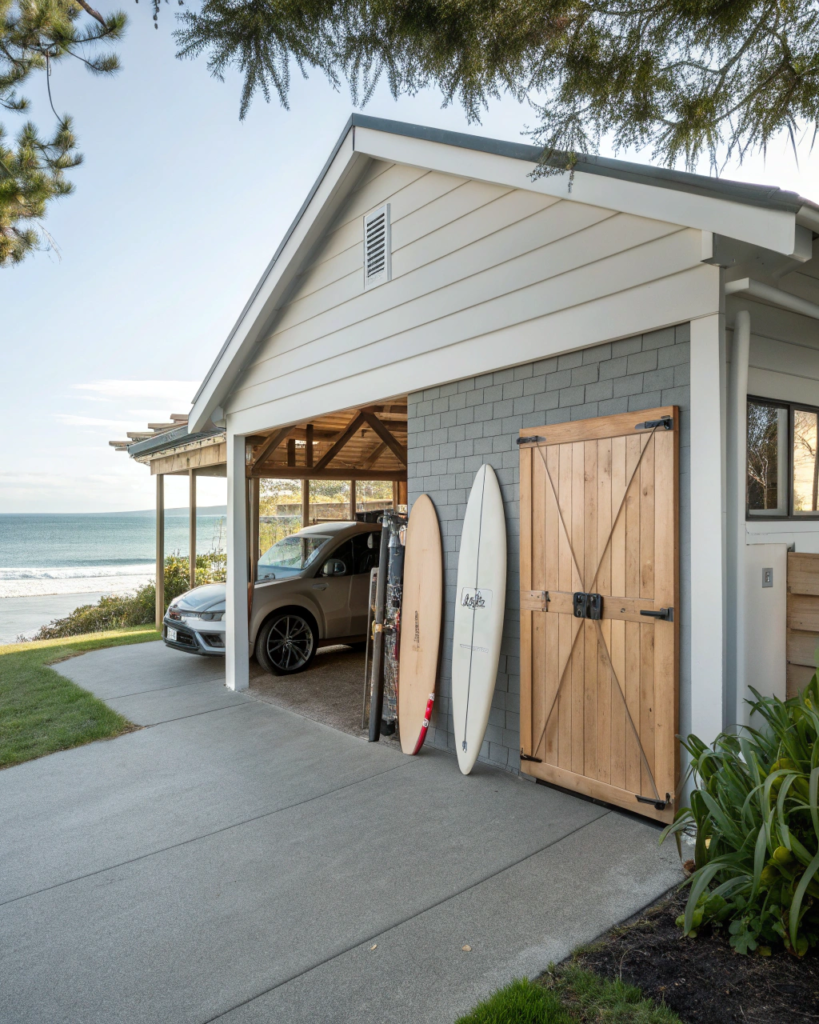
Not all epoxy flooring is created equal — and nowhere is that difference more significant than in a coastal environment. Windang and the Lake Illawarra foreshore present a unique combination of environmental stressors that standard epoxy systems are simply not designed to withstand. Understanding why coastal conditions demand a specialist approach is the first step toward making a smart, lasting investment in your property.
Salt Air and Humidity — The Windang Reality
Windang sits on a narrow peninsula between Lake Illawarra and the Tasman Sea, making it one of the most salt-air-exposed locations in the Illawarra region. Salt particles carried in the air do not just affect exposed surfaces — they penetrate concrete pores, attack the chemical bond between standard epoxy and the substrate, and accelerate corrosion of embedded rebar. According to Bureau of Meteorology climate data for the Illawarra region, average relative humidity levels along the Illawarra coast regularly exceed 70–80%, with summer peaks climbing even higher. At these humidity levels, standard epoxy products suffer adhesion failure, bubbling, and delamination far sooner than their inland counterparts.
Marine-grade epoxy systems counteract this by using chemically modified resins and moisture-tolerant primers that maintain their bond strength even when the substrate or atmosphere carries elevated humidity. For Windang homeowners, this is not a premium upgrade — it is the baseline requirement for any flooring installation that will genuinely last.
Hydrostatic Pressure and the Water Table
Windang’s peninsula geography creates another challenge rarely encountered inland: hydrostatic pressure. Because the water table sits relatively close to the surface in this low-lying coastal area, moisture does not just come from above — it pushes upward through the concrete slab from below. This upward moisture pressure, if unmanaged, will lift and delaminate any coating that has not been specified to resist it.
Signs of hydrostatic pressure include damp patches appearing on seemingly dry concrete, efflorescence (white salt deposits on the slab surface), and premature lifting of applied coatings at edges and joins. A qualified coastal installer will assess hydrostatic pressure risk as part of the pre-installation moisture testing process, and specify a vapour barrier and moisture-tolerant primer system as the appropriate solution.
2. Marine-Grade Epoxy Systems Explained
Marine-grade epoxy is not a marketing term — it describes a category of epoxy formulations specifically engineered to perform in high-moisture, chemically aggressive environments. Understanding what separates these systems from standard products helps Windang property owners evaluate contractor proposals with confidence and avoid being undersold on a system that will not perform in local coastal conditions.
What Makes Epoxy Marine-Grade — and Why It Matters
The defining characteristic of marine-grade epoxy is its formulation for environments where moisture is a constant factor. Key differences from standard epoxy include:
- 100% solids content — standard epoxy contains solvents that evaporate during cure, causing shrinkage and reducing film build. 100% solids formulations have no solvent loss, producing a denser, thicker, and more durable coating layer.
- Moisture-tolerant primers — these primers use amine-based chemistry that reacts with and displaces moisture on the concrete surface, creating a reliable bond even on damp substrates that would cause standard primers to fail.
- Enhanced flexibility — coastal temperature cycling and substrate movement require a coating with greater elongation before cracking, especially in areas experiencing seasonal expansion and contraction.
- Chemical resistance — resistance to salt, fuel, oil, and cleaning agents is built into the resin chemistry rather than relying on topcoat protection alone.
For a coastal property in Windang, specifying anything less than a marine-grade system is a false economy. The cost difference between a standard and marine-grade installation is a fraction of the cost of remediation when a standard system fails within two to three years.
UV-Stable Topcoats for the Australian Coastal Sun
Australia’s UV index consistently ranks among the highest in the world, and the coastal environment compounds UV degradation with reflective water surfaces and salt-laden air that can break down surface coatings prematurely. A UV-stable topcoat is non-optional for any outdoor or sun-exposed coastal epoxy installation in Windang.
The two most effective UV-stable topcoat options are polyaspartic and polyurethane coatings. Polyaspartic topcoats cure faster, offer excellent UV resistance and flexibility, and maintain gloss and colour far longer than standard epoxy clear coats. Polyurethane coatings provide similar UV protection with slightly greater chemical resistance — preferred for marine facility and boat storage applications. Both significantly outperform standard epoxy finishes in the Windang coastal environment.
| Full vapour barrier system | Standard Epoxy | Marine-Grade System |
|---|---|---|
| UV Resistance | Fullvapourr barrier system | High — stable for 10+ years |
| Moisture Tolerance | Fails above 75% RH | Performs in 90%+ RH |
| Expected Lifespan (Coastal) | 2–5 years | 15–20 years |
| Hydrostatic Resistance | None | Full vapor barrier system |
| Salt Air Performance | Degrades quickly | Engineered for marine exposure |
3. Moisture Testing and Surface Preparation: The Critical First Step
In coastal epoxy flooring, what happens before the first coat is applied determines whether the installation succeeds or fails. No amount of product quality compensates for inadequate moisture assessment and surface preparation. This is especially true in Windang and around Lake Illawarra, where concrete slabs frequently carry elevated moisture levels year-round.
Why Moisture Testing Is Non-Negotiable in Coastal Properties
Moisture testing is the non-negotiable first step in any coastal epoxy installation. Skipping this step — as some contractors do to reduce cost or time — is the single most common cause of early failure in coastal epoxy flooring. The consequences include bubbling, delamination, and complete adhesion loss, typically appearing within 6–18 months of installation.
Two industry-standard testing methods are used for coastal slabs. The calcium chloride test measures moisture vapour emission from the slab surface over 60–72 hours. The relative humidity (RH) in-situ probe method measures moisture levels at depth within the slab — generally more accurate for coastal properties like those in Windang, as it captures the full moisture profile through the concrete thickness rather than surface conditions alone.
| RH Reading | Assessment | Recommended Action |
|---|---|---|
| Below 75% | Acceptable | Proceed with marine-grade primer |
| 75% – 85% | Elevated — caution required | Moisture-tolerant primer mandatory |
| 85% – 95% | High — specialist treatment needed | Vapor barrier + tolerant primer |
| Above 95% | Critical — do not apply coating | Full drainage remediation first |
Surface Preparation: Why Coastal Concrete Requires More
Coastal concrete requires more aggressive surface preparation than inland slabs. Salt contamination, efflorescence, and previous coating residue all compromise the epoxy bond if not fully removed before application. The preparation process for a Windang coastal installation typically includes:
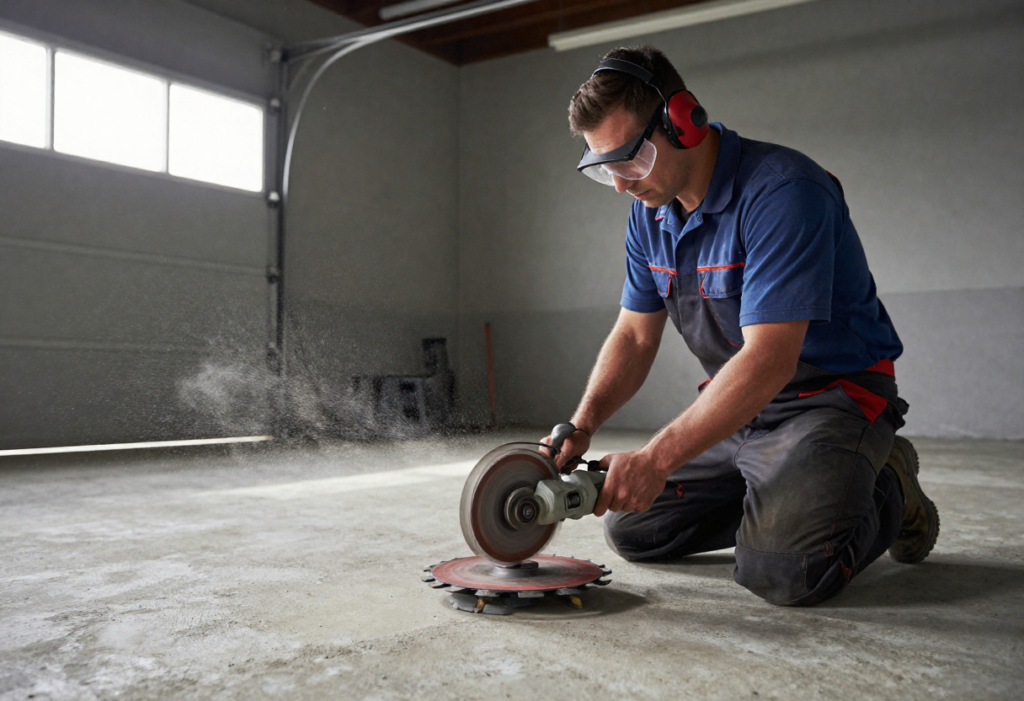
- Chemical salt neutralisation — a treatment solution applied to remove soluble salts from concrete pores before any mechanical preparation begins.
- Diamond grinding or shot blasting — to achieve a minimum CSP 3 (Concrete Surface Profile) in accordance with Standards Australia surface preparation guidelines, creating the mechanical profile the epoxy primer bonds into for maximum long-term adhesion.
- Crack and joint repair — using flexible polyurethane or epoxy fillers rated for dynamic substrate movement in coastal conditions.
- Vapour barrier installation — where moisture readings require it, either a liquid-applied membrane or a sheet system integrated with the primer layer.
This preparation phase takes longer and costs more for coastal properties than inland installations — and it is also the phase where underqualified contractors most often cut corners. This makes choosing a specialist coastal installer critical to long-term performance.
4. Best Epoxy Solutions for Coastal Applications
Different coastal applications demand different system specifications. A residential garage in Windang has different performance requirements from a lakefront patio or a commercial boat storage facility — but all share the same foundational need for moisture-resistant, UV-stable, and salt-tolerant epoxy systems.
Residential Garage and Patio Floors
For Windang residential garages, the recommended system combines a moisture-tolerant amine primer, a 100% solids epoxy base coat with a decorative flake or metallic finish, and a UV-stable polyaspartic topcoat with anti-slip additive. The anti-slip component is particularly important in garage zones where wet vehicles are driven in from rain or lake access — creating a slip hazard on smooth epoxy surfaces without adequate texture.
Outdoor patios near the lake foreshore require UV resistance as the top priority. Colour selection also matters — lighter tones reflect heat and maintain their appearance longer under direct coastal sun. For surfaces near pools or direct lake access, a broadcast aggregate topcoat provides the most durable and safe non-slip finish available.
Boat Storage, Marine Facilities and Basement Applications
Boat storage and marine facility floors are among the most demanding coastal epoxy applications. These floors must resist petroleum products, bilge water, and heavy trailer loads — while remaining safe for foot traffic. A chemical-resistant epoxy system with a textured polyurethane topcoat and embedded aggregate is the correct specification. For commercial marine facilities, anti-slip compliance with Australian workplace safety standards (AS/NZS 4586) is a mandatory requirement.
Basement floors in Windang properties present the most challenging moisture conditions, sitting closest to the water table. A full system — drainage channel installation, sheet vapour barrier, moisture-tolerant primer, and 100% solids epoxy — addresses both the hydrostatic pressure from below and the ambient humidity from above. Local Epoxy Flooring Wollongong has completed multiple Illawarra basement installations using this full specification, achieving outstanding long-term results for property owners throughout the region.
5. Installation Timing for Lake Illawarra Properties
Coastal epoxy flooring is highly sensitive to conditions at the time of application. Temperature, humidity, and dew point all directly affect cure quality and long-term adhesion. For Windang and Lake Illawarra properties, getting the timing right is a meaningful factor in the success of any epoxy installation.
Best Seasons and Weather Windows
The optimal installation windows for coastal epoxy in the Illawarra region are autumn (April to June) and the shoulder of spring (September to October). During these periods, temperatures are moderate at 15–25°C and humidity levels are generally lower than summer peaks. Bureau of Meteorology seasonal data for the Illawarra confirms that mid-summer conditions in Windang — with temperatures above 30°C and relative humidity regularly above 80% — create significant challenges for epoxy cure quality and require experienced management of ventilation and working times.
Professional coastal installers monitor dew point alongside temperature and humidity. When the concrete surface temperature is within 3°C of the dew point, moisture will condense on the surface during application — leading to amine blush (a waxy surface layer that prevents inter-coat adhesion) or outright surface failure. Reviewing a 72-hour weather forecast before any coastal installation is standard practice for experienced teams.
What Happens When Timing Goes Wrong
Installing epoxy outside optimal conditions produces failures that are expensive to remediate. Amine blush causes a permanent, hazy, non-adhesive surface between coats. Bubbling occurs when moisture vapour tries to escape through a partially cured coating layer. Delamination follows when adhesion between coats is compromised by incorrect temperature or humidity at the time of application. These failures are not covered by product warranties when installation conditions were outside specification — which is why experienced, condition-aware installation matters so much on the Illawarra coast.
6. Investment, Lifespan and ROI for Coastal Properties
The most important financial conversation around coastal epoxy flooring is not the upfront investment — it is the value per year of performance. When correctly specified and installed, marine-grade epoxy delivers exceptional long-term value. When undersold or improperly installed, it becomes one of the most expensive flooring decisions a coastal property owner can make.
Why Coastal Installations Require a Higher Investment — And Why It Is Fully Justified
A marine-grade coastal epoxy installation requires a greater investment than a standard inland job for transparent reasons: professional moisture testing, more aggressive surface preparation, specialist primer systems, higher-specification materials, and experienced labour capable of managing coastal installation conditions. These additional inputs add a meaningful premium to the base cost — one that is fully justified by the performance outcome.
Set against a 15–20 year performance lifespan, that investment translates to exceptional long-term value. A standard epoxy system installed in Windang that fails in three to five years — requiring professional removal, remediation, and full reinstallation — will cost significantly more over a decade than a correctly specified marine-grade installation from the outset. Contact Local Epoxy Flooring Wollongong directly for a detailed quote tailored to your property’s specific requirements.
| Factor | Standard Epoxy | Marine-Grade System |
|---|---|---|
| Upfront Investment | Lower | Moderate premium over standard |
| Expected Lifespan (Coastal) | 2–5 years | 15–20 years |
| Replacement Frequency (10 yrs) | 2–3 full replacements | None expected |
| Remediation Risk | High — moisture failure common | Low — engineered for coastal conditions |
| 10-Year Value | Poor — high total outlay | Excellent — lowest cost per year |
Long-Term Performance and Maintenance
A properly installed marine-grade coastal epoxy system requires minimal but consistent maintenance to reach its full 15–20 year lifespan. Monthly cleaning with a pH-neutral cleaner removes salt deposits and abrasive grit before they can degrade the topcoat surface. Avoid alkaline degreasers, acid-based cleaners, and abrasive scrubbing pads — all of which break down the topcoat chemistry over time.
Early warning signs of moisture-related issues include small bubbles forming in the surface, slight hazing or cloudiness, or edge lifting at joins and wall junctions. Identifying these signs early enables targeted repair without full system replacement. Local Epoxy Flooring Wollongong recommends an annual inspection of all coastal installations and offers a 3-year light recoat programme that extends system life significantly at a fraction of full replacement cost.
7. Choosing the Right Installer for Coastal Epoxy in Wollongong
In coastal epoxy flooring, the quality of the installer matters as much as the quality of the product. The most advanced marine-grade system will fail if applied by a contractor who does not understand moisture management, coastal surface preparation, and the environmental conditions specific to Windang and Lake Illawarra. Choosing correctly from the start protects your investment from day one.

Why DIY Fails Near Water — And What Professional Installation Delivers
Retail and online epoxy kits are formulated for general, controlled conditions — not the elevated humidity, hydrostatic pressure, and salt contamination of a coastal environment. The solvent-based epoxies in consumer kits have neither the moisture tolerance nor the film build of professional 100% solids systems. In Windang conditions, DIY kit installations routinely fail within 6–18 months, leaving homeowners facing the cost of professional removal and correct reinstallation on top of the original kit expense.
Professional coastal installation delivers more than a superior product. It delivers specialist equipment — RH probe moisture meters, calcium chloride test kits, dew point meters, and industrial diamond grinders capable of achieving the correct surface profile. It delivers calibrated product mixing ratios for consistent performance, and — critically — the experience to read coastal conditions and adapt the installation plan when environmental factors require it.
Key Questions to Ask Your Coastal Epoxy Contractor
Before engaging any contractor for an epoxy installation in Windang or the Illawarra region, ask these specific questions:
- Do you conduct moisture testing using RH in-situ probes as part of your pre-installation process?
- What primer system do you specify for high-moisture coastal and lakeside slabs?
- Are you using a 100% solids epoxy base coat — and can you provide the product data sheet?
- Can you provide references from completed coastal or lakeside installations in the Illawarra region?
- What does your warranty specifically cover in relation to moisture-related failure?
- Do you hold the appropriate contractor licences and current public liability insurance in NSW? Verify their licence status directly through NSW Fair Trading before signing any contract.
A contractor who cannot confidently and specifically answer all of these questions is not the right choice for a coastal property in Windang. Engaging a specialist — one whose experience is built around the Illawarra environment — is the clearest path to a long-lasting, high-performance result.
Ready to Protect Your Windang Property with Marine-Grade Epoxy?
Local Epoxy Flooring Wollongong specialises in marine-grade epoxy installations across Windang, Lake Illawarra, and the wider Illawarra region. Every installation begins with a professional moisture assessment — ensuring your system is correctly specified for your property’s unique coastal conditions before a single drop of product is applied.
Contact us today for a free moisture assessment and obligation-free quote.
📍 317 Keira St, Wollongong NSW 2500

