
Marcus had his Berkeley garage floor coated three years ago. Looked great for about eighteen…
Salt Air Epoxy Flooring Damage – A Protection Guide for Primbee NSW
I still remember the bloke who called me from Primbee about eighteen months back. He’d just had a full garage floor done – nice charcoal flake system, looked absolutely brilliant when it was fresh. But by the time that second summer rolled around, he was already seeing the edges lifting, a few soft spots near the roller door, and this dull, chalky haze spreading across the surface that no amount of mopping would fix.
He was frustrated. And honestly? He had every right to be.
The thing is, it wasn’t the epoxy’s fault exactly. It wasn’t even the installer cutting corners, not really. The problem was that nobody had sat him down beforehand and said, “mate, you live sixty metres from the water. The air here is different. The way you need to approach your floor coating is different too.”
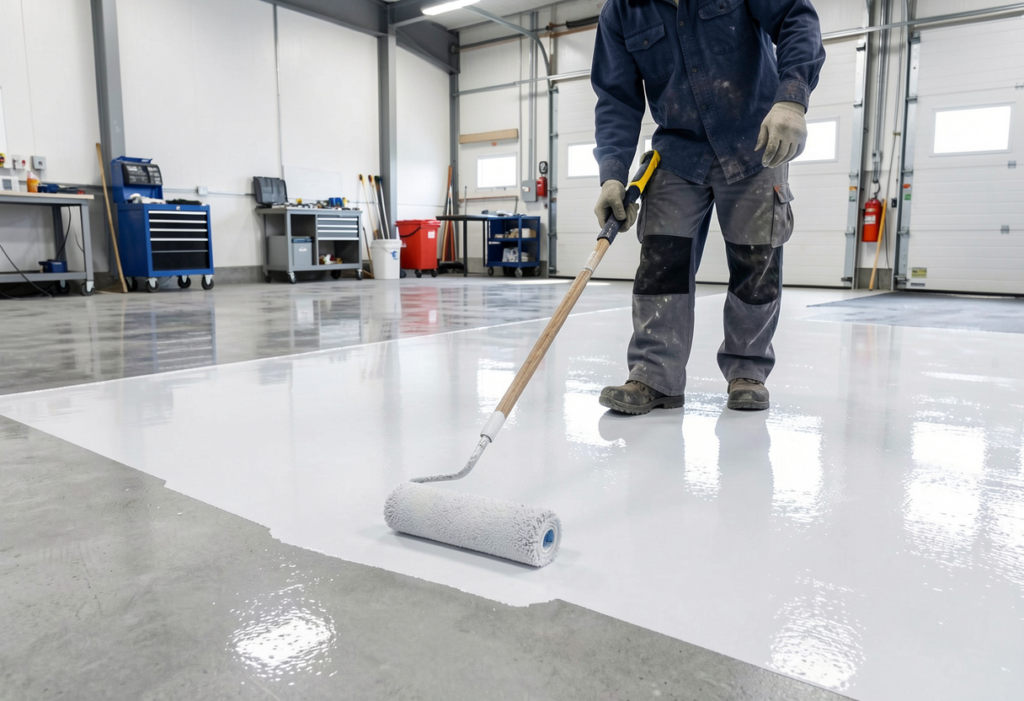
That’s what this article is about.
If you’re in Primbee, Windang, Cringila, or anywhere along that lower Illawarra coastline, you already know the salt air is relentless. It eats metal letterboxes, fades paint faster than it should, and yes – it absolutely can work its way into an epoxy floor system and cause real damage over time. The good news is it doesn’t have to. With the right products, the right prep, and a bit of know-how around maintenance, your floor can handle everything this coastline throws at it.
Let’s get into it.
Understanding Salt Air Corrosion on Flooring Materials
Most people think of salt air damage as a surface problem. You see the rust on the fence, the pitting on the aluminium window frames, and you assume it’s all happening on the outside of things. But salt air is sneaky. The microscopic salt particles that float in off Bass Point and Port Kembla’s coastline don’t just land on surfaces – they work their way into any gap, any pore, any weak point they can find.
Bare concrete is especially vulnerable. Concrete is full of tiny capillaries, and when salt-laden moisture gets into those pores, it starts a slow process of crystallisation. As the salt crystals grow and contract with temperature changes, they physically push the concrete apart from the inside. You end up with that powdery, flaking surface called spalling – and if an epoxy coating is sitting on top of concrete that’s already doing this, the bond underneath starts to fail.
Here’s where it gets interesting. Epoxy itself is actually quite resistant to salt. The problem isn’t the epoxy – it’s what happens at the bond line between the coating and the substrate, and it’s what happens when UV light and salt air combine to attack the top layer of the system over time. A standard epoxy with no UV-stable topcoat will start to chalk and yellow. Once that topcoat breaks down, moisture pathways open up, and salt starts doing what salt does.
In a suburb like Primbee, where the prevailing winds push straight off the water and through residential streets, this process happens faster than it would inland. It’s not dramatic – you won’t wake up one morning to a destroyed floor. It’s gradual, and by the time you notice the soft spots and the lifting edges, the damage has usually been progressing for months.
Epoxy Formulations That Resist Salt Damage
Not all epoxy systems are built the same, and this is where product selection matters enormously for coastal properties.
The two main things to look for are a high-solids epoxy base coat and a polyurethane or polyaspartic topcoat that’s specifically rated for UV and moisture resistance. Here’s a quick breakdown of how different systems perform in coastal conditions:
| System Type | Salt Resistance | UV Stability | Suited for Primbee? |
| Standard water-based epoxy | Low | Poor | No |
| 100% solids epoxy (base only) | High | Moderate | Partially |
| Epoxy base + polyurethane topcoat | Very High | Good | Yes |
| Epoxy base + polyaspartic topcoat | Very High | Excellent | Yes – best option |
Polyaspartic topcoats in particular have become the go-to for coastal Queensland and NSW installations because they cure harder, resist abrasion better, and hold up against the UV intensity we get here without that chalky yellowing. They’re not cheap, but for a home in Primbee, the extra investment up front is almost always worth it when you compare it to re-doing a failed floor two years down the track.
Moisture vapour transmission is another thing your installer should be checking before any product goes down. Concrete slabs near the coast often have higher moisture vapour emission rates – sometimes high enough to cause adhesion failure in a standard epoxy system. A moisture barrier primer applied before the base coat seals those vapour pathways and gives the whole system a much stronger foundation.
Protective Coatings for Extreme Coastal Exposure
For properties that are really exposed – think roller doors that face directly into the prevailing sea breeze, or covered outdoor areas where the floor gets a constant salt mist – you want to be thinking about systems that go above and beyond a standard residential install.
A few options worth knowing about:
Penetrating sealers on the concrete before coating. These chemically bond with the concrete matrix and fill those capillary pores before the epoxy even goes on. It’s an extra step, but on a slab that’s been exposed to coastal conditions for years, it makes a meaningful difference to the longevity of the system on top.
Two-coat topcoat systems. Rather than a single polyaspartic or polyurethane finish coat, some installers will apply two thinner coats of the topcoat product, which builds a denser barrier. This is particularly relevant for workshop areas or driveways where the floor sees mechanical wear on top of the environmental load.
Anti-carbonation coatings. More common on commercial projects, but worth mentioning for any exposed slab in an industrial-adjacent area like Cringila or Port Kembla. These coatings slow the reaction between carbon dioxide, salt air moisture, and the calcium compounds in concrete that leads to long-term structural degradation.
Preventing Salt Air Deterioration in Primbee Properties
Prevention really does start before the first drop of coating hits the floor. Surface preparation is where coastal installs live or die.
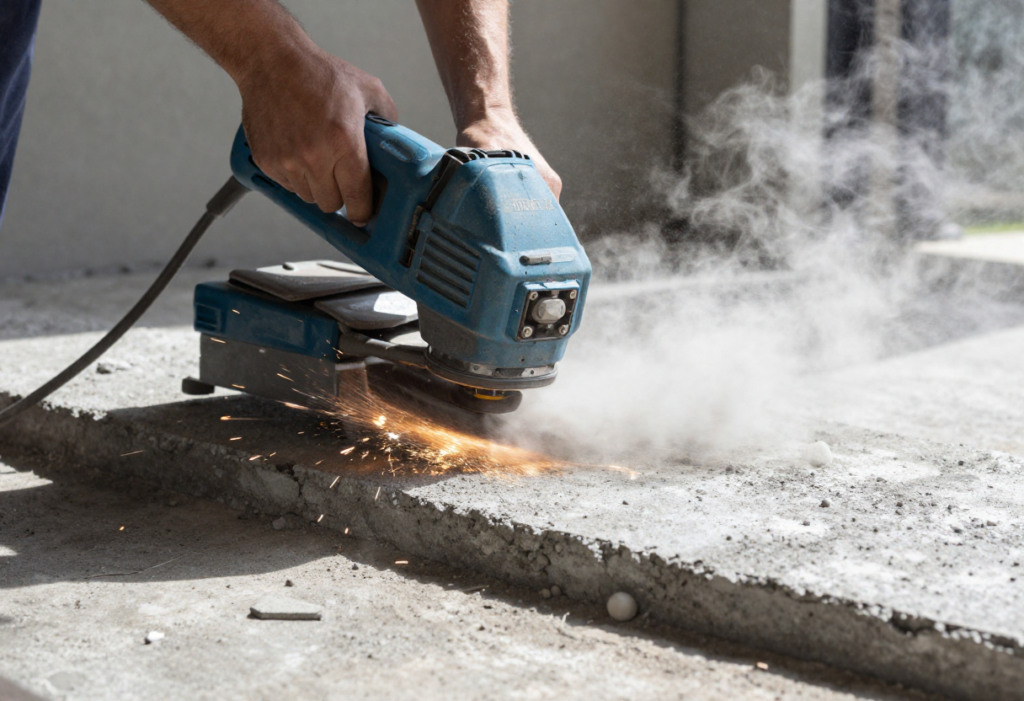
Shot blasting or diamond grinding the slab – not just acid etching – opens the concrete profile properly and removes any existing salt contamination from the surface. If a contractor is quoting you an acid wash only on a coastal slab, push back. Shot blasting is the industry standard for a reason, and on a slab that’s been breathing in salt air for a decade, it’s non-negotiable.
Timing the install matters too. High-humidity days, early mornings when dew is still present, or periods of onshore wind during application can all affect how the coating bonds and cures. A good local epoxy installer will check Bureau of Meteorology conditions before scheduling the job – not just whether it’s going to rain, but relative humidity levels throughout the day.
Maintenance Tips for Salt-Exposed Epoxy Floors
Once your floor is down, the maintenance side is genuinely pretty simple – but consistency matters.
- Rinse down regularly. A light hose or mop with clean water every few weeks removes salt particle build-up before it can accumulate. This is especially important near entry points where salt is being tracked in from outside.
- Use pH-neutral cleaners. Harsh degreasers and acidic cleaners break down the topcoat over time. Stick to mild, pH-neutral products and your finish coat will last significantly longer.
- Inspect the edges annually. Edge lifting is usually the first sign of moisture ingress. Catching a small lifted section early and having it re-bonded is a minor repair. Leaving it means water gets under the whole system.
- Recoat on schedule. A quality polyaspartic topcoat on a well-prepped coastal slab should last eight to twelve years with proper care. But if you start seeing the sheen dulling and the surface roughening up, don’t wait for it to fail – a maintenance recoat at the right time extends the life of the whole system for a fraction of the cost of starting over.

