
Marcus had his Berkeley garage floor coated three years ago. Looked great for about eighteen…
Epoxy Flooring Lifespan Coastal Areas: What Primbee Homeowners Really Need to Know
My mate Craig lives about three streets back from Primbee Beach. Absolute legend of a bloke, meticulous about his property. Two years ago he had his garage floor done with a budget epoxy system — the kind you can buy off the shelf at the hardware store. Looked incredible for about eight months. Then the peeling started. Then the bubbling. By the second summer, it looked worse than the bare concrete he started with.
The thing is, Craig didn’t do anything wrong. He just didn’t account for where he lives.
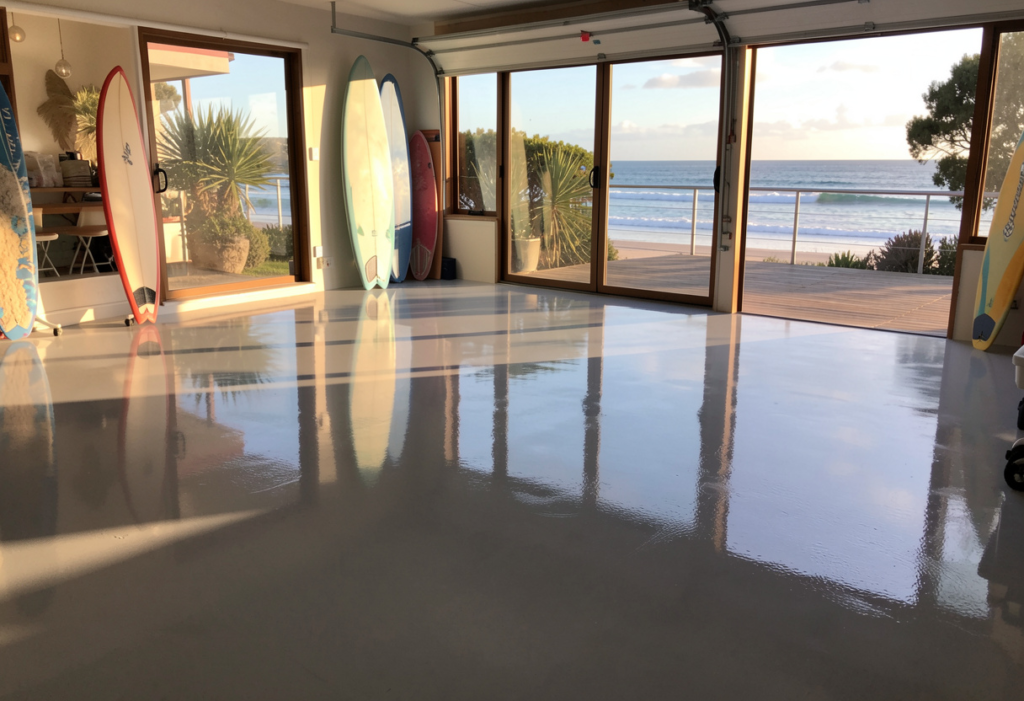
Primbee sits right on the edge of Lake Illawarra, with the Pacific Ocean not far behind it. The salt air comes off the water constantly — not always in a dramatic way, more like a slow, invisible pressure that works on every exposed surface around your home. Timber, metal, paintwork… and yes, your garage or workshop floor. It’s relentless.
So when people ask me how long epoxy flooring lasts in a coastal environment like Primbee, I always say the same thing: it depends almost entirely on three things — the system that was installed, how it was prepped, and how it’s looked after. Get all three right, and you’re looking at a floor that could genuinely last 15 to 20 years. Get even one of them wrong, and you might be back to square one inside two or three years, just like Craig.
This guide is specifically for homeowners and business owners in Primbee and the surrounding Illawarra coastline who want straight answers about the epoxy flooring lifespan in coastal areas — no fluff, no sales pitch, just what the real-world experience actually looks like.
Factors Affecting Epoxy Longevity in Coastal Environments
If you’ve ever wondered why two houses on the same street can have completely different outcomes with the same type of flooring product, this is the section for you. Coastal environments like Primbee don’t treat all epoxy systems equally, and there’s a handful of factors that will make or break how long your floor actually holds up.
Surface Preparation
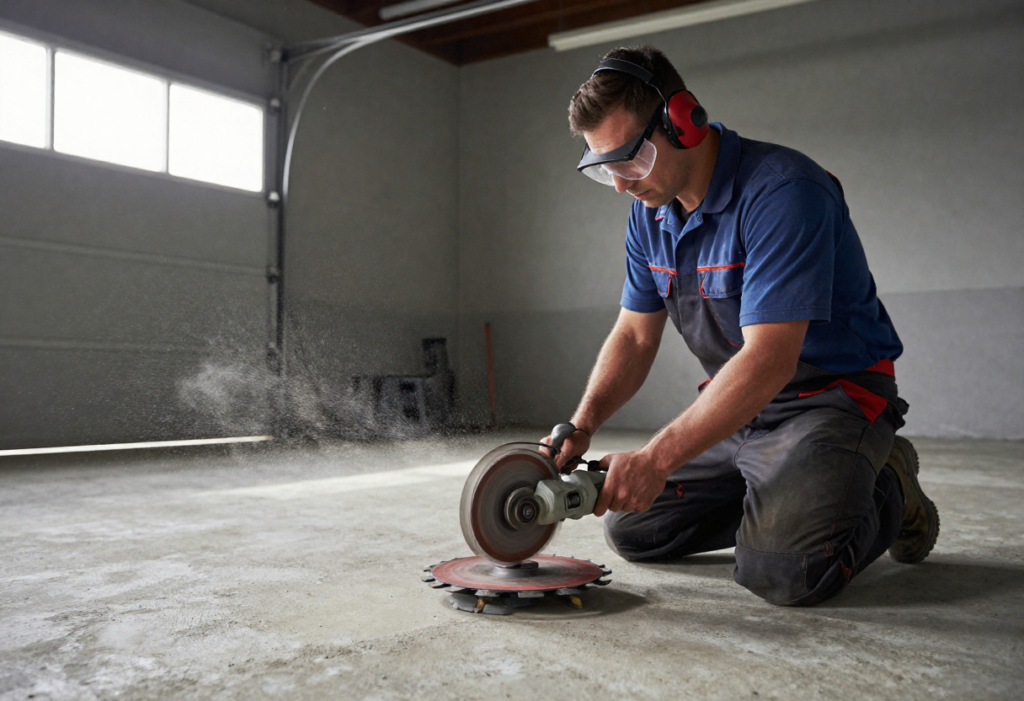
This one’s non-negotiable. The single biggest reason epoxy floors fail prematurely in coastal areas isn’t the salt air — it’s poor prep work underneath. Concrete that hasn’t been properly ground, shot blasted, or acid etched will eventually reject the coating on top of it, especially when moisture and humidity are pushing up from below. In a coastal suburb, where ground moisture levels tend to be higher than inland areas, skipping or rushing prep is basically writing a cheque your floor can’t cash.
Professional epoxy installers in the Wollongong region will typically use diamond grinding or shot blasting to open up the concrete’s pores before any coating goes down. If a quote you’ve received doesn’t specifically mention surface preparation as part of the process, that’s worth asking about before you sign anything.
The Epoxy System Itself
Not all epoxy is created equal — and in a coastal setting, that gap in quality becomes very obvious very quickly. There’s a real difference between:
- Single-coat consumer-grade systems — typically 1–2mm thick, limited UV and moisture resistance
- Multi-coat professional systems — 3–5mm or more, with a dedicated primer, body coat, and UV-stable topcoat
- Polyaspartic or polyurethane topcoats — added as a final layer specifically to handle UV exposure and surface abrasion in high-humidity zones
For Primbee specifically, a system without a UV-stable topcoat is going to show yellowing and surface breakdown within a few years. The sun hits hard here, and that salt-laden humidity accelerates the degradation of lower-grade coatings noticeably faster than you’d see in somewhere like Campbelltown or Penrith.
Concrete Moisture Levels
Coastal concrete slabs often carry higher moisture content than people realise. If a moisture barrier or vapor barrier isn’t applied before the epoxy goes down, that moisture will eventually work its way up through the slab and cause the coating to lift, bubble, or delaminate. This is exactly what happened to Craig’s floor — and it’s more common in low-lying coastal areas than installers sometimes let on.
A quick moisture test before installation isn’t optional in a place like Primbee, it’s just good practice.
Ventilation and Airflow
Garages and workshops near the waterfront tend to get less cross-ventilation than people expect, which means humidity can sit on the floor surface for extended periods after rain or sea fog rolls through. Floors in spaces with poor airflow will age faster — not dramatically, but enough to shave years off the lifespan if nothing else is factored in.
Installation Season
This one surprises people. Epoxy applied during Wollongong’s humid summer months — particularly in unventilated garages — can cure unevenly if temperatures and humidity aren’t properly managed during application. Reputable installers will account for this. Cheaper operators often don’t.
Salt Air Impact on Different Epoxy Systems
Salt air is the quiet enemy of just about every building material in coastal Australia. It doesn’t announce itself. It just slowly works away at surfaces over months and years until one day you notice the damage is already done. For epoxy flooring, the impact varies quite a bit depending on what system is actually sitting on your floor.
Here’s a straightforward breakdown of how the most common epoxy systems handle salt air exposure over time:
| Epoxy System | Salt Air Resistance | Expected Lifespan (Coastal) | Notes |
| DIY/Consumer Grade Epoxy | Poor | 1–3 years | Thin coating, minimal moisture resistance |
| Standard Professional Epoxy | Moderate | 5–8 years | Better prep and thickness, but limited UV protection |
| Multi-Coat Epoxy with Polyurethane Topcoat | Good | 10–15 years | UV stable, handles humidity well |
| Polyaspartic System | Excellent | 15–20+ years | Best option for coastal exposure, fast cure time |
The chemistry behind why salt air causes problems is actually pretty simple. Salt particles are hygroscopic — they attract and hold moisture. When those particles settle on or near your epoxy floor, they create micro-environments of sustained dampness right at the surface level. Over time, that works into any small crack, chip, or weak point in the coating and starts breaking down the bond between the epoxy and the concrete underneath.
For Primbee homes sitting close to Lake Illawarra or within a kilometre of the open coast, this process happens faster than most product spec sheets will ever tell you. Those specs are usually written for controlled environments, not for a coastal suburb with an onshore breeze running most of the year.
What Actually Holds Up
Polyaspartic coatings have become the gold standard for coastal Australian installations over the last several years, and for good reason. They cure faster than traditional epoxy — sometimes within a single day — and they’re formulated specifically to resist UV degradation, surface abrasion, and moisture penetration at a level that standard epoxy systems simply can’t match. They’re not cheap, but in a coastal environment the cost difference between a polyaspartic system and a standard epoxy almost always pays for itself in longevity.
Multi-coat systems that include a dedicated moisture barrier primer, a high-build epoxy body coat, and a polyurethane or polyaspartic topcoat are the next best option if a full polyaspartic system isn’t in the budget. The layered approach gives the floor multiple lines of defence against salt, moisture, and UV — which is exactly what a Primbee garage or workshop floor needs.
Single-coat consumer products? In a coastal environment they’re basically a temporary fix. They look great on day one and start showing their limits within the first year or two.
Maintenance Strategies to Maximize Lifespan
Getting a quality system installed is only half the job. How you look after it from that point forward is what separates a floor that lasts eight years from one that lasts eighteen.
Regular Cleaning
Salt residue accumulates on coastal floors even when you can’t see it. Cars and bikes track it in from the street, and sea breeze carries fine particles into garages and workshops over time. A simple pH-neutral floor cleaner applied every few weeks — nothing harsh, nothing acidic — will keep that salt from building up and sitting against the surface coating. Avoid bleach-based cleaners as a regular solution, they’ll gradually break down the topcoat chemistry over time.
Avoid Dragging Sharp or Heavy Objects
This sounds obvious but it’s worth saying. Dragging steel shelving, toolboxes, or heavy equipment across an epoxy floor creates surface scratches that give moisture a point of entry. In a coastal environment where humidity is already pressing against every surface, those scratches become a bigger problem than they would be inland. Use furniture pads, lift rather than drag, and put rubber mats or protective strips under anything that sits permanently on the floor.
Annual Visual Inspection
Once a year, get down close and have a proper look at the floor surface — particularly around the perimeter where the coating meets the wall, and around any floor drains or expansion joints. These are the spots where coastal moisture most commonly finds a way in. Small chips or lifting edges caught early can often be spot-repaired without needing to redo the whole floor.
Recoating Before It Fails
Most professional epoxy systems will give you visible warning signs before they fully fail — dullness, minor surface scratching, slight discolouration. In a coastal setting, a maintenance recoat every seven to ten years on a quality system is far cheaper than a full removal and reinstallation. Think of it the same way you think about repainting the exterior of your home — you don’t wait until the timber is rotting to act.
Keep Moisture Out Where Possible
If your garage doesn’t have a proper seal at the bottom of the door, coastal air and rainwater will pool against the floor edge every time it rains. A simple garage door threshold seal — available at most hardware stores — makes a genuine difference to how much moisture your floor is exposed to over the years.
Signs Your Coastal Epoxy Floor Needs Replacement
There’s a difference between a floor that needs a bit of maintenance and one that’s genuinely past its useful life. In a coastal environment, knowing that difference can save you from throwing good money after bad.
Widespread Delamination
If the coating is lifting in multiple spots across the floor — not just one or two isolated areas — that usually means the bond between the epoxy and the concrete has broken down across a wide area. Spot repairs won’t fix that. The floor needs to be stripped back and reinstalled from scratch.
Persistent Bubbling or Blistering
Bubbles in an epoxy surface are almost always a moisture problem. In a coastal setting, this typically means moisture is moving up through the slab and has nowhere to go except into the coating. If blistering keeps coming back after repairs, the underlying moisture issue needs to be addressed before any new coating will hold.
Deep Surface Cracking
Minor hairline cracks in the top surface can often be recoated over. But when cracking goes deep — particularly if you can see the concrete underneath — that’s structural failure of the coating rather than just surface wear. A professional assessment will tell you whether a recoat or full replacement is the right call.
Colour That’s Gone Beyond Dull
UV degradation in coastal environments tends to turn epoxy floors yellowish or chalky over time. Some surface dulling is normal and can be addressed with a maintenance recoat. But when the colour has shifted significantly or the surface has a powdery, chalky texture that won’t clean off, the topcoat has broken down and needs replacing.
The Floor Is More Than 15 Years Old
Even a well-maintained, quality system installed in a coastal environment has a finite life. If your floor is pushing 15 years or more and hasn’t had a maintenance recoat during that time, it’s worth getting a professional to assess whether you’re in replacement territory — before you have a bigger, more expensive problem on your hands.
Comparing Epoxy Durability: Coastal vs Inland Installations
People sometimes ask why the quotes they’re getting for coastal properties are higher than what their relatives paid for the same job in somewhere like Campbelltown or the Blue Mountains. It’s a fair question, and the answer comes down to the difference in what those environments actually demand from a flooring system.
| Factor | Coastal (Primbee/Illawarra) | Inland (Campbelltown/Penrith) |
| Average Epoxy Lifespan | 10–15 years (quality system) | 15–20 years (quality system) |
| Salt Air Exposure | High | Minimal |
| Humidity Levels | Elevated year-round | Seasonal variation |
| UV Intensity at Surface | High, combined with humidity | High but drier conditions |
| Moisture Barrier Required | Almost always | Situation dependent |
| Recommended System | Polyaspartic or multi-coat with UV topcoat | Standard multi-coat often sufficient |
| Maintenance Frequency | Higher | Lower |
The honest reality is that coastal installations face a combination of stressors — salt, humidity, UV, ground moisture — that inland floors simply don’t deal with to the same degree. A system that performs brilliantly in Penrith for twenty years might show significant wear in Primbee within ten if it wasn’t specified for coastal conditions.
This isn’t a reason to be put off epoxy flooring in a coastal suburb. It’s just a reason to go in with clear expectations and to make sure whoever you hire understands the local environment they’re working in. A contractor who installs predominantly in coastal NSW is going to spec your job very differently — and more appropriately — than someone who mostly works inland and treats every job the same way.
For Primbee and the broader Illawarra coastline, the epoxy flooring lifespan in coastal areas really does come down to those original three factors I mentioned at the start: the system, the prep, and the ongoing care. Get all three right and a quality epoxy floor is genuinely one of the best investments you can make in a coastal property. Get them wrong, and you’ll be back to square one before you’ve had a chance to enjoy it.
If you’re ready to get a proper assessment from someone who understands what Primbee’s environment actually does to flooring, reach out to a local installer who can walk through your specific situation — concrete condition, moisture levels, how the space is used — before recommending anything. That conversation will tell you more than any product brochure ever could.

