
Marcus had his Berkeley garage floor coated three years ago. Looked great for about eighteen…
Epoxy Flooring Coastal Climate Berkeley: Will It Actually Hold Up?
A bloke from Berkeley reached out not long ago, frustrated after spending good money on a garage floor coating that started peeling within eighteen months. Salt air, humidity, the whole lot — his floor looked worse than before he’d had it done. And honestly? It wasn’t his fault. He just got the wrong system for where he lives.
If you’re a homeowner or business owner in Berkeley, you already know the coast doesn’t go easy on anything. Your car, your deck, your gutters — they all cop it. So it’s a fair question to ask whether epoxy flooring can actually hold up in a coastal NSW climate, or whether you’re just throwing money at a problem that’ll come right back. This guide breaks it all down.
Understanding Berkeley’s Coastal Climate Challenges
Berkeley sits in a stretch of NSW coastline where the environment throws a pretty consistent set of problems at anything you’re trying to maintain. You’ve got humidity that doesn’t let up, salt-laden air rolling in off the ocean, and temperature swings that cycle through faster than people realise.
What makes coastal climates particularly tough on surfaces isn’t just moisture on its own — it’s the combination. Humidity softens materials, salt accelerates corrosion, and fluctuating temperatures cause surfaces to expand and contract repeatedly. The Bureau of Meteorology’s climate data for the Illawarra region shows just how consistently high humidity levels sit along this stretch of NSW coastline, and that data tells you everything you need to know about why surface coatings here face a tougher job than they do further inland.
Concrete floors in coastal garages and warehouses absorb moisture from below as well as above. That moisture has nowhere to go when a coating is applied on top, and if the wrong system goes down, that trapped moisture turns into hydrostatic pressure — and the floor starts bubbling and peeling from underneath.
Berkeley’s proximity to the ocean also means salt spray doesn’t stay at the shoreline. Fine salt particles travel inland with coastal breezes, settling on surfaces and slowly working into any gaps, cracks, or weak points in a coating. For industrial and commercial properties near Port Kembla and the wider Illawarra coastline, this is an everyday reality, not an occasional concern.
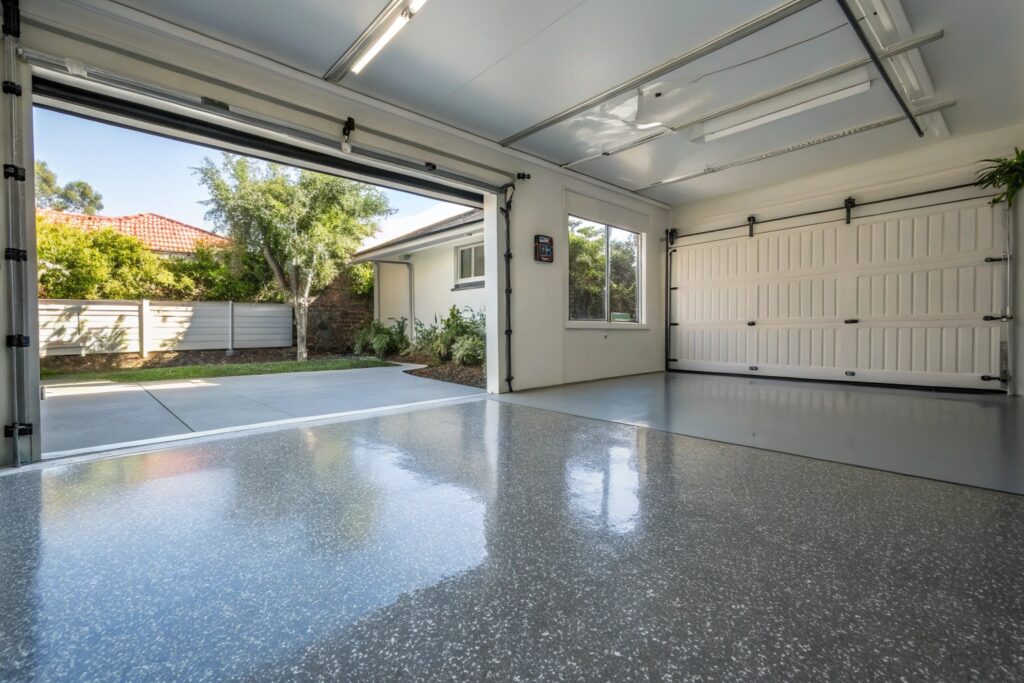
How Humidity Affects Epoxy Flooring Performance
Humidity is probably the single biggest factor that determines whether an epoxy installation succeeds or fails in a coastal environment. And it’s not just about whether it’s raining outside — relative humidity in the air during application matters just as much as the moisture sitting in the concrete itself.
When epoxy is applied in high humidity conditions, the curing process gets disrupted. The coating can’t bond properly to the substrate, which leads to adhesion failures down the track. You might not see it straight away — the floor can look perfectly fine for the first few months — but give it a coastal summer or two and the problems start showing up.
Most standard epoxy systems are designed to be applied when relative humidity sits below 85%. In Berkeley and surrounding coastal areas, that window can be pretty narrow depending on the time of year. An experienced local installer knows to check moisture readings in the concrete slab itself before a single drop of product goes down. A moisture vapour emission rate test — or MVER — tells you exactly what you’re dealing with, and it changes everything about which system gets used.
The good news is that properly formulated moisture-tolerant epoxy systems exist specifically for these conditions. These products are engineered to cure correctly even when humidity levels are higher than ideal, and they create a barrier that prevents moisture vapour from pushing up through the slab and lifting the coating from below. Getting the right product matched to your actual site conditions is what separates a floor that lasts a decade from one that fails in eighteen months.
Salt Air Resistance: What Berkeley Homeowners Need to Know
Salt air is relentless. It doesn’t announce itself, it doesn’t give you warning signs — it just quietly gets into everything and starts breaking things down. For epoxy flooring in coastal Berkeley, salt exposure is one of the main reasons cheaper or poorly specified systems fail well before their time.
The way salt affects epoxy comes down to chemistry. Salt particles suspended in coastal air settle onto surfaces and, when combined with moisture, create a mildly corrosive environment. Standard epoxy formulations can handle normal wear and tear, but they weren’t built to resist ongoing salt exposure at the level you get living within a few kilometres of the NSW coast.
What you want in a coastal environment is a system with strong chemical resistance built into the topcoat. Polyurethane and polyaspartic topcoats perform significantly better than standard epoxy alone when it comes to salt air resistance. They create a denser, less permeable surface layer that salt particles can’t work their way into over time. For commercial and industrial floors near Port Kembla’s heavy industry corridor, this isn’t optional — it’s the baseline requirement.
For residential garages in Berkeley’s established suburbs, the practical difference shows up in how the floor holds its appearance and structural integrity over time. A salt-resistant system keeps its gloss, resists staining from salt-tracked vehicles, and doesn’t start chalking or fading the way a standard coating will after a few coastal summers.
One thing worth knowing — surface preparation plays just as big a role as the product itself. Diamond grinding or shot blasting the concrete before application opens up the surface profile so the epoxy bonds at a mechanical level, not just chemically. In a salt air environment, that mechanical bond is what keeps the floor locked down when conditions get tough.
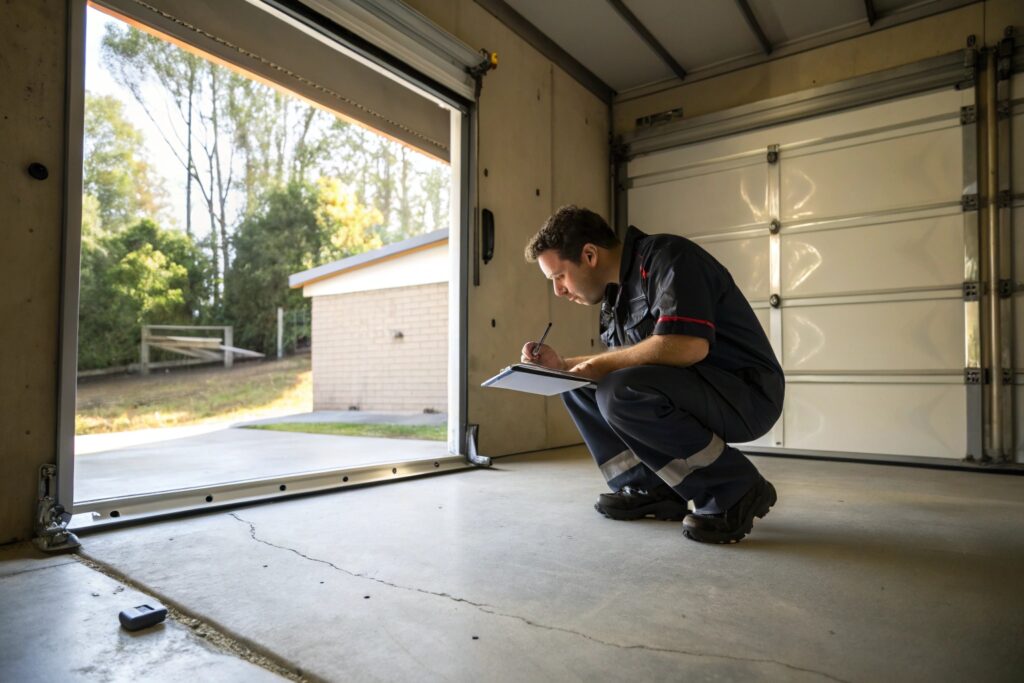
Moisture Management in Coastal Garage Floors
Moisture in a coastal garage floor doesn’t just come from rain or spills — it comes from the ground itself. Concrete is porous by nature, and in coastal areas with higher water tables and consistently damp soil conditions, moisture is constantly moving up through the slab whether you can see it or not.
This is what catches a lot of Berkeley homeowners off guard. The garage floor looks dry on the surface, feels dry when you walk on it, and then six months after an epoxy installation the coating starts lifting at the edges or bubbling in patches. That’s hydrostatic pressure doing its work — moisture that had nowhere to go once a coating sealed the surface above it.
The solution starts before installation even begins. A proper moisture assessment involves testing the concrete slab with a calcium chloride test or an in-situ relative humidity probe. These tests measure how much moisture vapour is moving through the slab over time, and the results directly determine which epoxy system is appropriate for that specific floor.
For floors with higher moisture readings, a moisture mitigation primer goes down first. This creates a barrier layer that manages vapour transmission before the main epoxy system is applied. It’s an additional cost upfront, but it’s a fraction of what a failed floor costs to strip back and redo — which is exactly the situation that bloke from Berkeley found himself in.
Good drainage design around the garage perimeter also takes pressure off the floor system itself. Directing water away from the slab, keeping gutters clear, and making sure there’s no pooling against the garage walls all reduce the moisture load the coating has to deal with long term. It’s the kind of practical detail a local installer familiar with Berkeley’s conditions will flag during an assessment.
Choosing the Right Epoxy System for Berkeley’s Environment
Not all epoxy systems are created equal, and in a coastal environment like Berkeley, the product selection process matters more than most people realise. The wrong system in the wrong conditions isn’t just a waste of money — it actively damages confidence in what is otherwise a genuinely excellent flooring solution.
For residential garage floors in Berkeley, a two or three coat system typically performs best. A moisture-tolerant epoxy base coat, a mid coat for build and durability, and a polyurethane or polyaspartic topcoat that handles UV exposure, salt air, and surface abrasion. That combination gives you a floor that looks good and holds up without needing constant attention.
For commercial and industrial applications — warehouses, workshops, and facilities around the Port Kembla corridor — a heavier build system with chemical resistant properties is the right starting point. These environments layer on extra demands beyond coastal conditions alone, and the epoxy system needs to account for forklift traffic, chemical spills, and the kind of daily punishment that a residential garage never sees. SafeWork NSW’s guidance on slips, trips and falls makes clear that floor surface selection is a compliance issue, not just an aesthetic one — and that applies directly to the anti-slip finish requirements for commercial epoxy installations.
Water-based epoxy systems have come a long way and suit certain residential applications well, particularly where VOC concerns or ventilation limitations are a factor. Solvent-based systems still offer superior penetration and bonding on older or more porous concrete, which is common in Berkeley’s established housing stock. A good installer will assess the slab condition and recommend accordingly rather than defaulting to one product across every job.
Colour and finish also play a practical role, not just an aesthetic one. Lighter colours show salt residue and debris more readily, while textured anti-slip finishes add grip in areas that get wet from coastal weather. These choices factor into long term maintenance and how the floor performs day to day.
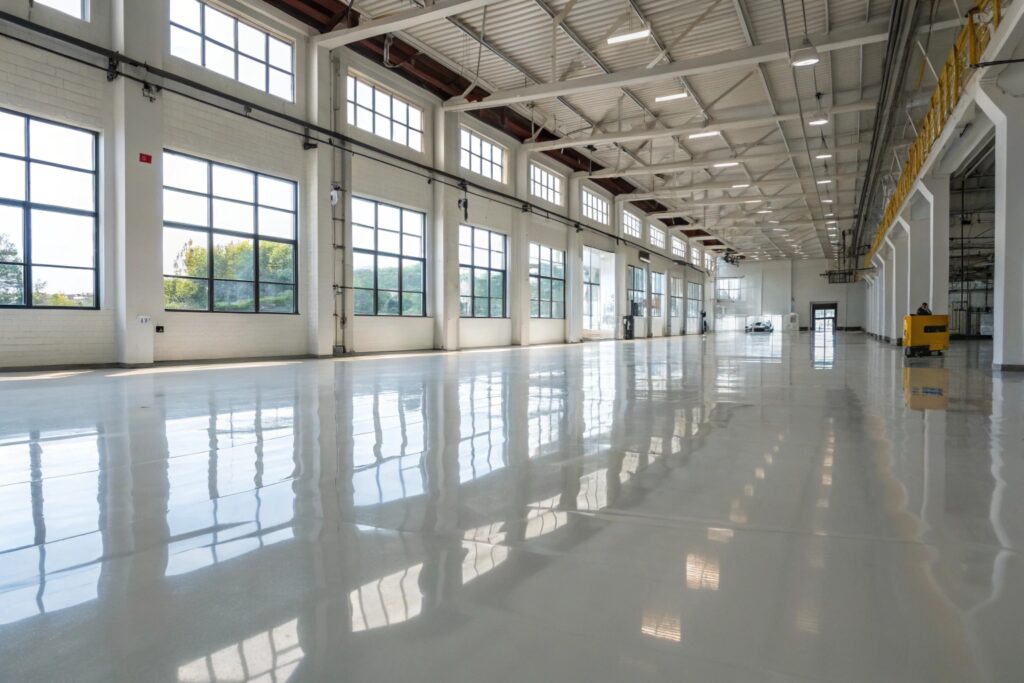
Year-Round Performance in NSW Coastal Conditions
One of the most common concerns Berkeley property owners raise is whether epoxy flooring performs consistently across the full range of seasonal conditions — not just during a mild autumn installation, but through summer heat, winter wet, and everything in between.
The honest answer is yes, when the right system goes down correctly. A properly specified and installed epoxy floor in coastal NSW handles seasonal variation well because the materials are designed to flex with the substrate as temperatures shift. That expansion and contraction cycle that breaks down poorly bonded coatings doesn’t affect a well-installed system the same way.
Summer in Berkeley brings higher humidity and UV exposure, particularly in garages and commercial spaces with roller doors that stay open during the day. A quality polyaspartic topcoat handles UV without yellowing or chalking, which is something standard epoxy alone can’t claim. Winter brings more consistent moisture and cooler temperatures that slow curing times — another reason why experienced local installers time their work carefully and don’t rush the process.
The floors that perform best year-round are the ones that were installed with the local environment in mind from the start. That means site-specific moisture testing, appropriate product selection, correct surface preparation, and enough cure time between coats. Shortcuts taken during installation show up as problems twelve months later when the seasons have cycled through and the coating has been tested properly.
Regular maintenance also extends year-round performance significantly. A simple cleaning routine that removes salt residue, grit, and chemical spills before they work into the surface keeps the topcoat in good condition and pushes the lifespan of the floor well beyond what a neglected installation would manage.
Ready to Get a Coastal-Rated Epoxy Floor in Berkeley?
If you’ve been wondering whether epoxy flooring can handle Berkeley’s coastal conditions, the answer is straightforward — the right system absolutely can. It comes down to proper assessment, matched products, and an installer who actually understands what the local environment demands.
Don’t leave it to chance or go with the cheapest quote that skips the moisture testing and surface prep. Get in touch with our team today for an obligation-free assessment of your garage, warehouse, or commercial space. We’ll give you an honest recommendation based on your specific site conditions — not a one-size-fits-all answer.

