
Marcus had his Berkeley garage floor coated three years ago. Looked great for about eighteen…
Anti Slip Epoxy Floors Cringila | WorkSafe NSW Compliant Solutions
A facility manager near the Port Kembla corridor told me something I haven’t forgotten. The morning one of his workers went down on a wet concrete floor near the coolant station, everything changed. Six weeks off with a knee injury, a SafeWork investigation, and a stack of paperwork he wasn’t prepared for. “I knew the floor was slippery when it was wet,” he said. “I just kept putting it off.”
It’s a story I hear more than people realise around Cringila.
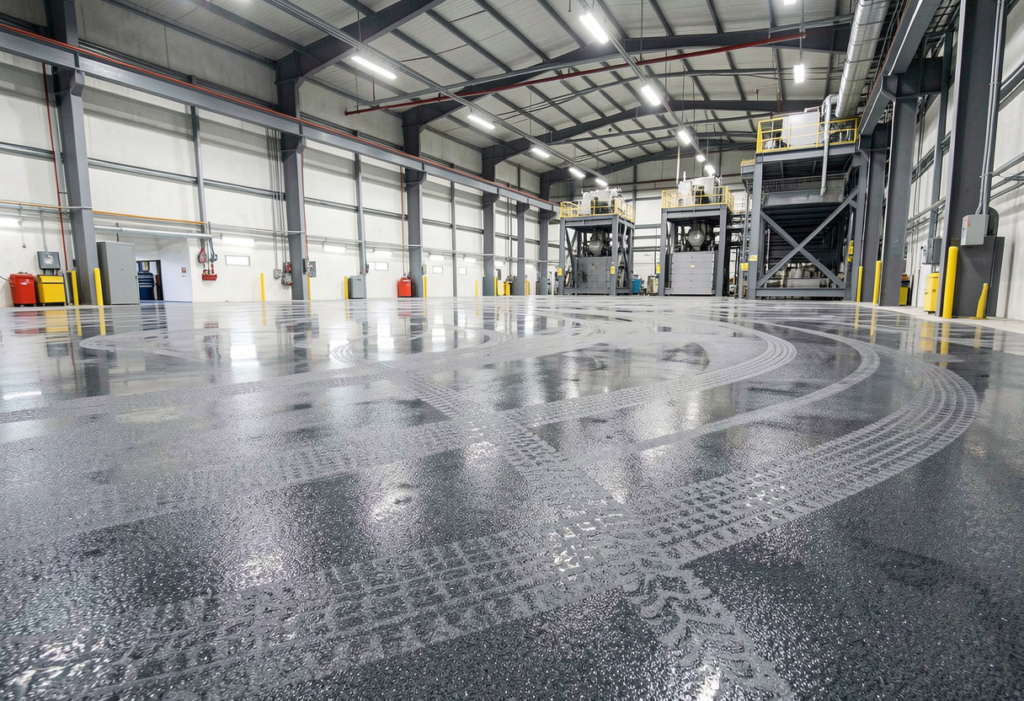
Anti slip epoxy floors Cringila businesses are investing in today aren’t just about compliance. They’re about making sure the bloke who starts at 6am goes home the same way he arrived. And they’re about protecting your operation from liability that can genuinely hurt you.
Cringila sits in the middle of one of Australia’s most active industrial zones — steel processing, chemical handling, heavy manufacturing. These floors deal with oil, coolant, water, metal particles, and constant forklift traffic every single day. Standard concrete doesn’t cut it here. WorkSafe NSW has been increasingly active in this region, and slip resistance requirements for industrial flooring are enforceable standards, not suggestions.
This post covers what applies to your facility, your texture and coating options, maintenance requirements, and whether the numbers actually stack up.
WorkSafe NSW Requirements for Industrial Flooring
Under the Work Health and Safety Act 2011 (NSW), employers have a legal duty to provide a safe workplace — and that includes the floor underfoot. WorkSafe NSW can issue improvement notices, prohibition notices, and significant fines where flooring presents an identified slip or trip hazard.
For industrial environments in Cringila, the relevant obligations sit under the WHS Regulations and are supported by theSafeWork NSW code of practice for managing the work environment and facilities. That document specifically addresses floor surfaces, drainage, and contamination in wet or chemically exposed areas.
The short version: if your floor gets wet during normal operations and doesn’t meet minimum slip resistance ratings, you’ve got a compliance gap. That gap becomes a serious problem the moment someone goes down.
Slip Resistance Testing Standards (AS4586)
The benchmark for slip resistance in Australia is AS4586 — Slip Resistance Classification of New Pedestrian Surface Materials. This standard assigns ratings based on wet and dry pendulum testing, oil-wet ramp testing, and wet barefoot testing.
For industrial manufacturing environments like those common in Cringila, you’re generally looking at:
- P4 or P5 rating for pedestrian areas subject to contamination
- R10 to R13 rating on the oil-wet ramp scale for areas exposed to oils or coolants
- Higher ratings near machinery, loading docks, and coolant channels
A standard smooth epoxy might perform well in a dry commercial space, but it can drop to dangerously low slip resistance ratings the moment oil or water hits it. That’s why the texture and aggregate choices in your coating system aren’t aesthetic decisions — they’re engineering decisions.
Your installer should be able to provide test data or product specifications that reference AS4586 compliance for the specific system they’re recommending. If they can’t, that’s worth questioning.
Anti-Slip Texture Options for Manufacturing
There’s no one-size answer here. The right texture depends on what your floor is actually exposed to, the footwear your workers wear, and how the area needs to be cleaned.
Common options used in Cringila manufacturing facilities include:
Aluminium oxide broadcast — fine or coarse grit particles broadcast into the topcoat before it cures. Durable, cost-effective, and suitable for most general manufacturing areas. Coarser grades handle heavier contamination.
Quartz sand broadcast — similar application method, slightly less aggressive profile. Good for areas with lighter contamination risk or where cleanability is a priority.
Shark grip or polymer additives — mixed directly into the topcoat rather than broadcast on top. Produces a more consistent texture that’s easier to clean. Popular in food processing and pharmaceutical environments but increasingly used in general manufacturing.
Raised profile systems — moulded anti-slip patterns pressed into the coating during application. Used in extremely high-risk zones like pit edges, ramp transitions, and loading dock lips.
Most quality installers will recommend different textures for different zones within the same facility rather than applying a single specification across the board.
Wet Area Safety in Industrial Environments
The most dangerous spots in any Cringila manufacturing facility are usually the same ones — coolant stations, washdown bays, areas near water-cooled machinery, and anywhere product or chemical spillage is a regular occurrence.
Wet area safety isn’t just about the coating itself. It’s a system:
- Drainage design needs to move liquid away from foot traffic zones quickly
- Coved skirting at wall junctions stops liquid pooling at edges
- Slope-to-drain gradients in the coating system help passive drainage between washdowns
- High-build epoxy systems seal the substrate so moisture doesn’t migrate up from below
In coastal industrial areas like Cringila, you’ve also got groundwater and humidity to think about. A moisture-tolerant epoxy system that addresses both surface contamination and substrate vapour transmission is worth the extra consideration upfront rather than a re-coat job two years down the track.
Cleaning and Maintenance of Anti-Slip Surfaces
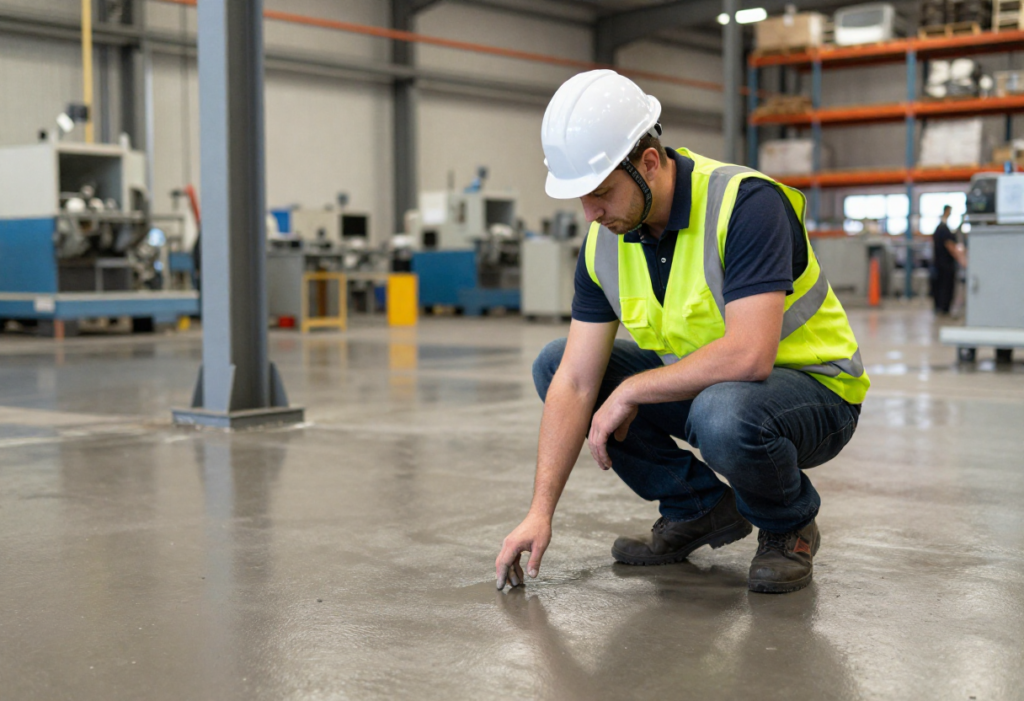
One thing facility managers sometimes don’t anticipate — textured anti-slip surfaces need a slightly different cleaning approach than smooth floors. The aggregate profile that gives you grip also gives contamination somewhere to sit if you’re not cleaning it properly.
For most manufacturing environments in Cringila, a practical maintenance routine looks like this:
- Daily: Sweep or vacuum to remove metal filings, dust, and dry debris before it gets ground in
- Weekly: Mop with a pH-neutral industrial cleaner — avoid highly alkaline degreasers on epoxy unless the product is rated for it
- Monthly: Inspect for any areas where coating is thinning, aggregate is pulling away, or drainage is backing up
- Annually: Slip resistance test the surface, especially in high-traffic wet zones, to confirm it’s still performing to specification
The Australian Epoxy Flooring Industry guidelines recommend keeping a maintenance log as part of your WHS documentation — useful if you’re ever required to demonstrate due diligence after an incident.
Cost-Benefit Analysis of Safety Flooring Investments
Let’s talk numbers, because this is where a lot of Cringila facility managers get stuck. A quality anti-slip epoxy system for an industrial environment typically runs between $25 and $65 per square metre depending on the system, substrate condition, and preparation required.
That feels significant until you stack it against what a single workplace injury actually costs:
| Cost Category | Estimated Range |
| Workers’ comp claim (moderate injury) | $15,000 – $80,000+ |
| SafeWork NSW investigation costs | $5,000 – $20,000 |
| Production downtime | Varies significantly |
| Legal and compliance costs | $10,000 – $50,000+ |
| Reputation and staff morale impact | Hard to quantify |
A 500sqm manufacturing floor coated to a compliant standard might cost $15,000 to $25,000 installed. One serious slip-and-fall incident can cost multiples of that before you’ve even spoken to a lawyer.
The facility manager from the start of this article ended up resurfacing his entire production floor after the incident. He said the cost of doing it properly the first time would have been about 30% of what the whole situation ended up costing him. “It’s the cheapest insurance you can buy,” was how he put it.
For Cringila businesses operating in high-risk industrial conditions, compliant anti-slip epoxy flooring isn’t an overhead — it’s a risk management decision that pays for itself.
Ready to get your facility assessed? A site visit from a qualified epoxy installer can identify your highest-risk zones and recommend the right system for your specific operations. Don’t wait for an incident to make the call.

