
Marcus had his Berkeley garage floor coated three years ago. Looked great for about eighteen…
Chemical Resistant Epoxy Flooring in Warrawong: The Industrial Guide for Manufacturing & Port Kembla Facilities
A Warrawong workshop manager thought his sealed concrete floor was tough enough for anything his facility could throw at it. Then a forklift battery acid spill during a busy production shift changed everything. Within hours, the concrete had begun to pit and corrode. Within weeks, the damaged surface was a safety liability. The repair bill? More than three times what a proper chemical resistant epoxy system would have cost from the start.
It’s a story that plays out more often than it should across Warrawong and Port Kembla’s manufacturing and industrial facilities.
If you manage or own an industrial space in the Warrawong area, choosing the right chemical resistant epoxy flooring isn’t just about aesthetics — it’s about protecting your operation, your staff, and your bottom line.
In this guide, you’ll learn exactly which epoxy systems perform best against the chemicals common to local manufacturing environments, how to evaluate your options, and what Warrawong facility managers need to know before making this investment.
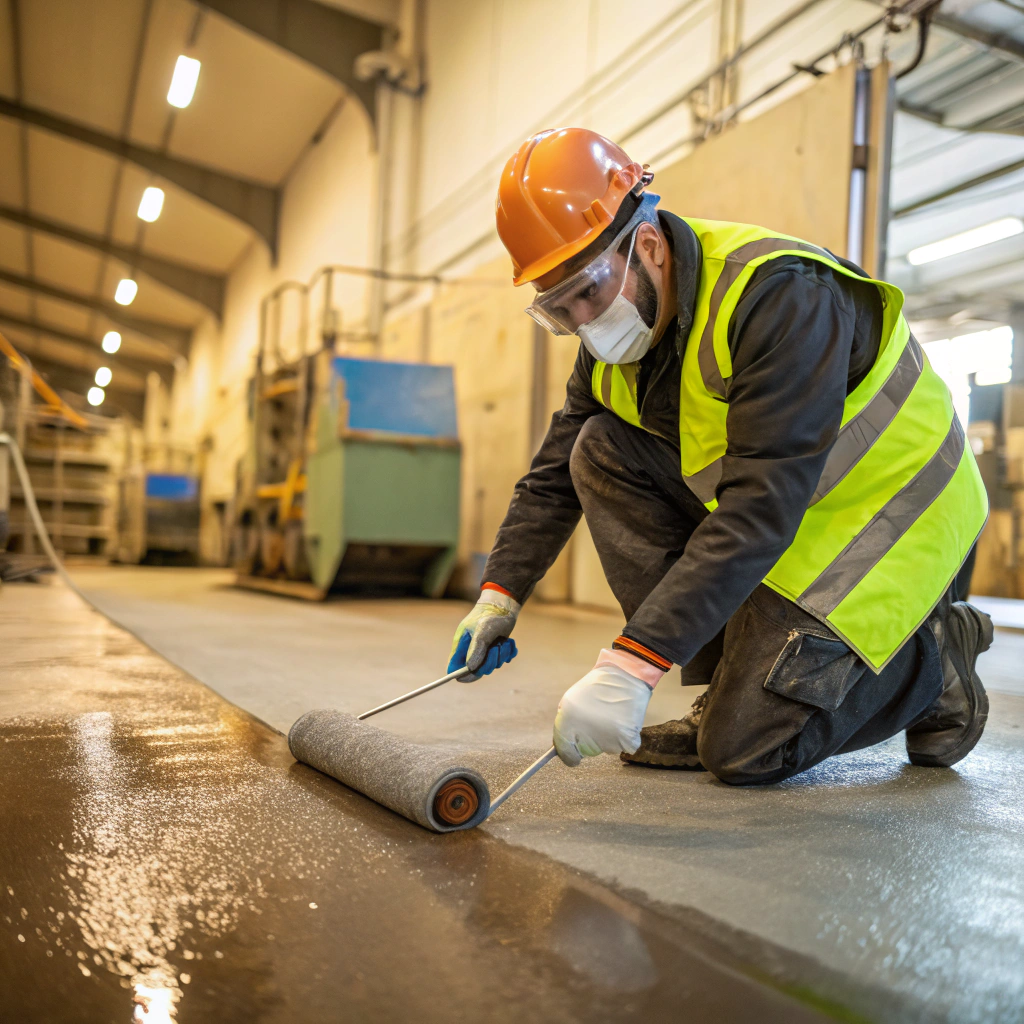
What Is Chemical Resistant Epoxy Flooring?
Chemical resistant epoxy flooring is a high-performance industrial coating system engineered with specialised resins and hardeners to create a dense, non-porous surface barrier. Unlike standard concrete sealers, it’s specifically formulated to withstand prolonged exposure to aggressive substances without breaking down or allowing penetration to the substrate beneath.
For Warrawong and Port Kembla manufacturing facilities, chemical resistant epoxy flooring typically protects against:
- Acids including hydrochloric, sulfuric, and battery acid
- Industrial solvents and degreasers
- Alkalis and caustic cleaning agents
- Oils, hydraulic fluids, and petroleum-based products
- High-temperature wash-down chemicals
The result is a flooring system that protects your concrete substrate from corrosion, staining, and structural deterioration — extending the operational life of your facility floor significantly.
Understanding Chemical Resistance in Industrial Epoxy Systems
Why Standard Epoxy Isn’t Enough for Industrial Environments
Decorative epoxy systems designed for residential garages handle everyday wear just fine — but put them in a Warrawong manufacturing environment with regular chemical exposure and they’ll fail fast. True chemical resistant systems have a significantly higher cross-linking density in their molecular structure, creating a surface barrier that aggressive substances can’t penetrate. Specifying the wrong system because it looks identical on day one is a mistake that shows up very clearly by month six.
The Chemical Resistance Scale — What the Ratings Actually Mean
When reviewing product data sheets for industrial epoxy systems, you’ll encounter four standard resistance ratings:
- Excellent — No degradation under continuous or prolonged exposure. Suitable for immersion or frequent direct contact.
- Good — Performs well under regular splash and spillage but may show minor effects under prolonged immersion.
- Limited — Short-term resistance only. Suitable for occasional incidental contact with immediate clean-up.
- Not Recommended — The chemical will degrade the coating. Do not specify this system where this chemical is present.
Wollongong’s Industrial Environment and Why It Raises the Stakes
Warrawong sits in one of Australia’s most active industrial corridors — right on the coast. Elevated humidity plus salt air accelerates surface degradation across most materials, including epoxy. When you combine that coastal moisture with regular chemical exposure, you get a two-front assault that standard systems aren’t built to handle. The local environment raises the bar on what chemical resistant epoxy flooring in Warrawong needs to deliver.
Understanding how chemical resistance works is the foundation — but choosing between the systems available for your Warrawong facility is where the real decision begins. Safe Work Australia’s guidelines on industrial flooring safety compliance are worth reviewing before any specification decision.
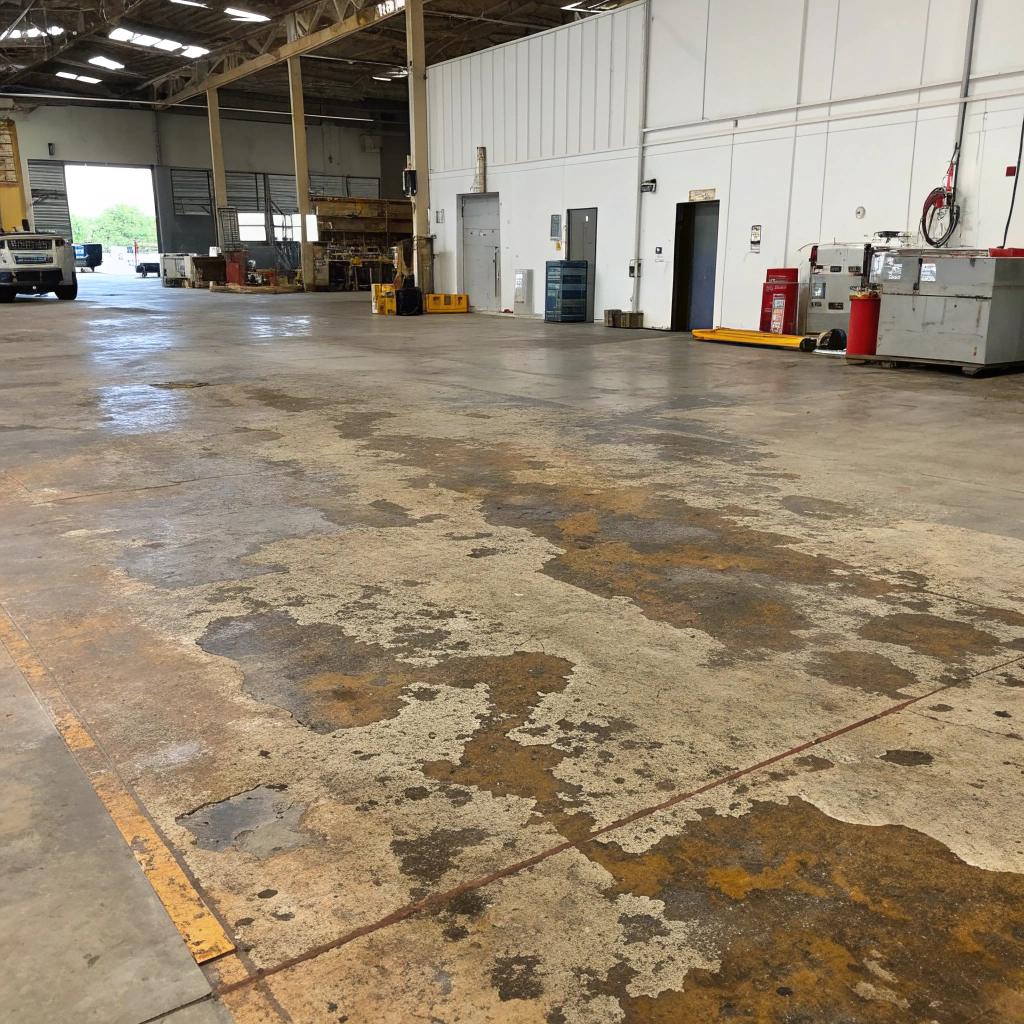
Novolac vs Vinyl Ester Epoxy for Warrawong Manufacturing
What Is Novolac Epoxy and When Should Warrawong Facilities Use It?
Novolac epoxy’s tighter molecular structure delivers superior resistance across a broader chemical range — strong acids, solvents, and oxidising agents. It also handles high-temperature processes and steam cleaning better than standard systems. Best suited for metal processing, chemical storage, and battery manufacturing. One important note: it requires precise humidity and temperature control during application, which matters in Wollongong’s coastal climate.
What Is Vinyl Ester Epoxy and Where Does It Outperform Novolac?
Vinyl ester is the specification of choice where strong acid resistance and bleach-based compound exposure are the primary concerns. It performs particularly well in marine-adjacent industrial settings — directly relevant to Warrawong’s steelworks-adjacent supply chain. It’s more expensive and harder to apply than Novolac, so your contractor’s experience level matters more than usual with this system.
Side-by-Side Comparison — Choosing the Right System for Your Warrawong Facility
The right choice comes down to your specific chemical exposure profile, budget, and facility conditions.
| Factor | Novolac Epoxy | Vinyl Ester Epoxy |
|---|---|---|
| Chemical resistance range | Broad — strong acids, solvents, oxidisers | Excellent — strongest acids, bleach compounds |
| Temperature tolerance | High — suits steam cleaning and hot chemical exposure | Moderate — less suited to high heat environments |
| Installation complexity | Moderate — humidity/temperature sensitive | High — requires experienced applicator |
| Cost range | Moderate | Higher |
| Ideal applications | Metal processing, battery facilities, chemical storage | Highly acidic environments, marine-adjacent industrial |
Knowing your system options is only half the picture — the chemicals your Warrawong facility actually handles day to day should drive the final specification.
Common Chemicals in Warrawong Facilities and Flooring Solutions
The Chemical Profile of Warrawong’s Industrial Sector
Warrawong’s industrial sector covers metals processing, heavy manufacturing, automotive workshops, chemical storage, and food and beverage processing — and each generates a distinct chemical exposure profile. That variety is why a blanket flooring recommendation doesn’t work. Getting the specification right starts with understanding what chemicals your facility actually produces at floor level.
Acids — The Most Aggressive Threat to Industrial Floors in the Region
Acids are the most destructive chemical category for unprotected concrete and they’re present across a wide range of Warrawong industries:
- Battery acid — automotive workshops and forklift maintenance facilities
- Hydrochloric acid — metal treatment operations
- Phosphoric acid — metal pre-treatment and food processing
- Nitric acid — specialised manufacturing and laboratory environments
Acids break down concrete’s pH balance, causing pitting and aggregate exposure. By the time the damage is visible enough to act on, the repair scope is almost always larger than it needed to be.
Solvents, Alkalis, and Oils — The Secondary Threats Warrawong Facilities Often Underestimate
Solvents, alkalis, and oils are a daily reality across Warrawong’s manufacturing sector and are frequently underestimated. Facilities dealing with multiple chemical categories need a broader spectrum resistance system. Wash-down frequency and drainage design carry equal weight — a well-specified epoxy floor paired with poor drainage will still fail ahead of schedule.
Matching the Right Epoxy System to Your Specific Chemical Exposure
| Chemical | Industry | Recommended System |
|---|---|---|
| Battery acid | Automotive, forklift maintenance | Novolac epoxy |
| Hydrochloric acid | Metal treatment | Novolac or Vinyl Ester |
| Phosphoric acid | Metal pre-treatment, food processing | Novolac epoxy |
| Nitric acid | Specialised manufacturing, laboratory | Vinyl Ester epoxy |
| Solvents (acetone, MEK) | Paint shops, engineering finishing | Novolac epoxy |
| Caustic soda / Ammonia | Food processing, pharmaceutical | Novolac epoxy |
| Oils and hydraulic fluids | Heavy engineering, transport | Standard chemical resistant epoxy |
Not sure which chemicals your facility is exposed to? A site assessment from our Warrawong team can map your exposure profile before you specify a single litre of coating.
Once you know which chemicals you’re dealing with, the next step is making sure any system you’re quoted on can actually prove its resistance claims.
Chemical Resistance Testing Standards for Industrial Applications
Why Testing Standards Matter for Warrawong Facility Managers
Understanding testing standards separates a flooring investment that lasts a decade from one that fails within 18 months. Any reputable contractor should be providing documented test data for every system they recommend — not just a verbal assurance. Warrawong’s coastal humidity and temperature variation can also affect real-world performance relative to laboratory test conditions, so knowing what the data actually covers matters.
The Key Australian and International Standards You Should Know
- AS/NZS 4020 — Products in contact with drinking water. Relevant for food processing facilities.
- ISO 2812 — Paint and varnishes chemical resistance testing. The international benchmark.
- ASTM C267 — Chemical resistance of mortars, grouts, and monolithic surfacings. Widely referenced in industrial epoxy specifications.
- AS 1428 — Slip resistance standards. Chemical resistant floors must also meet workplace safety requirements.
How to Read a Chemical Resistance Data Sheet — A Plain English Guide
A typical data sheet will cover the chemical name and concentration tested, exposure duration and temperature during testing, result rating for both continuous immersion and splash and spillage, and substrate preparation requirements.
The most important distinction to understand is the difference between splash and spillage resistance and continuous immersion resistance — they are not the same rating. Real facilities also frequently expose floors to chemical combinations rather than single substances, which can accelerate degradation beyond what any single-chemical test reflects.
Red Flags to Watch for When a Contractor Can’t Answer Your Testing Questions
- Unable to provide manufacturer technical data sheets
- Quoting chemical resistance verbally without written documentation
- No mention of substrate preparation standards in their proposal
- Unfamiliar with AS/NZS standards relevant to your industry
- No warranty documentation specifically covering chemical exposure scenarios
When you request a quote from our Warrawong team, we provide full technical data sheets for every system we recommend — before you sign anything.
Even the best-specified and most rigorously tested system will only deliver its full lifespan with the right maintenance program in place.

Maintenance of Chemical Resistant Floors in Manufacturing
Why Maintenance Is the Most Overlooked Factor in Chemical Resistant Flooring Longevity
Even the highest-specification system will underperform without adequate maintenance protocols. Think of maintenance as investment protection rather than an ongoing cost. Warrawong’s coastal humidity means surface contaminants accumulate faster than non-coastal locations — and a well-maintained chemical resistant epoxy floor should last 10-15 years before requiring resurfacing. A neglected one won’t get close.
Daily and Weekly Maintenance Protocols for Chemical Resistant Epoxy Floors
Daily:
- Immediate spill response — neutralise before cleaning for acid spills, absorb before washing for oils and solvents
- Dry sweeping or dust extraction to prevent abrasive particle buildup
Weekly:
- Wet cleaning with pH-neutral detergents — acidic or high-alkaline cleaning products can damage coatings not rated for them
- Visual inspection routine to identify early-stage coating breakdown before it spreads
Periodic Maintenance and Professional Inspection for Warrawong Facilities
Annual professional inspection should cover coating adhesion, chemical attack patterns, joint integrity, and drain surround condition. A fresh topcoat every 3-5 years can effectively double the working life of the underlying system. Joints and drain surrounds are the most vulnerable points of any chemical resistant flooring system and need the closest attention during inspections.
Our Warrawong team offers scheduled floor inspections for manufacturing facilities — contact us to set up an annual assessment program.
Common Maintenance Mistakes That Void Epoxy Flooring Warranties in Manufacturing
- Using high-alkaline or acidic cleaning agents on systems not rated for them
- Allowing chemical pooling where the system was only specified for splash and spillage
- Pressure washing at excessive PSI — can delaminate topcoats
- Ignoring early-stage joint failures — allows moisture and chemical ingress under the coating
- Using incompatible repair products when spot-treating damaged areas
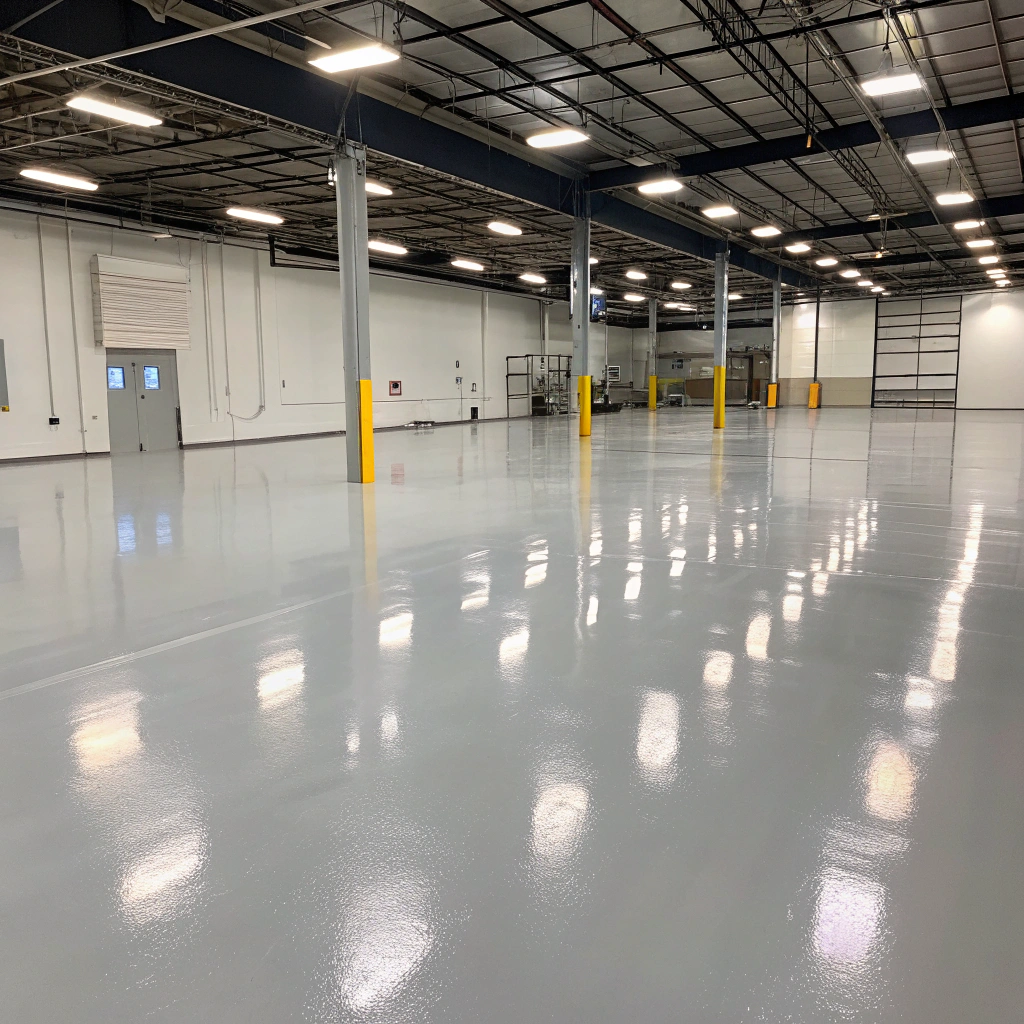
Get a Free Chemical Resistance Assessment for Your Warrawong Facility
Every Warrawong facility has a different chemical exposure profile. The right epoxy system for a metal processing operation isn’t the same as the right system for a food processing facility or an automotive workshop — and specifying the wrong one is an expensive mistake that plays out slowly but consistently.
Whether you’re dealing with acid spills, solvent exposure, heavy wash-down cycles, or a combination of all three, our team at Local Epoxy Flooring Wollongong works with Warrawong and Illawarra manufacturing facilities to assess your specific exposure profile and recommend a documented, warranted solution before any work begins.
What Happens Next
Getting the right chemical resistant epoxy flooring for your Warrawong facility is a straightforward process:
- Contact us — phone, email, or the form below
- We assess your facility — on-site evaluation of your chemical exposure profile, substrate condition, and operational requirements
- We provide a documented recommendation — full technical data sheets, system specification, and written quote before you commit to anything
Service Area: Warrawong, Port Kembla, Wollongong, and surrounding Illawarra suburbs
📞 0242026324 ✉️ info@epoxyflooringwollongong.com

