
Marcus had his Berkeley garage floor coated three years ago. Looked great for about eighteen…
Why Commercial Kitchens Are Switching to Epoxy Flooring Solutions
Running an industrial kitchen comes with unique challenges. Between heavy equipment, constant foot traffic, spills, and strict hygiene requirements, flooring needs to handle it all without breaking down. That’s where epoxy flooring comes in. It’s quickly becoming the go-to choice for commercial kitchens, restaurants, cafeterias, and food processing facilities across Australia. This article explores why epoxy is such a smart investment for industrial kitchen environments.

Understanding the Demands of Industrial Kitchen Environments
Industrial kitchens face extreme conditions every single day. Hot liquids get spilled, grease splashes everywhere, and heavy pots and equipment get dropped regularly. Add in constant cleaning with harsh chemicals, and it becomes an environment that can destroy standard flooring in months.
Temperature changes are another challenge. Kitchen floors experience everything from cold near refrigeration units to scorching heat near ovens and fryers. Traditional flooring materials like tiles can crack under these conditions, while timber and vinyl simply aren’t suitable.
Flooring also needs to support heavy commercial equipment like industrial fridges, ovens, and food prep stations. Without a solid foundation, floors can crack, chip, or develop uneven surfaces that become safety hazards.
Unmatched Durability and Chemical Resistance for Food Preparation Areas
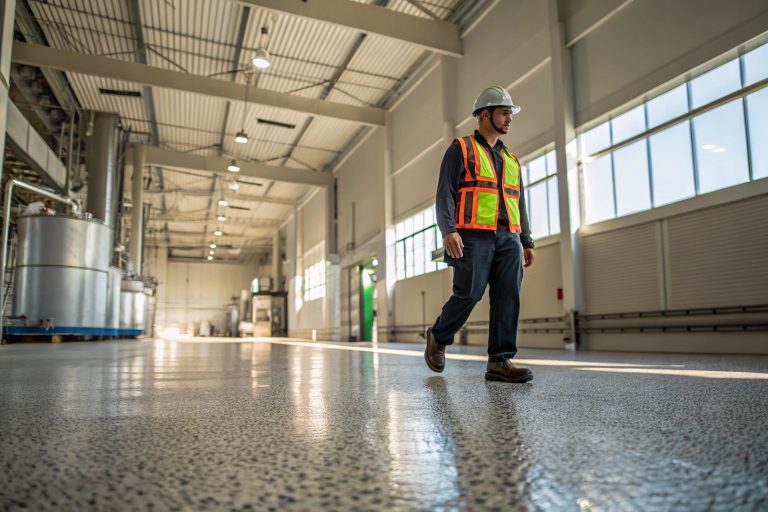
Epoxy flooring is incredibly tough. It creates a solid, seamless surface that can handle the daily punishment of a busy kitchen without showing wear. Unlike tiles that can crack or grout lines that deteriorate, epoxy forms a continuous coating that stays intact even under heavy use.
One of epoxy’s biggest advantages is its chemical resistance. Commercial kitchens use strong cleaning products, degreasers, and sanitisers to meet health standards. Standard flooring can break down when exposed to these chemicals repeatedly, but epoxy stands up to them without degrading. This means floors won’t stain, discolour, or deteriorate even with aggressive daily cleaning.
Epoxy is also highly resistant to impact damage. When heavy equipment gets dropped, epoxy absorbs the impact without cracking or chipping. This durability translates into fewer repairs and longer floor life, saving businesses money over time.
Hygiene and Safety Standards: How Epoxy Flooring Meets Commercial Requirements
Food safety regulations in Australia are strict for good reason. Kitchen flooring plays a major role in maintaining hygiene standards. Epoxy flooring’s seamless surface means there are no grout lines, gaps, or joints where bacteria, mould, or food particles can hide and grow.
The smooth, non-porous surface makes cleaning quick and thorough. Spills can be wiped up easily, and daily mopping actually removes contaminants rather than just pushing them around. This helps commercial kitchens maintain the cleanliness levels required by health inspectors.
Safety is another critical factor. Slip resistance can be built into epoxy floors with special additives or finishes. This is essential in environments where water, grease, and food spills are constant. Anti-slip epoxy helps prevent workplace accidents and keeps staff safe during busy service periods.
Cost-Effective Long-Term Solution for High-Traffic Kitchen Spaces
While the initial investment in epoxy flooring might seem higher than basic options, the long-term savings are significant. Epoxy floors can last 15-20 years or more in commercial settings with proper care. Compare that to tiles or vinyl that might need replacing every few years, and the value becomes clear.
Maintenance costs are minimal. There’s no need to reseal grout, replace cracked tiles, or deal with peeling vinyl. Regular sweeping and mopping with standard cleaning products is typically all that’s required. This reduces both labour time and cleaning supply expenses.
Downtime is expensive in the food service industry. When floors fail, businesses might need to close sections of kitchens for repairs. Epoxy’s durability means fewer disruptions to operations, and businesses won’t face unexpected repair bills that can impact budgets.
Installation and Maintenance: What Commercial Kitchen Owners Need to Know
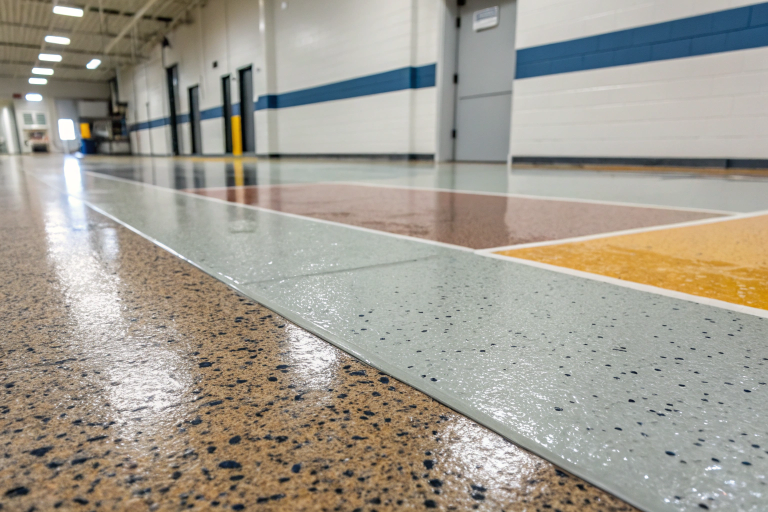
Professional installation is essential for commercial kitchen epoxy flooring. The process typically starts with thorough surface preparation. Existing concrete needs to be properly cleaned, repaired, and sometimes ground down to ensure proper adhesion. Local Epoxy Flooring Wollongong specialises in preparing commercial kitchen surfaces to meet the specific demands of food service environments.
Installation timing matters. Most commercial kitchens need to coordinate flooring work during slower periods or closures to minimise business disruption. The actual application process usually takes a few days, including curing time before floors can handle full traffic and weight.
Once installed, maintenance is straightforward. Daily sweeping removes loose debris, while regular mopping with pH-neutral cleaners keeps surfaces hygienic. It’s important to clean spills promptly, especially acidic substances, though epoxy handles these much better than other flooring types.
Ready to Upgrade Commercial Kitchen Flooring?
For businesses looking for a flooring solution that combines durability, hygiene, safety, and long-term value, epoxy is the smart choice for industrial kitchens. Local Epoxy Flooring Wollongong has extensive experience installing epoxy floors in commercial kitchens, restaurants, and food processing facilities throughout the Wollongong region.
Contact Local Epoxy Flooring Wollongong today for a free consultation and quote. Their professionals can assess spaces, recommend the best epoxy solution for specific needs, and provide timelines that work around business schedules.

